C&C 30
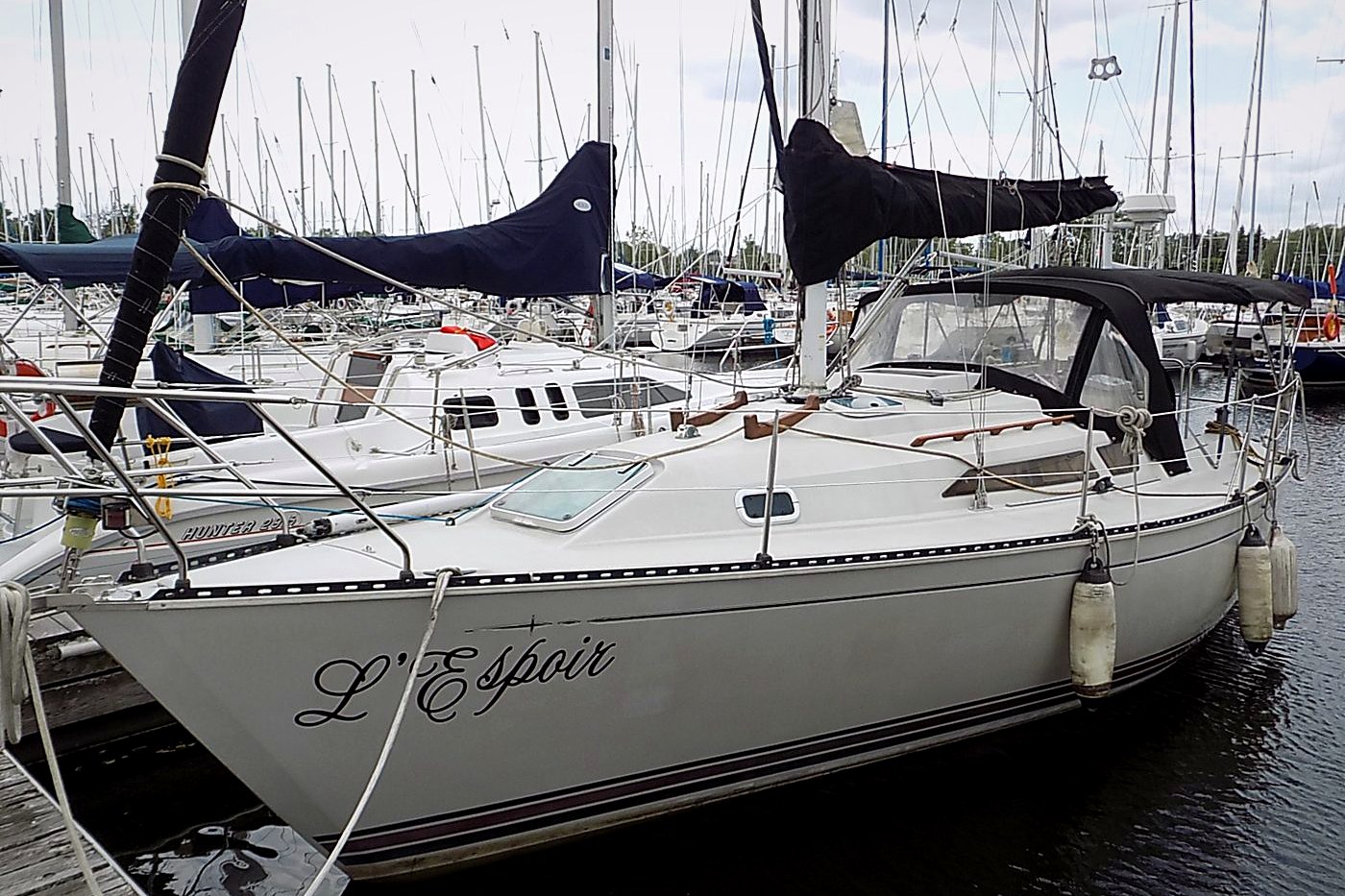
A Canadian racer-cruiser with balsa-cored construction that sails crisply, though buyers must check the deck and hull core for moisture.
Made to order: your copy is researched, fact-checked, and typeset to our standard, then delivered within about two weeks. We'll email you the moment it's ready.
About the C&C 30 (1974-1985)
The C&C 30 was one of the most successful boats Canada's C&C Yachts ever produced: a 30 foot masthead sloop drawn by George Cuthbertson and George Cassian and built at Niagara-on-the-Lake, Ontario. More than 800 were launched over a run lasting into 1985, which is why they still turn up on both coasts and across the Great Lakes.
It was conceived when the IOR handicap rule shaped nearly every fast production boat, so it has the deep fin keel, fine entry, and generous rig of a racer wrapped around an interior a family can genuinely cruise in. That is the appeal: a C&C 30 keeps moving upwind and in light air in a way most 30 footers of its era do not.
Specifications at a glance
| Years | 1974 to 1985 |
| Designer | Cuthbertson & Cassian, built by C&C Yachts |
| Length | 30.0 ft (9.14 m) overall, 24.9 ft (7.60 m) waterline |
| Beam | 10.0 ft (3.05 m) |
| Draft | 5.0 ft (1.52 m) deep keel, 4.2 ft (1.28 m) shoal |
| Displacement | 8,000 lb (3,629 kg), including 3,450 lb (1,565 kg) of ballast |
| Sail area | 458.75 sq ft (42.6 sq m), masthead sloop |
| Hulls built | more than 800 |
Known issues to check before you buy
- Oak mast step. Early boats step the mast on an oak block in the wettest part of the bilge, where it softens and can deflect or fail. Hulls up to 651 have the wood step; 652 and later got an aluminium casting. Lift the sole and probe it.
- Wet balsa in the deck. The deck is balsa cored, and wherever chainplates or stanchion bases were never rebedded the core goes soft. Have a surveyor sound the whole deck and the cockpit sole.
- Chainplate knees. The shroud chainplates tie into fiberglass knees inside the hull, and a leaking deck slot weakens both. Look below deck for staining, rust weep, and movement under rig load.
- Keel bolts and keel joint. A hairline crack at the hull-to-keel joint (the "keel smile") shows up at haulout on many of these boats, needs filling and fairing, and is a cue to check keel bolt torque.
- Original Atomic 4 gasoline engine. A sound one runs for years, but gasoline aboard makes the fuel lines, tank, and bilge blower survey items. Many boats were repowered with a Yanmar diesel.
Owning one
Costs are modest by 30 foot standards, and the owner network is good enough that almost every fault you will meet has already been diagnosed by someone else. This volume documents the C&C 30 (1974-1985) specifically: verified specifications, the documented weak points and how to inspect each, the service data, and the parts and owner community that keep these boats sailing.
Inside this volume
Known issues & a survey guide
The documented weak points for this exact model, how to inspect each, and what a proper fix costs, a checklist to carry to the survey.
Full specifications
Every published figure, hull and rig or engine detail, tankage, and running change, with the conflicts flagged, not guessed.
Systems & maintenance
Engine, electrical, plumbing, steering, and ground tackle, plus service intervals and the fluid and torque data.
Parts, yards & community
Where the parts are, what cross-references, and the owners associations and forums that keep the model alive.
Make it your boat.
We fold in your year, your engine and options, your refits and modifications, your hull number, and your own boat's photo on the cover. The book stops describing the boat that left the yard and starts describing the one in your slip.