C&C Yachts C&C 27
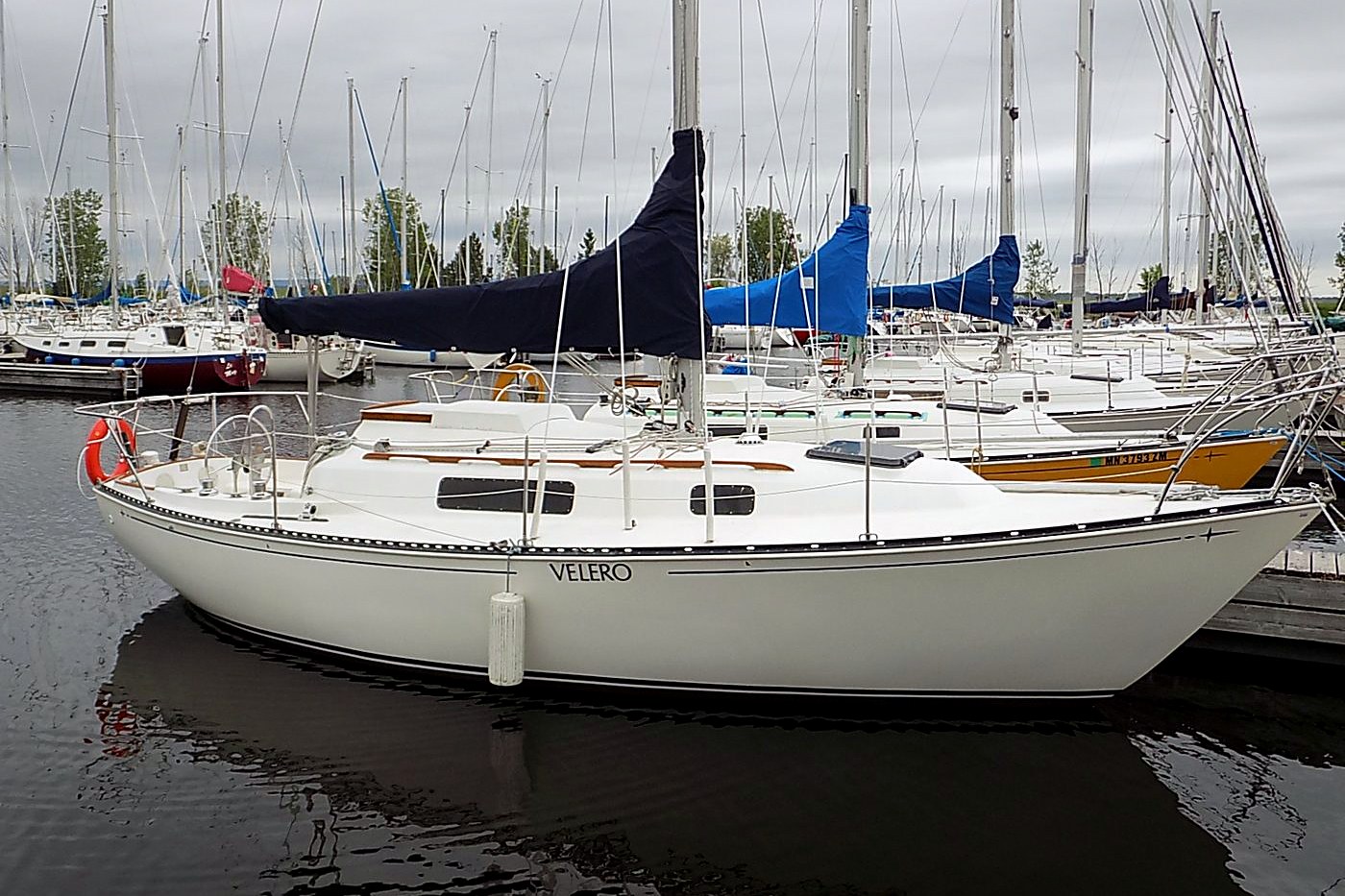
A widely raced club boat, the C&C 27 ran through five distinct marks over its long production life.
Made to order: your copy is researched, fact-checked, and typeset to our standard, then delivered within about two weeks. We'll email you the moment it's ready.
About the C&C Yachts C&C 27 (1971-1982)
The C&C 27 is one of the most successful small racer-cruisers ever built in North America. Drawn by Robert W. Ball for C&C Yachts and produced from 1971 to 1982, it married a stiff fin keel and a tall masthead rig to a hull that was fast for its size, which made it a club racing fixture on the Great Lakes and both coasts.
The appeal is that it still does both jobs. It will win a Wednesday night race and then sleep four for a weekend, with nearly six feet of headroom and systems simple enough to maintain yourself. Of the four unofficial series, the Mark III of 1974 onward, with its longer cockpit and available diesel, is the one most buyers want.
Specifications at a glance
| Years | 1971 to 1982, about 975 built |
| LOA | 27 ft 4 in (8.33 m), 27 ft 10 in (8.49 m) from the Mark III |
| LWL | 21 ft (6.40 m) to 22 ft 11 in (6.99 m) |
| Beam | 9 ft 2 in (2.79 m) |
| Draft | 4 ft 3 in (1.30 m), fixed fin keel |
| Displacement | 5,180 to 5,800 lb (2,350 to 2,630 kg) |
| Ballast | 2,116 lb (960 kg) on the Mark III |
| Sail area | 362 sq ft (33.6 sq m) |
Known issues to check before you buy
- Balsa-cored deck. The deck is cored with end-grain balsa, which rots once water gets past a leaking fitting. Tap around winches, the genoa track and stanchion bases for a dull thud, and get moisture meter readings.
- Chainplate bulkheads. The chainplates (the straps anchoring the wires that hold the mast up) bolt to plywood bulkheads, and water runs down the plate into the plywood. Probe for softness and staining at the bolts: this is the rig's main attachment.
- Bulkheads not tabbed to the deck. They were never bonded to the deck above them, so the deck can lift as the rig loads it. Look for movement or cracked paint along each bulkhead's top edge.
- Engine. Early boats carry the Atomic 4 gasoline engine, later ones a Yanmar diesel. On an Atomic 4, inspect the exhaust riser and manifold for internal corrosion and check the fuel lines and engine ventilation.
- Original rudder. Mark I boats have the original scimitar-shaped spade rudder, which gives heavy weather helm and can stall when heeled hard, so sail one before you commit.
Owning one
These are cheap boats to buy and cheap to keep, which is why so many have been neglected: the money goes into deck core, chainplates and rigging, so a survey pays for itself. This volume documents the C&C Yachts C&C 27 (1971-1982) specifically: verified specifications, the documented weak points and how to inspect each, the service data, and the parts and owner community that keep them sailing.
Inside this volume
Known issues & a survey guide
The documented weak points for this exact model, how to inspect each, and what a proper fix costs, a checklist to carry to the survey.
Full specifications
Every published figure, hull and rig or engine detail, tankage, and running change, with the conflicts flagged, not guessed.
Systems & maintenance
Engine, electrical, plumbing, steering, and ground tackle, plus service intervals and the fluid and torque data.
Parts, yards & community
Where the parts are, what cross-references, and the owners associations and forums that keep the model alive.
Make it your boat.
We fold in your year, your engine and options, your refits and modifications, your hull number, and your own boat's photo on the cover. The book stops describing the boat that left the yard and starts describing the one in your slip.