Cal 27
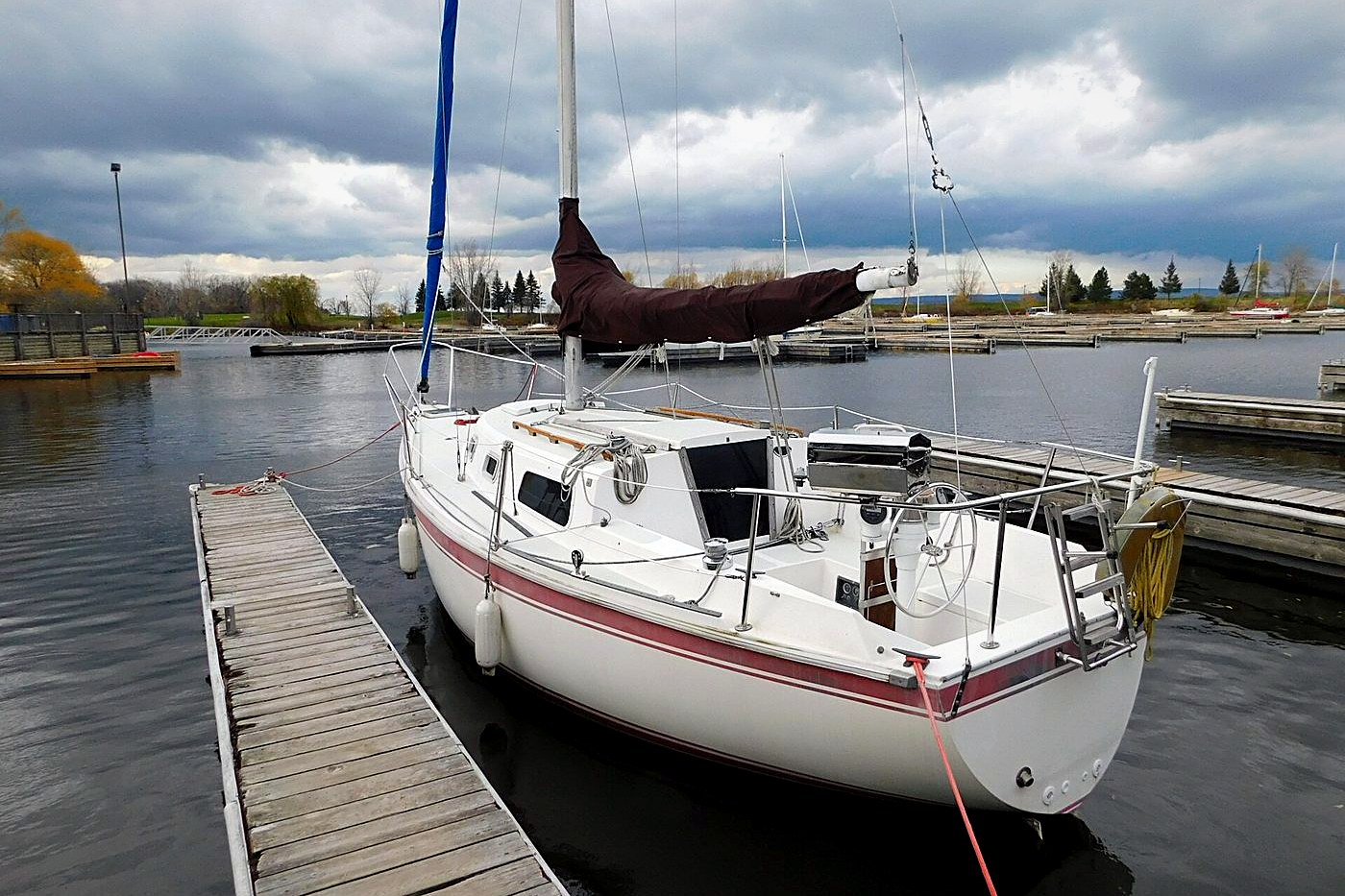
A Lapworth-designed pocket cruiser that sails well above its size, affordable and common on the West Coast used market.
Made to order: your copy is researched, fact-checked, and typeset to our standard, then delivered within about two weeks. We'll email you the moment it's ready.
About the Cal 27 (1971-1977)
The Cal 27 is a Bill Lapworth design, built by Jensen Marine under the Cal Yachts name. It slots between the Cal 25 and the bigger boats in the range: a masthead sloop (one mast, forestay running to the top of it) on a solid fiberglass hull, with a fixed fin keel and a spade rudder set well aft.
For its length the interior is unusually usable: a V-berth forward, an enclosed head, settees in the saloon, the galley aft, and better than six feet of headroom. On the water the boat is happiest in 6 to 14 knots, wants a reef above 15, and goes soft in very light air. A PHRF handicap (the club-racing number) of around 210 and low asking prices make it one of the cheapest ways into a capable coastal boat.
Specifications at a glance
| Years | 1971 to 1977 |
| Designer | C. William (Bill) Lapworth |
| Builder | Jensen Marine (Cal Yachts), USA |
| Length | 27.34 ft (8.33 m) overall, 22.33 ft (6.81 m) at the waterline |
| Beam | 9.00 ft (2.74 m) |
| Draft | 4.50 ft (1.37 m) |
| Displacement | 5,400 lb (2,449 kg), of which 2,725 lb (1,236 kg) is keel ballast |
| Sail area | 349 sq ft (32.4 sq m) |
Known issues to check before you buy
- Deck core at the mast step. The mast steps on deck rather than on the keel, so water working in around it softens the core inside the deck. Tap the area and look for a sagging headliner or cracks in the gelcoat below.
- The beam under the compression post. A metal beam carries the load from the post beneath the mast into the hull, and it corrodes slowly out of sight. It is hard to see without a borescope, so make it an explicit survey item.
- Chainplates, stanchions and the hull-to-deck joint. The plates that anchor the rigging are hard to seal where they pass through the deck, the lifeline stanchions lack proper backing plates, and the hull-to-deck seam weeps. Look for rust streaks, stains on the bulkheads below, and softness underfoot.
- Bulkhead tabbing. Confirm the bulkheads are still bonded to the hull. The fiberglass tabs holding them can let go with age, changing how rig loads are carried.
- Auxiliary power. These boats were sold with a 9.9 hp outboard or a small inboard, either the 25 hp Universal Atomic 4 gasoline engine or a 12 hp diesel, and all are marginal against a strong current or head sea. Confirm what is fitted and how old it is.
Owning one
A Cal 27 is cheap to buy and cheap to keep, so the money goes into deck hardware, rigging and mast support rather than the hull itself. This volume documents the Cal 27 (1971-1977) specifically: verified specifications, the documented weak points and how to inspect each, the service data, and the parts and owner community.
Inside this volume
Known issues & a survey guide
The documented weak points for this exact model, how to inspect each, and what a proper fix costs, a checklist to carry to the survey.
Full specifications
Every published figure, hull and rig or engine detail, tankage, and running change, with the conflicts flagged, not guessed.
Systems & maintenance
Engine, electrical, plumbing, steering, and ground tackle, plus service intervals and the fluid and torque data.
Parts, yards & community
Where the parts are, what cross-references, and the owners associations and forums that keep the model alive.
Make it your boat.
We fold in your year, your engine and options, your refits and modifications, your hull number, and your own boat's photo on the cover. The book stops describing the boat that left the yard and starts describing the one in your slip.