Catalina 34
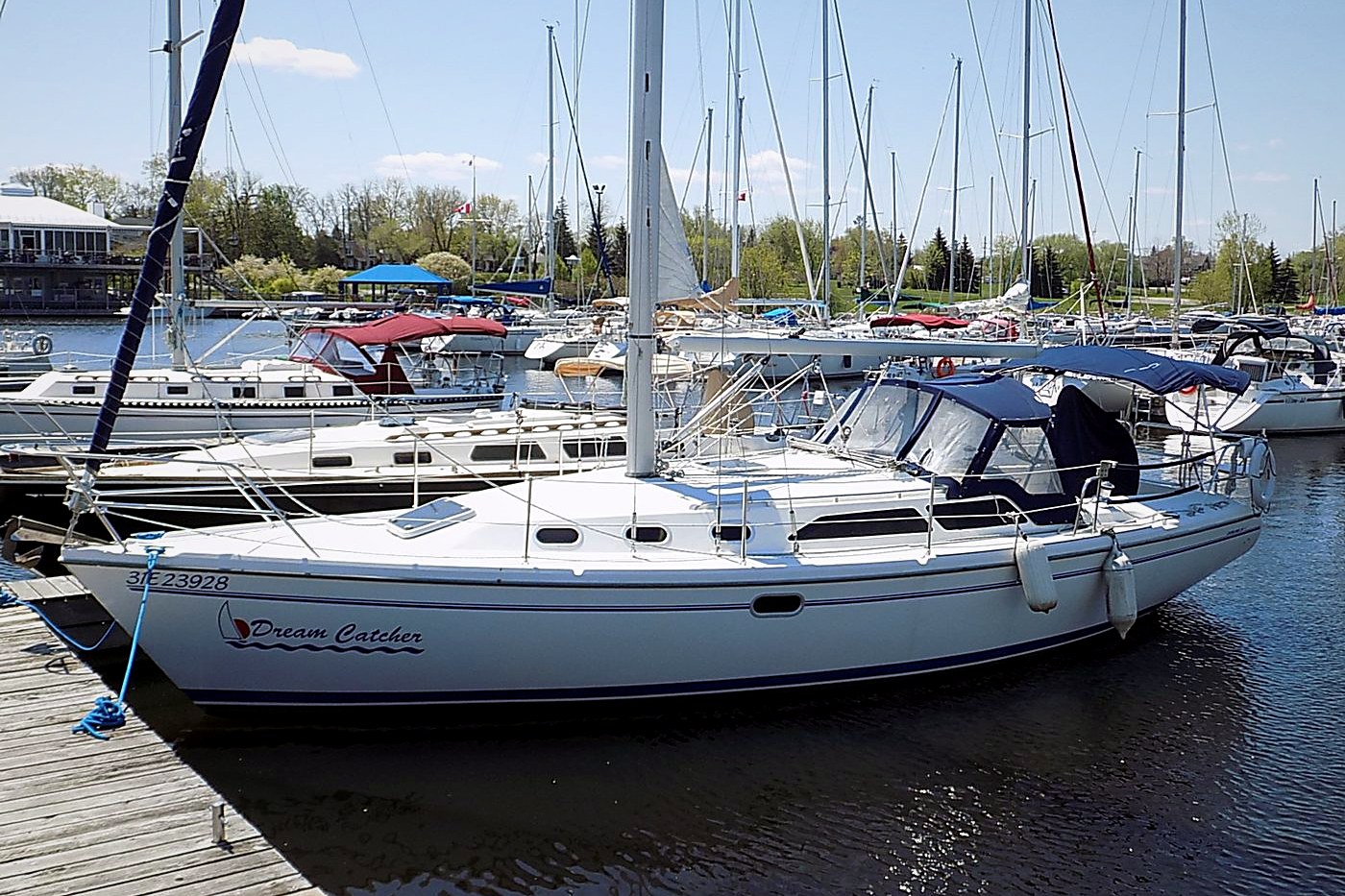
A comfortable coastal cruiser whose MkII update improved the interior, with the wing keel version popular in shallow home waters.
Made to order: your copy is researched, fact-checked, and typeset to our standard, then delivered within about two weeks. We'll email you the moment it's ready.
About the Catalina 34 (1986-1995)
The Catalina 34 is one of America's most successful mid-size cruisers, and the Mark I covered here is the version most buyers find used. Introduced for 1986, it pairs a long waterline, moderate displacement and generous sail area with 6 ft 3 in headroom, a real galley and an aft cabin.
The appeal is space and predictability for the money. Practical Sailor could find no serious objection to any important part of the design: it sails well enough to satisfy, forgives a small crew, and parts stay available because the class is large. From 1990 the cockpit floor ran through the transom, giving the walk-through stern owners call the Mark 1.5.
Specifications at a glance
| Years | 1986 to 1995 (Mark I) |
| Designer | Frank Butler, Catalina Yachts |
| LOA | 34 ft 6 in (10.52 m) |
| LWL | 29 ft 10 in (9.09 m) |
| Beam | 11 ft 9 in (3.58 m) |
| Draft | 5 ft 7 in (1.70 m) fin keel, 3 ft 10 in (1.17 m) wing |
| Displacement | 11,950 lb (5,420 kg), 5,000 lb (2,268 kg) ballast |
| Sail area | 523 sq ft (48.6 sq m), standard rig |
Known issues to check before you buy
- Chainplate leaks. The class weak point: water gets past the chainplates (the straps the shrouds bolt to) and wets the plywood core inside the deck. Look for brown staining on the headliner and soft deck around each plate.
- Keel fairing bond. The filler faired over the lead keel can release from the lead, showing as cracking or weeping at the hull-to-keel joint. Check it while hauled.
- Rudder water intrusion. The foam-cored spade rudder can take on water around its stainless frame. Get a moisture-meter reading, and expect play in the rudder bearing on early boats.
- Undersized heat exchanger. Universal conceded the 2 in heat exchanger on the M25 diesel was too small and recommended a 3 in unit. Symptom: temperature climbing above about 2,500 rpm.
- Early-boat details. Hulls before 1988 leak at the ports and wear out the original mainsheet traveller. On the earliest boats, vibration through the original alternator mount has cracked cylinder heads, so confirm the upgraded mount is fitted.
Owning one
A Catalina 34 is cheap to buy and cheap to keep for a 34 footer, which is why so many still sail. The real work is water management: chainplates, ports, rudder and bilge. This volume documents the Catalina 34 (1986-1995) specifically: verified specifications, the weak points and how to inspect each, service data, and the owner community.
Inside this volume
Known issues & a survey guide
The documented weak points for this exact model, how to inspect each, and what a proper fix costs, a checklist to carry to the survey.
Full specifications
Every published figure, hull and rig or engine detail, tankage, and running change, with the conflicts flagged, not guessed.
Systems & maintenance
Engine, electrical, plumbing, steering, and ground tackle, plus service intervals and the fluid and torque data.
Parts, yards & community
Where the parts are, what cross-references, and the owners associations and forums that keep the model alive.
Make it your boat.
We fold in your year, your engine and options, your refits and modifications, your hull number, and your own boat's photo on the cover. The book stops describing the boat that left the yard and starts describing the one in your slip.