Hunter 33
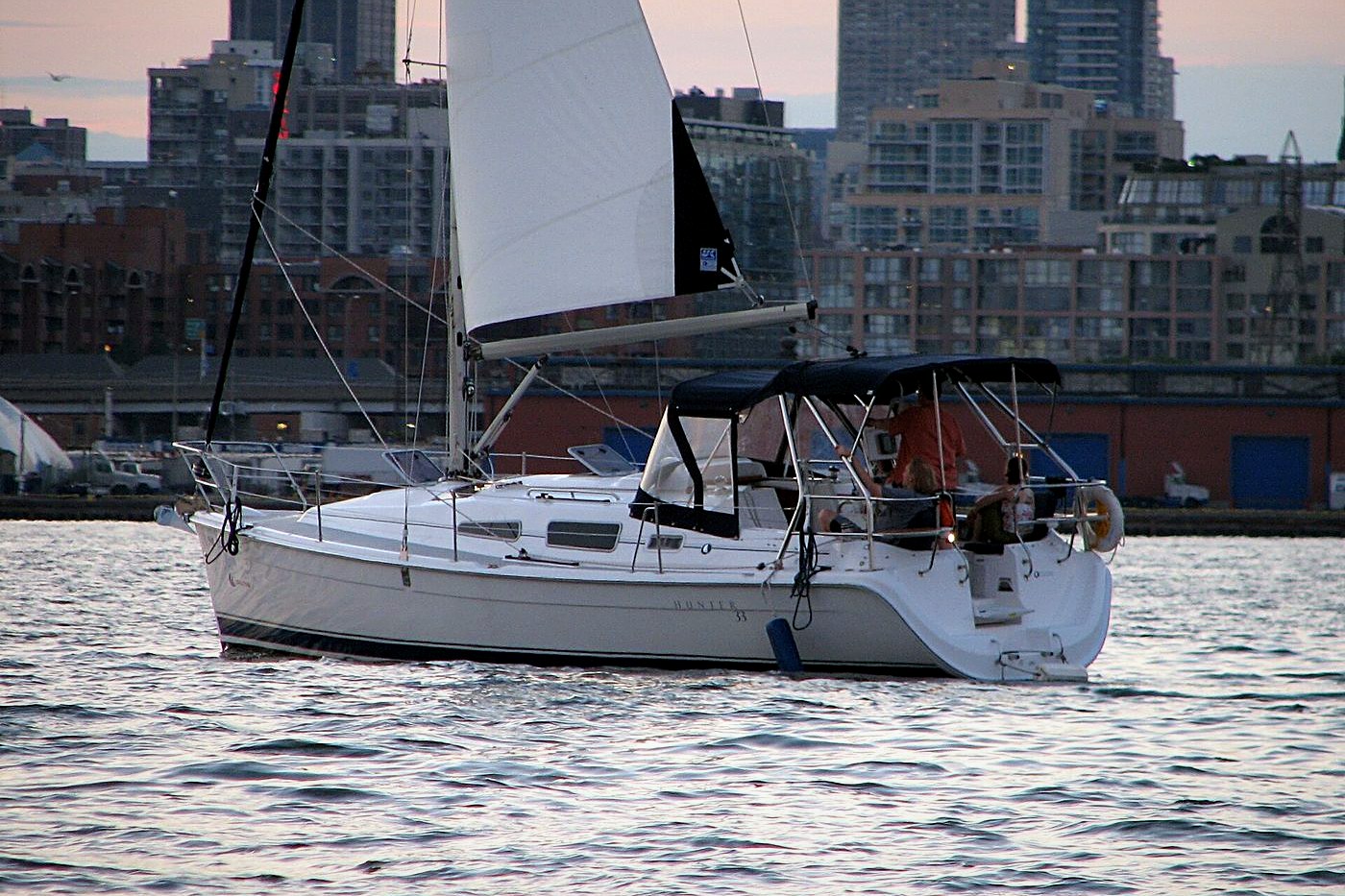
An early Cherubini-designed Hunter with a traditional look, more solidly built than the mass-market Hunters that followed.
Made to order: your copy is researched, fact-checked, and typeset to our standard, then delivered within about two weeks. We'll email you the moment it's ready.
About the Hunter 33 (1977-1983)
This is the boat that established Hunter Marine. Drawn by John Cherubini and built from 1977 to 1983, it shares its look with his other Hunters: a low sheer, a reverse transom, and a conventional masthead sloop rig. It was built to a price, but the hull below the waterline is solid glass, and the fin keel and spade rudder make it quicker than the roomy interior suggests.
The appeal today is cost of entry. These are among the least expensive 33-foot cruisers on the market, they sail respectably, and almost everything aboard is simple enough to fix yourself. The boat is past forty, though, so the survey matters far more than the asking price.
Specifications at a glance
| Years | 1977 to 1983 |
| LOA and LWL | 32.7 ft (9.96 m) and 27.1 ft (8.25 m) |
| Beam | 10.2 ft (3.10 m) |
| Draft | 5.25 ft (1.60 m) fin keel, 4.0 ft (1.22 m) shoal option |
| Displacement | 10,600 lb (4,808 kg) |
| Ballast | 4,100 lb (1,860 kg) |
| Sail area | 497 sq ft (46.2 sq m), masthead sloop |
| Engine | Yanmar 2QM15 diesel, roughly 15 hp |
Known issues to check before you buy
- Deck core at the mast step. The mast is stepped on deck over a compression post that carries the load to the keel. Water finds the wood core around the mast base, the core rots, and the deck slowly compresses. Look for a step sitting low, a cracked cabin liner, and a dull sound when you tap.
- Chainplate and toe-rail leaks. Water tracks down the chainplate bolts, the aluminium toe-rail fasteners, and the port frames. Check the plywood bulkheads the chainplates bolt to for staining, softness, and cracked tabbing at the hull.
- Waterlogged rudder. Owners regularly find the spade rudder full of water, which adds weight and rusts the stock from inside. Tap it for dead spots and feel for play at the rudder tube and packing nut.
- Underpowered engine. The original Yanmar 2QM15 has little in reserve for 10,600 lb into a head sea. Establish whether the boat has been repowered, and inspect the mounts, exhaust elbow, and heat exchanger on an original engine.
- Stuffing box access. The shaft stuffing box is genuinely hard to reach, so it gets ignored. Look for a wet bilge and rust streaks aft; a dripless seal is the usual fix.
Owning one
Nothing here is exotic: the systems are basic, the parts are generic, and the owner forums have solved most of it already. Budget for deck core, rudder, and standing rigging rather than hoping to avoid them. This volume documents the Cherubini-era Hunter 33 (1977-1983): verified specifications, the documented weak points and how to inspect each, service data, and the parts and owner community.
Inside this volume
Known issues & a survey guide
The documented weak points for this exact model, how to inspect each, and what a proper fix costs, a checklist to carry to the survey.
Full specifications
Every published figure, hull and rig or engine detail, tankage, and running change, with the conflicts flagged, not guessed.
Systems & maintenance
Engine, electrical, plumbing, steering, and ground tackle, plus service intervals and the fluid and torque data.
Parts, yards & community
Where the parts are, what cross-references, and the owners associations and forums that keep the model alive.
Make it your boat.
We fold in your year, your engine and options, your refits and modifications, your hull number, and your own boat's photo on the cover. The book stops describing the boat that left the yard and starts describing the one in your slip.