Audi TT
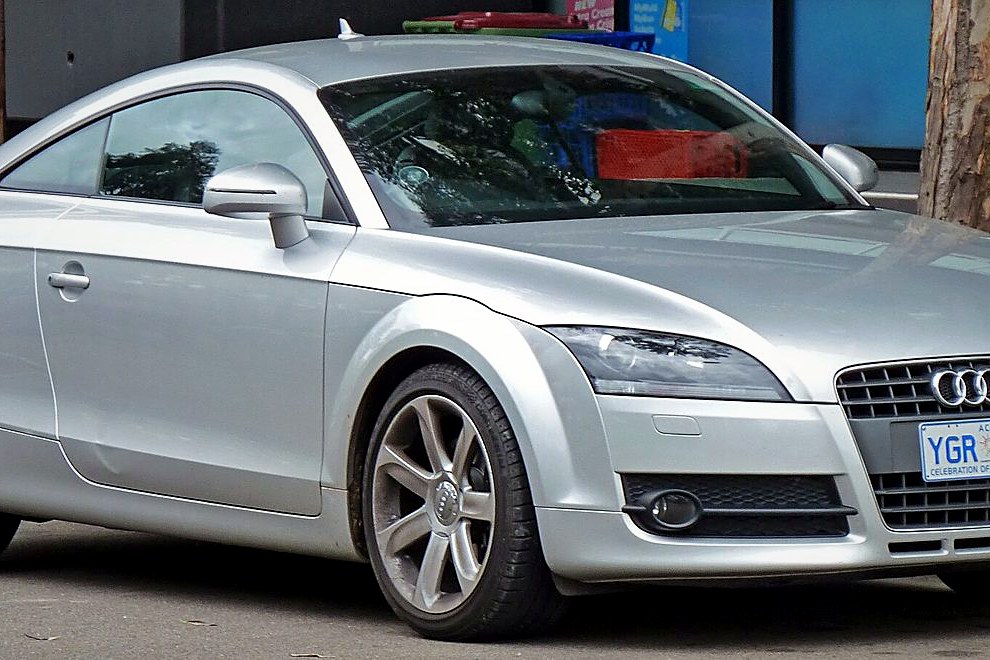
The Bauhaus-inspired coupe that turned Audi into a design brand.
Made to order: your copy is researched, fact-checked, and typeset to our standard, then delivered within about two weeks. We'll email you the moment it's ready.
About the Audi TT (1998-2006)
The first-generation Audi TT, known internally as the 8N, reached showrooms in 1998 looking almost exactly like the concept car that previewed it. Underneath the Bauhaus shell of circles and arcs sat the same platform as the Volkswagen Golf Mk4, which is why a TT is cheaper to keep than its looks suggest.
The drivetrain separates one car from the next. The 1.8 litre turbocharged four came in 180 or 225 PS tune, the 225 always with quattro all-wheel drive, and from 2003 a 250 PS 3.2 litre V6 added one of the first DSG dual-clutch gearboxes.
Specifications at a glance
| Years | 1998 to 2006 |
| Engines | 1.8 L turbocharged inline-four (1,781 cc), 3.2 L V6 (3,189 cc) from 2003 |
| Output | 180 or 225 PS (178 or 222 bhp) on the 1.8T, 250 PS (247 bhp) on the 3.2 |
| Torque | 235, 280 and 320 Nm (173, 207 and 236 lb-ft) respectively |
| Transmission | 5-speed or 6-speed manual, 6-speed DSG dual-clutch on the 3.2 |
| Layout | front engine, front-wheel drive or quattro all-wheel drive |
| Bodies | coupe and roadster |
Known issues to check before you buy
- Timing chain tensioner (1.8T). The chain linking the two camshafts runs on an originally plastic-backed tensioner. If it fails the chain jumps and the engine is ruined. Listen for a rattle on cold start, and ask whether the metal-backed update is fitted.
- Ignition coil packs. They fail without warning: sudden misfire, flashing engine light, reduced power. Cheap as a set, but sort them before diagnosing anything else.
- Haldex servicing on quattro cars. The rear-axle clutch that drives quattro needs oil roughly every 20,000 miles and oil plus filter every 40,000. Neglected fluid kills the pump, and the car quietly drives as a front-wheel-drive TT. Ask for receipts.
- The 1999 stability recall. After high-speed accidents in Germany, Audi recalled early cars for revised suspension, a boot spoiler and updated ESP. On a 1999 or early 2000 car, confirm the work was done.
- Cluster pixels and water ingress. Display segments fade until the readout is unreadable, and only a repair or exchange unit cures it. Tired seals also let water into the boot well, the usual root cause of electrical faults.
Owning one
A TT is affordable by sports car standards as long as the cambelt, the tensioner and the quattro hardware are up to date, and the cheapest cars to buy are usually the most expensive to own. This volume documents the Audi TT (1998-2006) specifically: verified specifications, the documented weak points and how to inspect each, the service data, and the parts and owner community.
Inside this volume
Known issues & a survey guide
The documented weak points for this exact model, how to inspect each, and what a proper fix costs.
Full specifications
Every published figure, engine option, and running change, with the conflicts flagged, not guessed.
Systems & maintenance
Electrical, fuel, cooling, and drivetrain, plus service schedules and torque and fluid data.
Parts & community
Where the parts are, what cross-references, and the clubs and forums that keep the model alive.
Make it your car.
We fold in your year, your engine and options, your refits and modifications, your VIN, and your own car's photo on the cover. The book stops describing the car that left the factory and starts describing the one in your garage.