BMW 3-Series
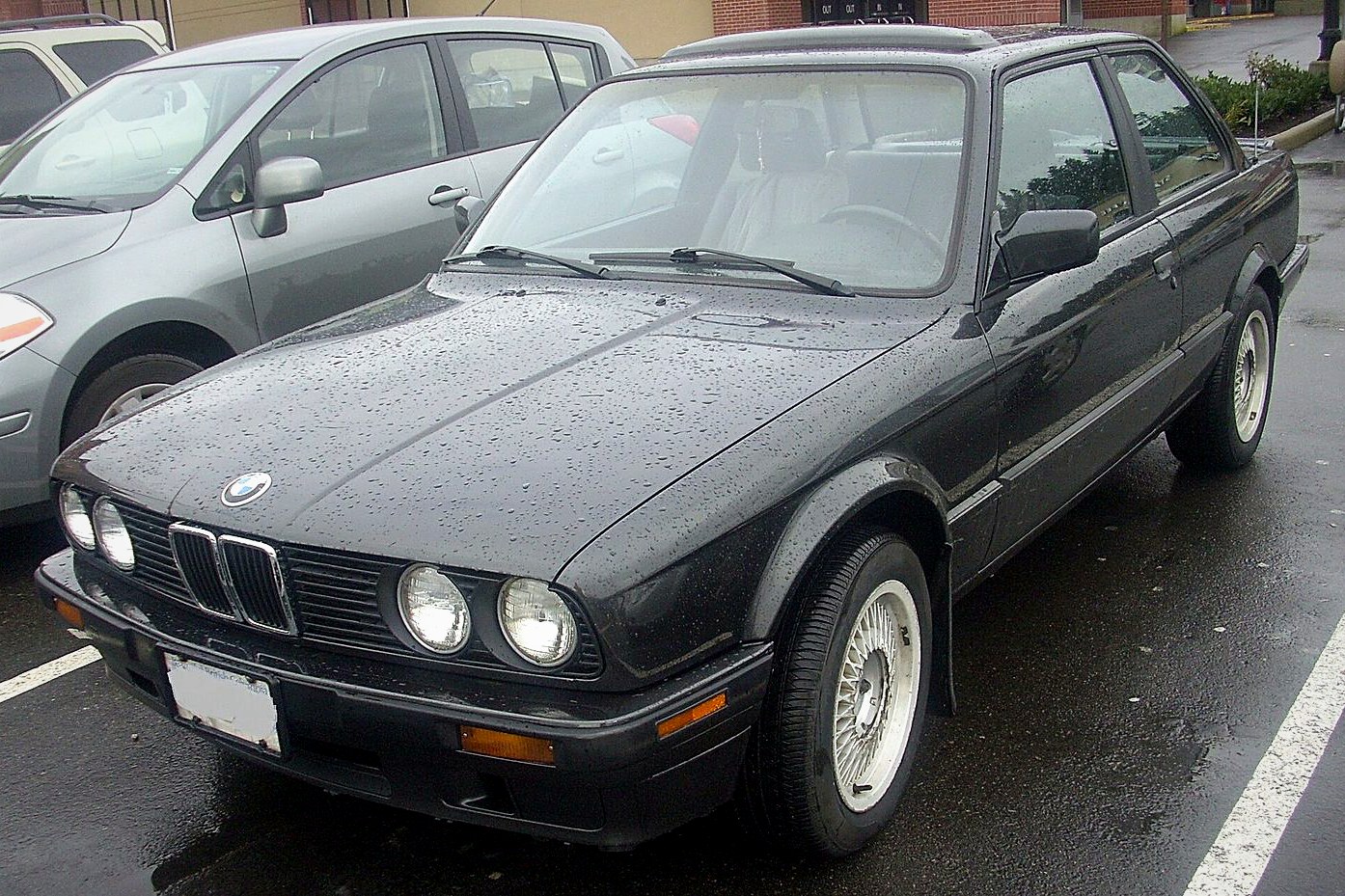
The definitive 1980s BMW, offered in coupe, sedan, touring, and convertible.
Made to order: your copy is researched, fact-checked, and typeset to our standard, then delivered within about two weeks. We'll email you the moment it's ready.
About the BMW 3-Series (1982-1994)
The E30 is the second-generation 3 Series, the car that made BMW's compact saloon an institution. Built from 1982 to 1994 as a two- or four-door saloon, with a convertible from 1985, a Touring estate from 1987 and the homologation-special M3, it ran to about 2.34 million cars. Engines spanned a 1.6 litre four to the 2.5 litre M20 six.
The appeal is the balance. A 325i weighs little over 1,200 kg, steers hydraulically, drives the rear wheels through a five-speed manual, and asks to be revved. Everything is mechanical and reachable, parts supply is enormous, and clean examples keep climbing in value.
Specifications at a glance
| Years | 1982 to 1994 |
| Engine (325i) | 2.5 L M20 single-cam inline six (2,494 cc) |
| Output | 170 PS (168 bhp) at 5,800 rpm |
| Torque | 222 Nm (164 lb-ft) at 4,300 rpm |
| Transmission | 5-speed manual or 4-speed automatic |
| Layout | front engine, rear-wheel drive |
| Production | about 2.34 million (all E30) |
Known issues to check before you buy
- Rust, in known places. Check the jacking-point pinch welds under each sill, the battery tray, the rear shock towers, the rear wheel arches and the base of the windscreen. Lift the trunk mat and carpets first.
- M20 timing belt. The six uses a rubber belt, replaced every 40,000 to 60,000 miles or four to five years, with the tensioner and water pump. A snapped belt can bend valves, so insist on a dated receipt.
- M20 cylinder head cracks. Hairline cracks form under the front camshaft journals, and the 885 casting can crack between coolant passage and cylinder after an overheat. The symptom is coolant vanishing with no external leak.
- Brittle cooling parts. The expansion tank, thermostat housing and radiator end tanks go hard with age and let go without warning, and a tired fan clutch makes it worse. Assume the whole system unless it has been renewed.
- M42 318is, 1990 on. The rubber profile gasket at the front of the cylinder head cracks and lets coolant into the oil, and the timing chain roller gear bolt can fail at high mileage. Check the oil for coolant.
- Cabin and electrics. Cracked dashboards are close to universal, and erratic fuel and temperature gauges plus failed window and sunroof motors are all common. Work every switch.
Owning one
An E30 is cheap to run and satisfying to fix, so the decision comes down to bodywork: welded sills and shock towers cost far more than any engine job. This volume documents the BMW 3-Series (1982-1994) specifically: verified specifications, the documented weak points and how to inspect each, the service data, and the parts and owner community.
Inside this volume
Known issues & a survey guide
The documented weak points for this exact model, how to inspect each, and what a proper fix costs.
Full specifications
Every published figure, engine option, and running change, with the conflicts flagged, not guessed.
Systems & maintenance
Electrical, fuel, cooling, and drivetrain, plus service schedules and torque and fluid data.
Parts & community
Where the parts are, what cross-references, and the clubs and forums that keep the model alive.
Make it your car.
We fold in your year, your engine and options, your refits and modifications, your VIN, and your own car's photo on the cover. The book stops describing the car that left the factory and starts describing the one in your garage.