BMW M3
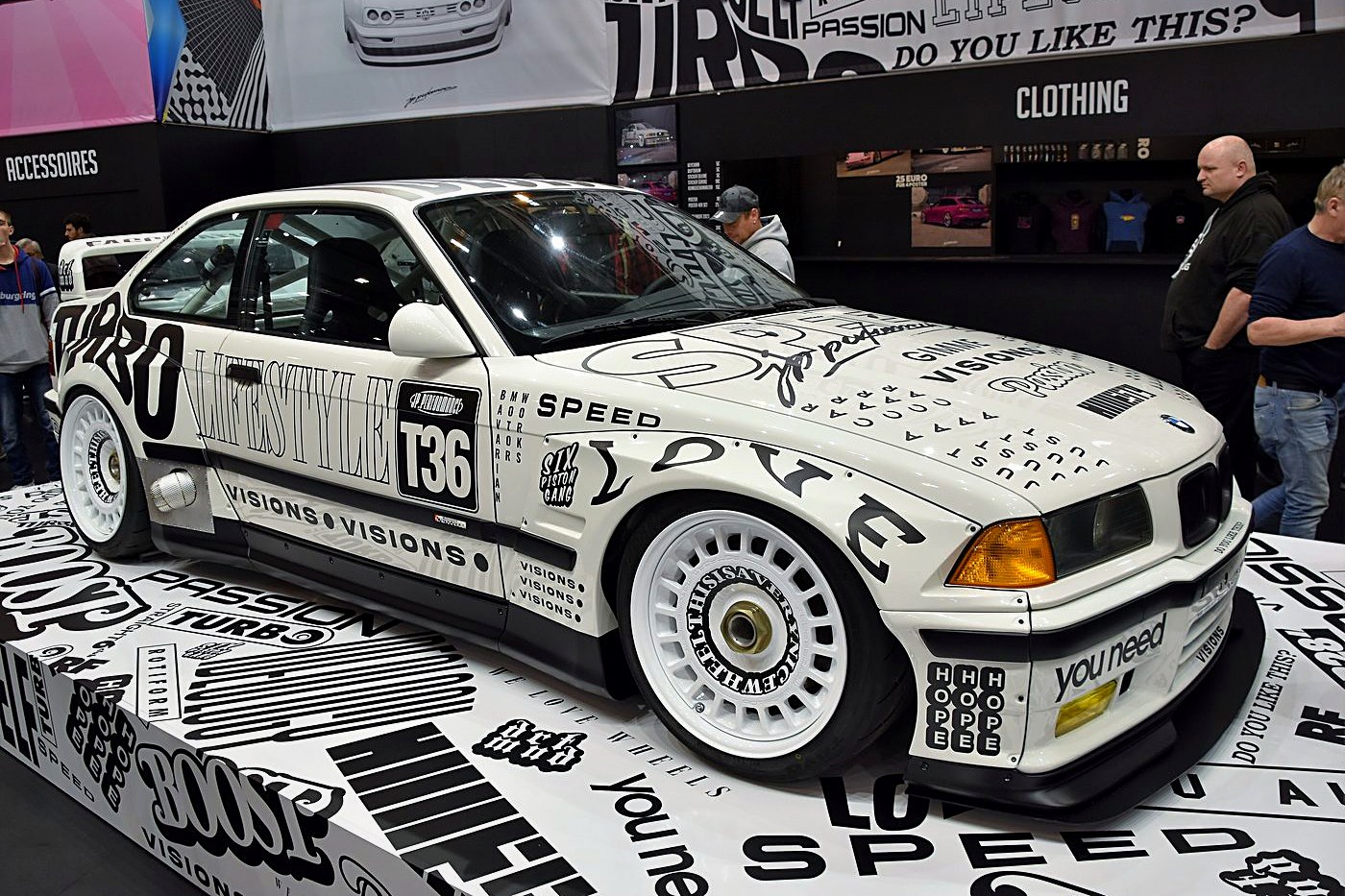
The straight-six M3 that made the badge attainable for a generation.
Made to order: your copy is researched, fact-checked, and typeset to our standard, then delivered within about two weeks. We'll email you the moment it's ready.
About the BMW M3 (E36) (1992-1999)
The E36 is the generation that turned the M3 from a race homologation special into a car BMW could sell in volume. Launched in 1992, it dropped the four-cylinder for the S50, a straight-six with an individual throttle body per cylinder and VANOS variable valve timing, and came as a coupe, convertible or saloon. More than 71,000 were built, four times the E30 total.
The appeal is that breadth: a high-revving six and rear-wheel drive in a car you can use daily. One caution matters most: Europe got 286 PS and later 321 PS, while North America got a separate, detuned engine. They are not the same car, and many parts do not interchange.
Specifications at a glance
| Years | 1992 to 1999 |
| Engine, Europe | 3.0 L S50B30 six (2,990 cc), then 3.2 L S50B32 (3,201 cc) late 1995 on |
| Engine, US | S50B30US, then S52B32US (3,152 cc) late 1996 on |
| Output | Europe 286 PS (282 hp), then 316 hp at 7,400 rpm; US 240 hp |
| Torque | Europe 320 Nm (236 lb-ft), then 350 Nm (258 lb-ft); US 305 Nm, then 320 Nm |
| Transmission | 5-speed manual; 6-speed on the 1996-on Evolution (not US); SMG option from 1997 |
| Layout | front engine, rear-wheel drive |
| Production | 46,525 coupes, 12,114 convertibles, 12,603 saloons |
Known issues to check before you buy
- Cooling system. Thermostat housing, expansion tank and radiator necks are plastic and go brittle. US engines also use a plastic water-pump impeller that fails past roughly 60,000 miles. One overheat warps the head.
- VANOS. The dual-VANOS unit on the 3.2 is the offender: worn solenoid seals give a fluctuating idle and hesitation under hard acceleration, and worn gears growl. Specialists reseal it every 50,000 miles.
- Rear subframe mounts. The floor around the four rear subframe mounts cracks, worse on lowered or tracked cars. BMW itself makes the reinforcement stampings used to repair it. Inspect from underneath.
- Valve clearances, European engines. Euro S50 engines use shims under the buckets, so clearances need periodic checking and loose ones quietly cost power. US engines have hydraulic lifters instead.
- Gearbox, differential, rear suspension. Six-speed cars wear second and third synchros, so feel for a crunch on a quick downshift. The differential gets noisy at high mileage, and trailing-arm bushes and rear damper top mounts always perish.
Owning one
An E36 M3 is cheap to buy next to the M3s either side of it and not cheap to fix, so deferred maintenance is the real price. This volume documents the BMW M3 (E36, 1992-1999) specifically: verified specifications, the documented weak points and how to inspect each, the service data, and the parts and owner community that keep them on the road.
Inside this volume
Known issues & a survey guide
The documented weak points for this exact model, how to inspect each, and what a proper fix costs.
Full specifications
Every published figure, engine option, and running change, with the conflicts flagged, not guessed.
Systems & maintenance
Electrical, fuel, cooling, and drivetrain, plus service schedules and torque and fluid data.
Parts & community
Where the parts are, what cross-references, and the clubs and forums that keep the model alive.
Make it your car.
We fold in your year, your engine and options, your refits and modifications, your VIN, and your own car's photo on the cover. The book stops describing the car that left the factory and starts describing the one in your garage.