Chevrolet Bel Air
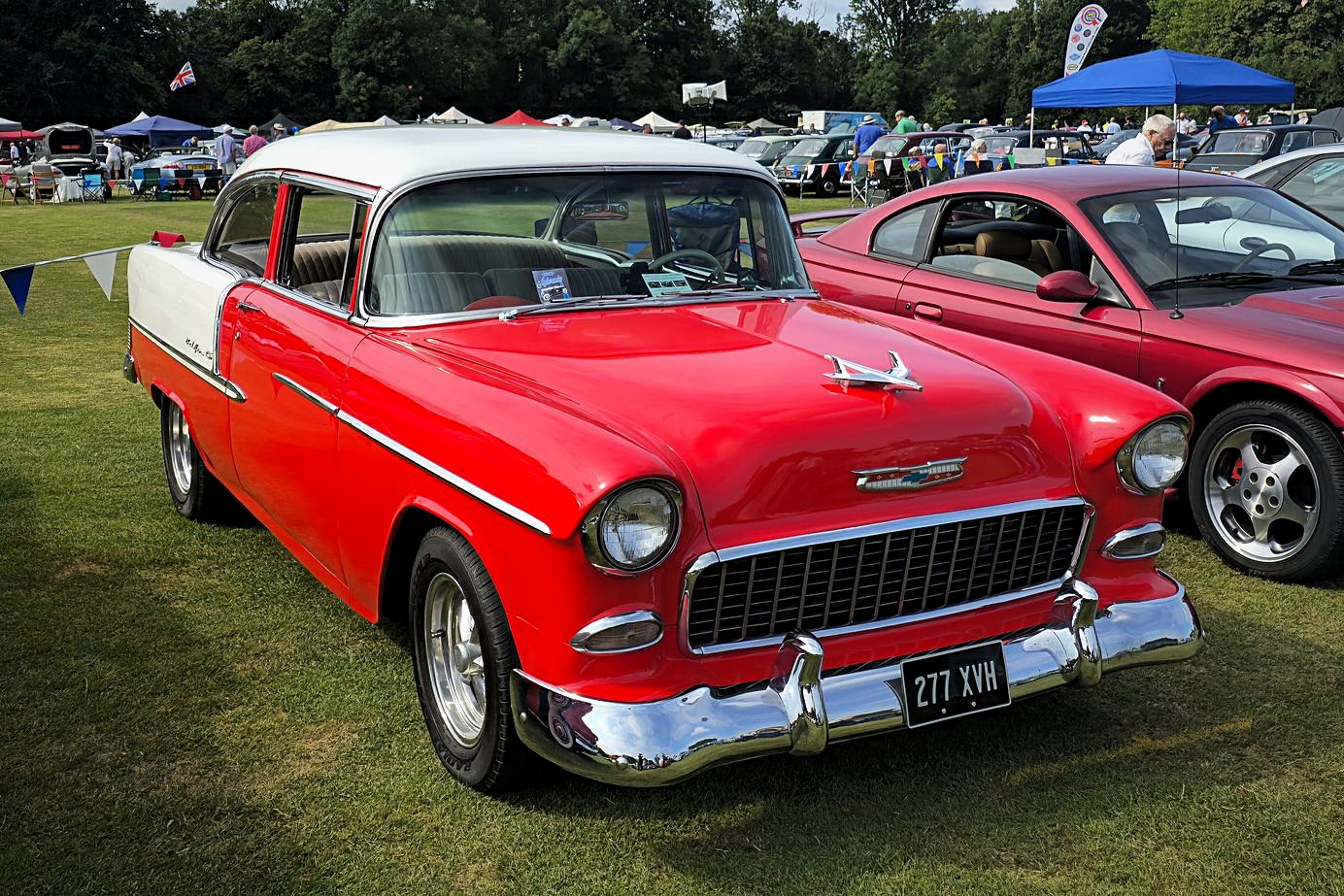
The Tri-Five Chevy, a defining shape of 1950s American motoring.
Made to order: your copy is researched, fact-checked, and typeset to our standard, then delivered within about two weeks. We'll email you the moment it's ready.
About the Chevrolet Bel Air (1955-1957)
The Tri-Five Chevrolets are the definitive American classics. 1955 brought an all-new body and the 265 cu in small-block V8, the engine that remade Chevrolet. 1957 added fins, the 283 cu in V8 and, with Rochester Ramjet fuel injection, one horsepower per cubic inch. Bel Air was the top series all three years: extra chrome, better interiors, the hardtops and convertibles everyone wants.
Nothing about owning one is hard. Reproduction sheet metal, interiors and driveline parts are as available as for any old car, and the small-block is the best understood engine there is. Value tracks body style, a 1957 Sport Coupe or convertible at the top, a four-door at the bottom.
Specifications at a glance
| Years | 1955 to 1957 |
| Engines | 235 cu in (3.9 L) six and 265 cu in (4.3 L) V8 (1955-56), 283 cu in (4.6 L) V8 from 1957 |
| Output | 162 hp (265 V8, 1955) to 283 hp (fuel-injected 283, 1957) |
| Transmissions | 3-speed manual, overdrive, 2-speed Powerglide; Turboglide from 1957 |
| Layout | front engine, rear drive, body-on-frame |
| Wheelbase | 115 in (2,921 mm) |
| Production | 702,220 Bel Airs, 1957 |
Known issues to check before you buy
- Rust in the structure, not just the panels. Check the trunk floor and the drop-offs beside it, the inner rockers, floor pans, cowl and lower A-pillar, and where the rear wheelhouse meets the rocker. Lift the trunk mat and carpet.
- The 1955 265 V8 has no full-flow oil filter. The first-year block had no provision for one, and the optional bypass filter cleaned only part of the oil. Early 265s also cracked pistons. Chevrolet fixed both for 1956, so ask what has been done inside.
- Turboglide, 1957 only. Buyers avoided this turbine automatic when new, and parts and rebuilders are scarce. Many were converted to Powerglide, so confirm what is under the car.
- Series identity. Check the VIN before paying Bel Air money: a 1957 V8 Bel Air begins VC57 (A is a 150, B a 210, C a Bel Air), so a VB57 in Bel Air trim is a dressed-up 210. Compare it with the cowl tag.
- Fuel-injection claims. The 283 hp Ramjet was a rare $500 option in 1957, and most fuel-injected cars now are conversions. Ask for paperwork.
Owning one
A Tri-Five is the easiest old car to run and the easiest to overpay for: trim and paint hide the things that cost real money, structural rust and a false identity. This volume documents the Chevrolet Bel Air (1955-1957) specifically: verified specifications, the weak points and how to inspect each, service data, and the owner community.
Inside this volume
Known issues & a survey guide
The documented weak points for this exact model, how to inspect each, and what a proper fix costs.
Full specifications
Every published figure, engine option, and running change, with the conflicts flagged, not guessed.
Systems & maintenance
Electrical, fuel, cooling, and drivetrain, plus service schedules and torque and fluid data.
Parts & community
Where the parts are, what cross-references, and the clubs and forums that keep the model alive.
Make it your car.
We fold in your year, your engine and options, your refits and modifications, your VIN, and your own car's photo on the cover. The book stops describing the car that left the factory and starts describing the one in your garage.