Chevrolet Camaro
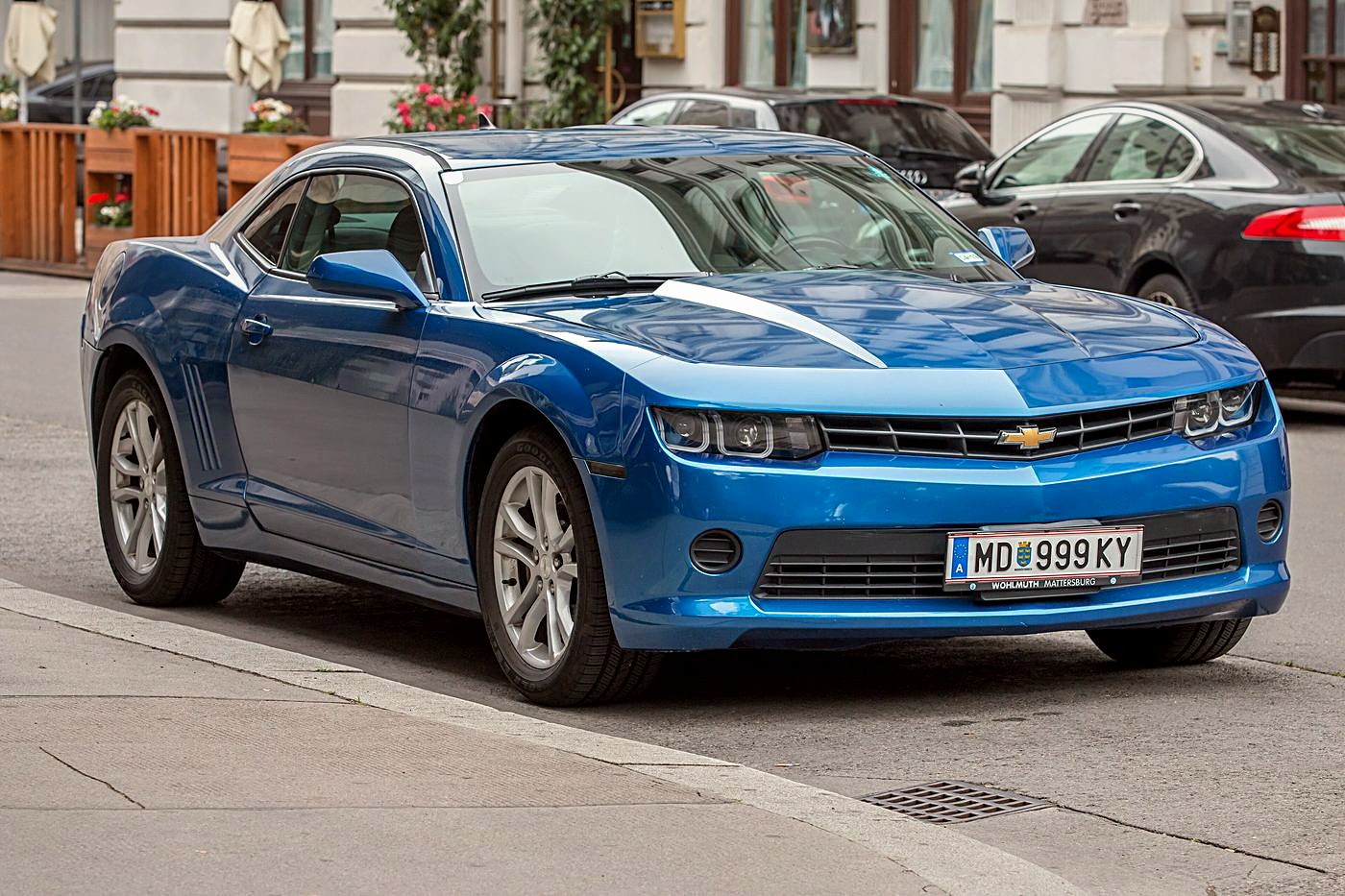
The retro-revival Camaro that brought the nameplate back after an eight-year gap.
Made to order: your copy is researched, fact-checked, and typeset to our standard, then delivered within about two weeks. We'll email you the moment it's ready.
About the Chevrolet Camaro (2010-2015)
The fifth-generation Camaro brought the nameplate back after an eight-year gap by leaning hard on the 1969 original: high shoulders, a slot of a windshield, quad tail lamps. Underneath it was modern, built on the rear-drive Zeta platform shared with the Holden Commodore, with independent rear suspension in place of the live axle of every earlier Camaro.
The appeal depends on which one you buy. A V6 is a comfortable, surprisingly quick cruiser. The SS, with the Corvette-derived 6.2 litre LS3, is the value proposition of modern muscle: cheap to buy, easy to tune, genuinely fast. Above it sit the supercharged ZL1 and the track-focused Z/28, both now collectible.
Specifications at a glance
| Years | 2010 to 2015 |
| Engines | 3.6 L V6 (LLT 2010-2011, LFX 2012-2015); 6.2 L V8 in the SS; supercharged 6.2 L LSA in the ZL1; 7.0 L LS7 in the Z/28 |
| Output | V6 304 to 323 hp; SS 426 hp (LS3, manual) or 400 hp (L99, automatic); ZL1 580 hp |
| Torque | SS 420 lb-ft (569 Nm); ZL1 556 lb-ft (754 Nm) |
| Transmission | 6-speed manual or 6-speed automatic |
| Layout | front engine, rear-wheel drive |
| Body styles | coupe from 2010, convertible from 2011 |
Known issues to check before you buy
- V6 timing chain (2010-2011 LLT). The chains stretch, sometimes by 50,000 miles, setting timing-correlation codes and a cold-start rattle. GM revised the design for the 2012 LFX. Long oil-change intervals make it worse, so ask for oil records and read the codes.
- Ignition key recall, 2010-2014 (NHTSA 14V-346). All 464,712 cars built from December 2008 to May 2014 could have the key knocked out of the run position by the driver's knee, cutting the engine and disabling the airbags. Confirm by VIN that the key was replaced.
- Clutch master cylinder, manual cars. The pedal stays on the floor or returns slowly as the cylinder fails internally. GM covered it under Special Coverage 14717 to 10 years or 120,000 miles, which has now expired, so work the pedal repeatedly when hot.
- Wheel hop. The soft factory rear cradle and differential bushings let the assembly move under hard acceleration, shaking the car and stressing the driveline. Common on the SS: look for upgraded bushings or driveline repairs.
- Water in the trunk. Sunroof and deck drains dump into the trunk when they separate or clog, soaking the spare-tire well and the wiring under it. Lift the liner and feel for damp carpet.
- Direct-injection carbon and oil use. Both V6s build carbon on the intake valves and can use noticeable oil. Check the level warm.
Owning one
Parts are everywhere and an SS is among the cheapest fast cars you can run, but visibility is poor, the plastics are cheap and a neglected V6 can hand you an engine bill. This volume documents the Chevrolet Camaro (2010-2015) specifically: verified specifications, the documented weak points and how to inspect each, service data, and the parts and owner community behind the car.
Inside this volume
Known issues & a survey guide
The documented weak points for this exact model, how to inspect each, and what a proper fix costs.
Full specifications
Every published figure, engine option, and running change, with the conflicts flagged, not guessed.
Systems & maintenance
Electrical, fuel, cooling, and drivetrain, plus service schedules and torque and fluid data.
Parts & community
Where the parts are, what cross-references, and the clubs and forums that keep the model alive.
Make it your car.
We fold in your year, your engine and options, your refits and modifications, your VIN, and your own car's photo on the cover. The book stops describing the car that left the factory and starts describing the one in your garage.