Ford Ranger
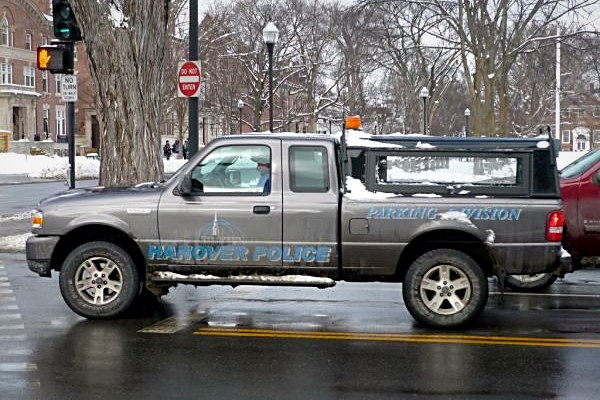
Ford's first purpose-built compact pickup for North America.
Made to order: your copy is researched, fact-checked, and typeset to our standard, then delivered within about two weeks. We'll email you the moment it's ready.
About the Ford Ranger (1983-1992)
The first-generation Ford Ranger arrived in early 1982 as a 1983 model, Ford's first purpose-built North American compact pickup and the replacement for the Mazda-sourced Ford Courier. Designed and built in the United States, it gave Ford a home-grown answer to the small trucks that were selling in huge numbers, offering a simple body-on-frame design, a wide spread of four-cylinder and V6 engines, and both rear-wheel drive and part-time four-wheel drive.
It worked. The Ranger became the best-selling compact truck in the United States, a title it held from 1987 well into the 2000s. These early trucks are honest, mechanically straightforward, and cheap to keep running, which is exactly why they remain popular as work trucks, first vehicles, and clean-title project builds today. Their character is all utility: no pretense, a huge parts network, and a design almost anyone can wrench on in a driveway.
Specifications at a glance
| Years | 1983 to 1992 (first generation) |
| Engines | 2.0 L and 2.3 L Lima inline-four, 2.8 L / 2.9 L / 4.0 L Cologne V6, 3.0 L Vulcan V6, plus 2.2 L Perkins diesel and 2.3 L Mitsubishi turbo-diesel (early) |
| Output | about 59 hp (2.2 diesel) to 160 hp (4.0 V6) |
| Transmissions | 4-speed and 5-speed manual, 3-speed and 4-speed automatic |
| Layout | front engine, rear-wheel drive or part-time 4WD |
| Body styles | regular cab and extended SuperCab |
| Assembly | United States (Louisville, Kentucky; Edison, New Jersey; Twin Cities, Minnesota) |
Known issues to check before you buy
- Frame and bed rust. These trucks are old and were used hard. Inspect the frame rails, the rear crossmember, cab corners, rocker panels, and the bed floor, and probe anywhere mud and salt collect.
- 2.9 V6 cylinder heads. The 2.9 Cologne V6 has a documented reputation for cracked heads and failing exhaust valve seats, often traced to overheating. Check for coolant in the oil, a rough idle, and any history of running hot.
- Twin-Traction Beam front end (4WD). The 4WD trucks use Ford's TTB swing-axle front suspension. Check for worn ball joints, tired radius-arm bushings, and uneven tire wear, all of which point to a front end that needs attention.
- General age items. Expect worn lifters or cam bearings on high-mile engines, tired clutches, leaky rear axle seals, and brittle wiring, vacuum lines, and rubber throughout.
Owning one
A first-generation Ranger rewards the buyer who inspects carefully and rewards the owner who does basic maintenance, because parts are cheap and plentiful and the mechanicals are simple enough to service at home. This volume documents the Ford Ranger (1983-1992) specifically: verified specifications, the documented weak points and how to inspect each, the service data, and the parts and owner community that keep them on the road.
Inside this volume
Known issues & a survey guide
The documented weak points for this exact model, how to inspect each, and what a proper fix costs.
Full specifications
Every published figure, engine option, and running change, with the conflicts flagged, not guessed.
Systems & maintenance
Electrical, fuel, cooling, and drivetrain, plus service schedules and torque and fluid data.
Parts & community
Where the parts are, what cross-references, and the clubs and forums that keep the model alive.
Make it your car.
We fold in your year, your engine and options, your refits and modifications, your VIN, and your own car's photo on the cover. The book stops describing the car that left the factory and starts describing the one in your garage.