Bimota KB1
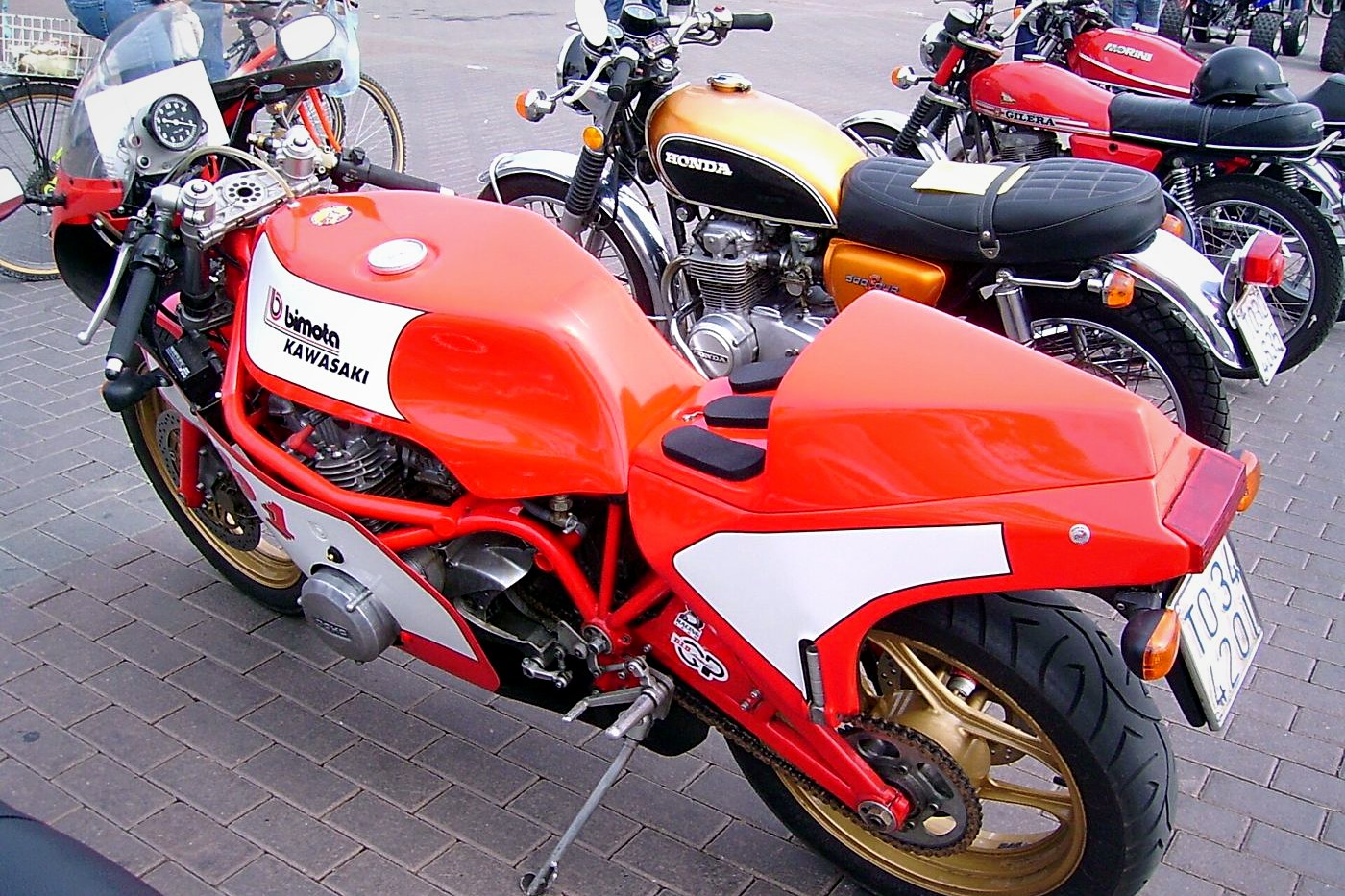
Bimota's first Kawasaki-engined machine, wrapping the Z1000 four in a jewel-like chrome-moly frame and hand-laid bodywork.
Made to order: your copy is researched, fact-checked, and typeset to our standard, then delivered within about two weeks. We'll email you the moment it's ready.
About the Bimota KB1
The Bimota KB1 was the bike that turned a small Rimini chassis workshop into a household name among serious riders. Built from 1978, it paired Bimota's own hand-welded tubular frame with a proven Kawasaki inline-four (the "K" in KB stands for Kawasaki, "B" for Bimota), most commonly the 1015 cc Z1000 unit and, in early cars, the 903 cc Z1 engine. The idea was simple and radical for its day: take a strong but softly framed Japanese superbike engine and wrap it in a rigid, light, precisely engineered Italian chassis.
Designed by Massimo Tamburini, who later penned the Ducati 916 and the MV Agusta F4, the KB1 was reportedly his own favorite. He chased weight and handling rather than headline horsepower, and the result was a rare, expensive, jewel-like machine. Only 827 were ever built, and all but 16 left the factory as kits for the owner to assemble, which makes a genuine, correctly built example a true collector's motorcycle today.
Specifications at a glance
| Years | 1978 to 1982 |
| Engine | Kawasaki air-cooled DOHC inline-four (903 cc Z1 or 1015 cc Z1000) |
| Output | about 84 hp at 7,950 rpm (1015 cc) |
| Transmission | 5-speed manual, chain final drive |
| Frame | multi-tubular steel backbone (Bimota) |
| Dry weight | about 190 kg (419 lb) |
| Production | 827 units total (16 factory-assembled) |
Known issues to check before you buy
- Originality and provenance. Because most were sold as kits, build quality varies rider to rider. Confirm frame and engine numbers, and look for a documented history. Incorrect or replacement engines and non-original bodywork hurt value sharply.
- Frame and welds. The tubular steel frame is the whole point of the bike. Inspect welds and tube junctions for cracks, prior repair, or corrosion, especially around the steering head and engine mounts.
- Parts scarcity. Bimota-specific components (fairing, bodywork, tank, footrest and yoke castings) are extremely hard to source. The Kawasaki engine internals are well supported, but the Italian chassis parts are not.
- Fasteners and finish. Original alloy castings, hardware, and the fiberglass bodywork are difficult to replace correctly. Check for cracked glass, botched refinishing, and mismatched fasteners.
Owning one
A KB1 is a rider's bike and a museum piece at once, best enjoyed by an owner who values precise handling and rarity over outright speed. This volume documents the Bimota KB1 specifically: verified specifications, the documented weak points and how to inspect each, the service data, and the specialist parts and owner community that keep them running.
Inside this volume
Known issues & a buyer's guide
The documented weak points for this exact model, how to inspect each, and what a proper fix costs.
Full specifications
Every published figure, engine and frame detail, and running change, with the conflicts flagged, not guessed.
Systems & maintenance
Engine, fueling, electrical, and chassis, plus service intervals and torque and fluid data.
Parts & community
Where the parts are, what cross-references, and the clubs and forums that keep the model alive.
Make it your bike.
We fold in your year, your engine and options, your rebuilds and modifications, your VIN, and your own motorcycle's photo on the cover. The book stops describing the bike that left the factory and starts describing the one in your garage.