BSA A10 Golden Flash
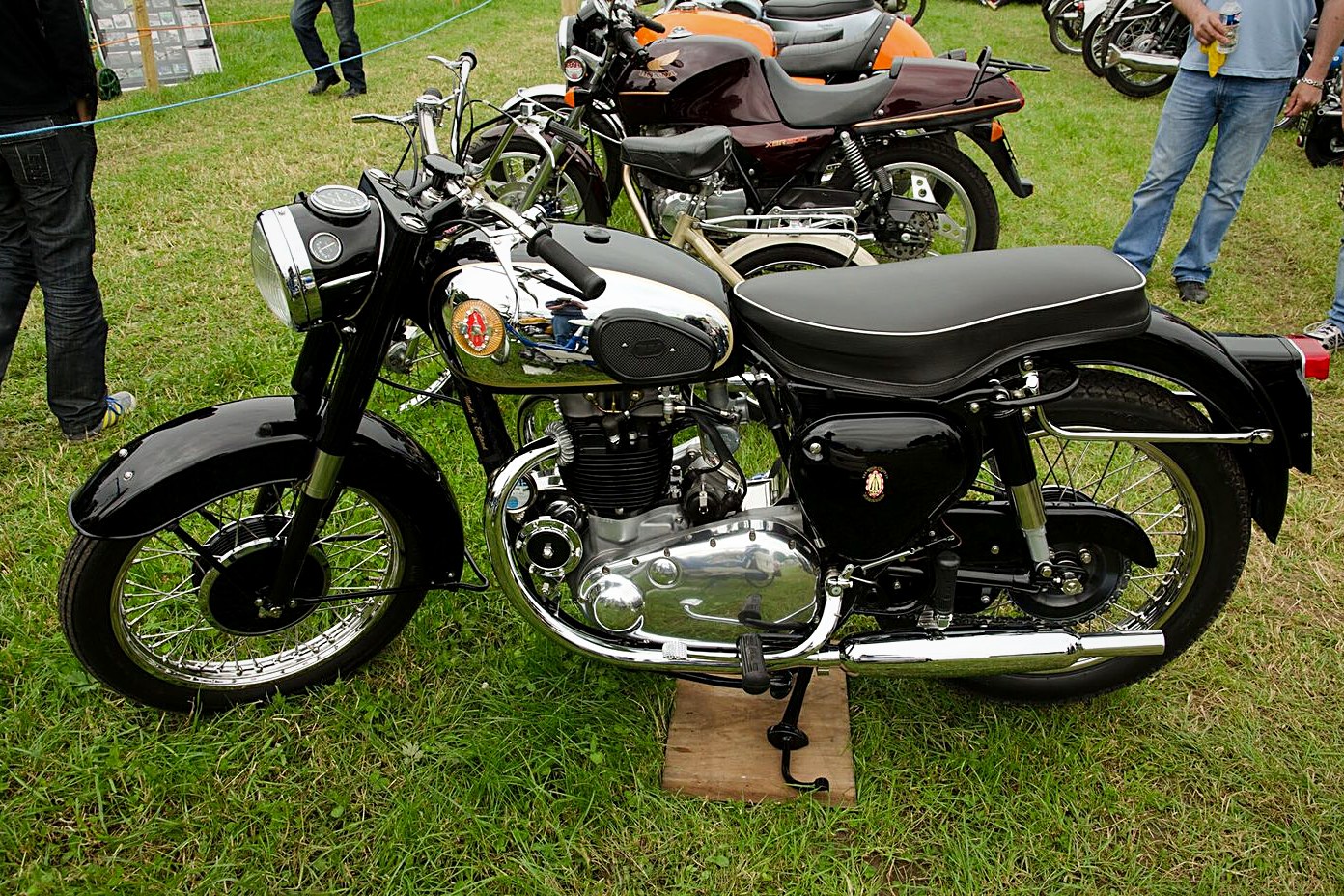
The pre-unit 650 twin that was a mainstay of British sidecar and touring riders.
Made to order: your copy is researched, fact-checked, and typeset to our standard, then delivered within about two weeks. We'll email you the moment it's ready.
About the BSA A10 Golden Flash (1950-1963)
The Golden Flash was BSA's answer to the postwar big-twin boom: a 646 cc overhead-valve parallel twin designed by Bert Hopwood at Small Heath and launched for 1950 in the beige-gold paint that named it. Built for touring and sidecar work rather than racing, it made a claimed 35 bhp with easy low-down torque, and most went to the United States. Production ran to 1963, when the unit-construction A65 replaced it.
The appeal now is what it was then: an easy, long-legged twin that is usable on real roads. Early bikes have a rigid or plunger frame; the swinging-arm frame from 1954 is the one to ride. Parts supply is excellent, and the sporting Road Rocket and Super Rocket share most of the hardware.
Specifications at a glance
| Years | 1950 to 1963 |
| Engine | 646 cc air-cooled overhead-valve parallel twin |
| Bore and stroke | 70 x 84 mm |
| Output | 35 bhp (sources differ on peak rpm) |
| Transmission | 4-speed, chain final drive |
| Chassis | rigid or plunger to 1954, swinging arm after |
| Electrics | magneto ignition, dynamo charging (alternator, 1961 on) |
| Dry weight | 395 lb (179 kg) |
Known issues to check before you buy
- Timing-side main bearing. The crankshaft runs in a plain bush here; as it wears, oil pressure falls, taking the big ends and often the crank with it. Check pressure hot; the fix is the SRM needle-roller and end-feed conversion.
- Crankshaft sludge trap. The centrifugal trap inside the crank fills with debris and starves the big ends, and cleaning it means splitting the cases. Ask for proof of when it was done.
- Oil leaks. Expect them from the rocker box on the later alloy head and from the gearbox sleeve-gear seal, which weeps when it sits on the side stand.
- Magneto and dynamo. Aged armature insulation and pitted contacts give weak spark and hard starting, and the dynamo barely keeps up with lights. Electronic ignition and an alternator are common conversions.
- Clutch and primary drive. The six-spring clutch on swinging-arm bikes drags and slips, and a rattly primary means a worn chain or slipper tensioner.
- Identity. Engines and top ends move between A7, A10 and Rocket models, so check engine and frame numbers against club records before paying for a rare variant.
Owning one
Nothing about the A10 is difficult, but everything is mechanical, and sorted properly (above all the timing-side bearing) it will run for years. This volume documents the BSA A10 Golden Flash (1950-1963) specifically: verified specifications, the documented weak points and how to inspect each, the service data, and the parts and owner community that keep them on the road.
Inside this volume
Known issues & a buyer's guide
The documented weak points for this exact model, how to inspect each, and what a proper fix costs.
Full specifications
Every published figure, engine and frame detail, and running change, with the conflicts flagged, not guessed.
Systems & maintenance
Engine, fueling, electrical, and chassis, plus service intervals and torque and fluid data.
Parts & community
Where the parts are, what cross-references, and the clubs and forums that keep the model alive.
Make it your bike.
We fold in your year, your engine and options, your rebuilds and modifications, your VIN, and your own motorcycle's photo on the cover. The book stops describing the bike that left the factory and starts describing the one in your garage.