BSA A65 Lightning
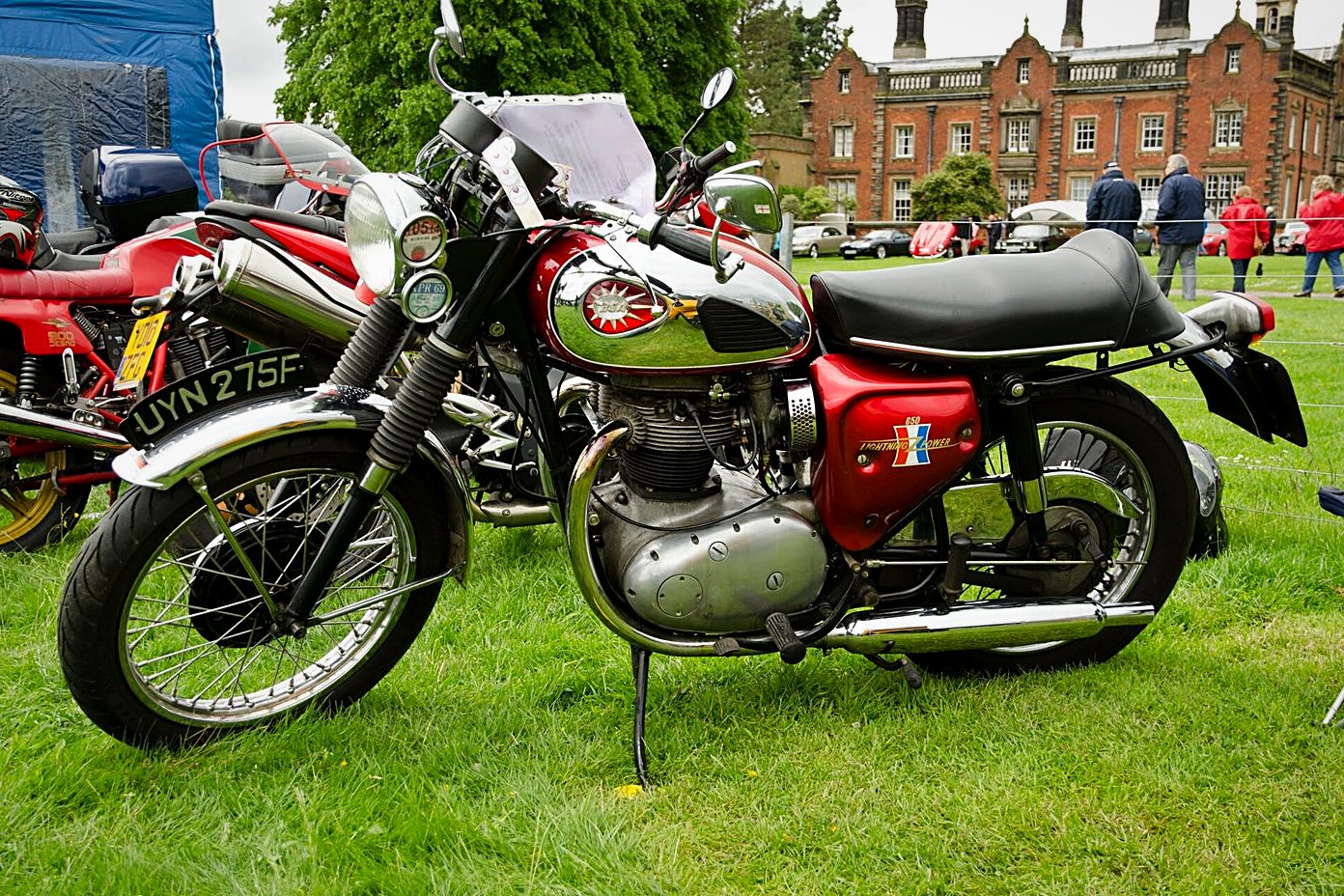
The twin-carb 650 unit twin was BSA's direct rival to the Bonneville.
Made to order: your copy is researched, fact-checked, and typeset to our standard, then delivered within about two weeks. We'll email you the moment it's ready.
About the BSA A65 Lightning (1965-1972)
The Lightning was BSA's fast twin, the sporting version of the 654 cc A65 unit-construction engine (unit construction means engine and gearbox share one casing). It arrived for 1965 with two carburettors and more tune than the single-carburettor Thunderbolt sold alongside it, and most went to the United States, where a 650 good for over 100 mph was what buyers wanted.
The appeal today is simple mechanicals and real performance. A pushrod parallel twin with a four-speed box and drum brakes can be maintained at home, specialist parts support is excellent, and the Lightning still undercuts an equivalent Triumph Bonneville. It has one serious design weakness, and the trade has spent fifty years fixing it.
Specifications at a glance
| Years | 1965 to 1972 |
| Engine | 654 cc air-cooled OHV parallel twin (75 x 74 mm) |
| Output | 52 bhp (39 kW) at 7,000 rpm (claimed) |
| Carburettors | twin Amal (389 Monobloc to 1967, 930 Concentric after) |
| Transmission | 4-speed, chain final drive |
| Weight | 395 lb (179 kg) dry |
| Top speed | 112 mph (180 km/h) (claimed) |
| Frame | half-duplex cradle to 1970, oil-in-frame 1971 to 1972 |
Known issues to check before you buy
- Timing-side main bush. The crank runs in a plain bronze bush on the timing (right) side and the big-end oil is pumped through it. As it wears, pressure falls and the left big end starves; a bush that spins in its housing cuts the oil off and breaks cranks and rods. Ask whether a roller-bearing conversion (SRM or Devimead) has been done.
- Sideways crank movement. From 1966 the drive-side ball main became a roller race, which no longer locates the crank endwise. It wanders, chews the shims and thrust washer, and that kills the bush above. Hold the crank end and feel for movement.
- The oil pump. The alloy pump can warp and lose pressure, worst hot and at high revs. Fit a proper oil pressure gauge, because the factory warning light is unreliable.
- Crankshaft sludge trap. Debris collects in a trap inside the crank, and its end plugs were punched at the factory so they resist removal, so rebuilds often skip it. Ask for proof it was cleaned.
- The 1971 and 1972 oil-in-frame bikes. The tall spine frame holds the oil and pushed seat height to about 33 in, awkward for shorter riders, and the conical front hub brake has a poor reputation.
Owning one
A good A65 Lightning is a rewarding, torquey road bike; a neglected one is expensive scrap. Buy on documented bottom-end work, not paint. This volume documents the BSA A65 Lightning (1965-1972) specifically: verified specifications, the documented weak points and how to inspect each, the service data, and the parts and owner community.
Inside this volume
Known issues & a buyer's guide
The documented weak points for this exact model, how to inspect each, and what a proper fix costs.
Full specifications
Every published figure, engine and frame detail, and running change, with the conflicts flagged, not guessed.
Systems & maintenance
Engine, fueling, electrical, and chassis, plus service intervals and torque and fluid data.
Parts & community
Where the parts are, what cross-references, and the clubs and forums that keep the model alive.
Make it your bike.
We fold in your year, your engine and options, your rebuilds and modifications, your VIN, and your own motorcycle's photo on the cover. The book stops describing the bike that left the factory and starts describing the one in your garage.