BSA Bantam
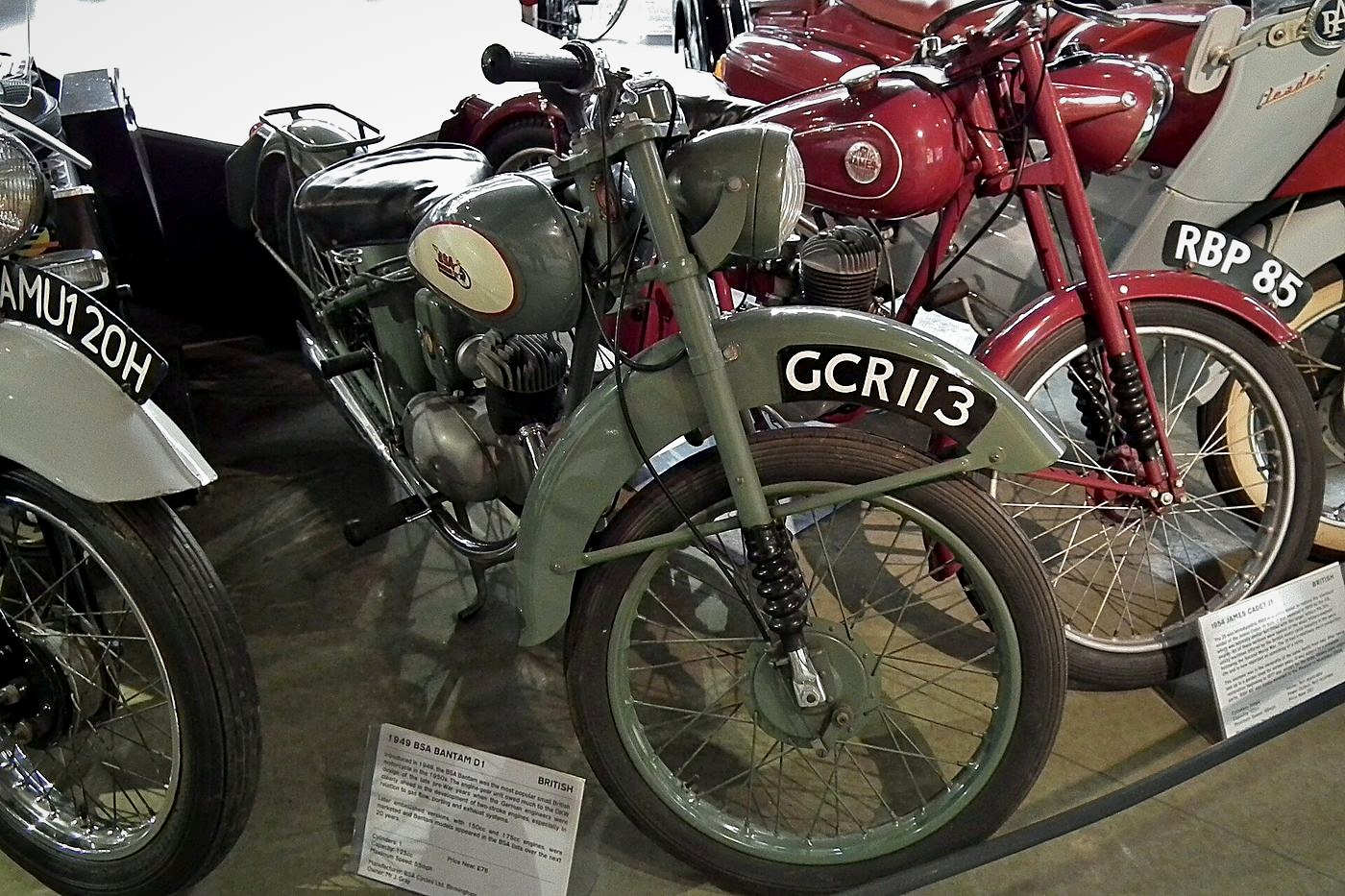
The 125cc two-stroke, based on a DKW design, that became Britain's everyman commuter.
Made to order: your copy is researched, fact-checked, and typeset to our standard, then delivered within about two weeks. We'll email you the moment it's ready.
About the BSA Bantam (1948-1963)
The Bantam is the little two-stroke that put post-war Britain on two wheels. Its engine was not really BSA's: it was a copy of the German DKW RT125, taken as war reparations and mirrored so the gear lever sat on the right for British riders. BSA sold the 123 cc D1 from 1948 until 1963, largely unchanged, alongside the larger 148 cc D3 Major (1954 to 1957) and the 173 cc D5 and D7 Super that followed.
The appeal is simplicity. There is very little to a Bantam: one cylinder, three gears, a flywheel magneto and a frame you can pick up. That makes it one of the cheapest and friendliest ways into pre-1960s British motorcycling, with a club, a parts supply and a racing following that never went away.
Specifications at a glance
| Years | 1948 to 1963 (D1) |
| Engine | 123 cc air-cooled two-stroke single, 52 mm x 57 mm |
| Output | 4.5 bhp (3.4 kW) |
| Transmission | 3-speed, wet clutch, chain final drive |
| Frame | rigid, with plunger rear suspension optional from 1950 |
| Top speed | 45 mph (72 km/h) |
| Fuel consumption | 100 to 125 mpg |
| Production | 350,000 to 500,000 Bantams of all types, 1948 to 1971 (never published exactly) |
Known issues to check before you buy
- Crankshaft seals. The classic Bantam fault. Old seals harden and split, letting air into the crankcase, which gives hard starting and an idle that will not settle. Budget for new ones on any bike without recent engine work.
- Petroil lubrication. The D1 and D3 have no oil pump: oil is mixed into the fuel, around 25:1. The handbook also warns against coasting downhill with the throttle shut, which starves the engine and can seize it. Ask what mix the owner uses, then check the bore.
- Main bearings and big end. Three mains and the big end all live on that fuel mix. Rock the flywheel for play, and listen for a rumble or a knock under load, not the normal two-stroke rattle.
- Wipac electrics. The flywheel magneto and generator on the left of the crank is the weak point, with the condenser and coil the usual causes of no spark. Early bikes have direct lighting and no battery, so the lights dim at idle. An electronic ignition conversion is a plus.
- Assembled bikes and ex-Post Office machines. So many were built and broken up that plenty of Bantams are made from several. Check the engine and frame numbers against the claimed year, and ask whether it started life as a Post Office bike.
Owning one
A Bantam is slow, and 45 mph means back roads, not dual carriageways. In return it is cheap to buy, cheap to run and simple enough to rebuild on a kitchen table with hand tools. This volume documents the BSA Bantam (1948-1963) specifically: verified specifications, the documented weak points and how to inspect each, service data, and the parts and owner community that keep them running.
Inside this volume
Known issues & a buyer's guide
The documented weak points for this exact model, how to inspect each, and what a proper fix costs.
Full specifications
Every published figure, engine and frame detail, and running change, with the conflicts flagged, not guessed.
Systems & maintenance
Engine, fueling, electrical, and chassis, plus service intervals and torque and fluid data.
Parts & community
Where the parts are, what cross-references, and the clubs and forums that keep the model alive.
Make it your bike.
We fold in your year, your engine and options, your rebuilds and modifications, your VIN, and your own motorcycle's photo on the cover. The book stops describing the bike that left the factory and starts describing the one in your garage.