Kawasaki H1 Mach III
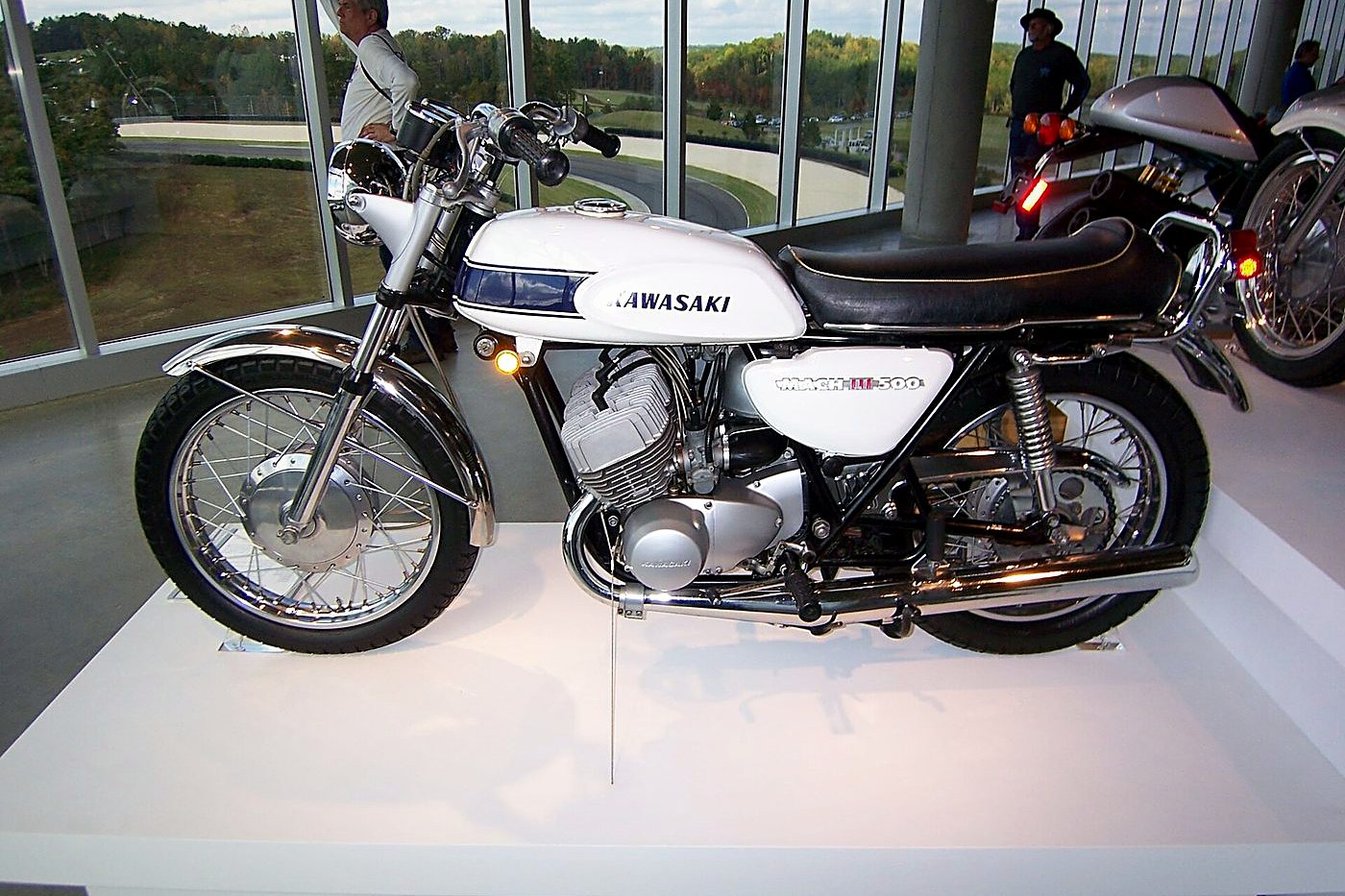
The 500cc air-cooled triple that made its name on brutal top-end power and a reputation for lifting the front wheel without warning.
Made to order: your copy is researched, fact-checked, and typeset to our standard, then delivered within about two weeks. We'll email you the moment it's ready.
About the Kawasaki H1 Mach III
The Kawasaki H1 Mach III is the machine that earned two-stroke triples their outlaw reputation. Launched in 1969, it wrapped a 499 cc air-cooled three-cylinder two-stroke in a light, slender chassis and priced it to undercut the four-stroke establishment. With a claimed 60 horsepower and a sub-400-pound dry weight, it out-accelerated almost everything on the road and ran the quarter mile in the low 13-second range, numbers that stunned riders used to heavier British and Japanese fours.
Its character is the whole point. The powerband arrives in a sudden, ripping surge, the exhaust note is unmistakable, and the handling was always secondary to the engine. Nicknamed the widow-maker, the H1 is a genuine landmark: the bike that announced Kawasaki as a performance brand and set the stage for the H2 750 and, eventually, the Z1. For collectors it remains one of the most charismatic and evocative motorcycles of its era.
Specifications at a glance
| Years | 1969 to 1975 (continued as the KH500 in 1976) |
| Engine | 499 cc air-cooled two-stroke inline three-cylinder |
| Bore and stroke | 60.0 mm x 58.8 mm |
| Compression ratio | 6.8:1 |
| Carburetion | 3 x Mikuni VM28 mm |
| Ignition | Capacitor discharge ignition (CDI) |
| Output | about 60 hp (claimed) |
| Transmission | 5-speed manual, chain final drive |
| Top speed | about 119 mph (period road test) |
Known issues to check before you buy
- Frame flex and weave. The H1 is well documented as underframed for its power, with skinny tubes and a steering head that is braced but not triangulated. Check the frame for cracks, straightness, and evidence of past accident repair, and expect the handling to feel vague at speed even on a sound example.
- Ignition and running fault. The CDI and stator can be temperamental and parts are scarce. Confirm all three cylinders fire cleanly and pull evenly, since a weak cylinder points to ignition, carburetion, or a tired top end.
- Two-stroke top end. These engines were run hard and can be seized or rebuilt. Ask for compression figures, look for fresh pistons and bores, and verify the oil injection (Superlube) pump works rather than being blanked off for premix.
- Brakes. The front drum was criticized when new and fades under repeated hard use. Inspect the shoes, cable, and actuation, and factor a rebuild into your plans if the bike will see regular road use.
Owning one
Owning an H1 is about respecting the engine and managing the chassis, not chasing modern manners: ridden within its limits it is thrilling and mechanically simple, and values for clean, original examples have climbed steadily. This volume documents the H1 Mach III specifically: verified specifications, the documented weak points and how to inspect each, the service data, and the specialist parts and owner community that keep them running.
Inside this volume
Known issues & a buyer's guide
The documented weak points for this exact model, how to inspect each, and what a proper fix costs.
Full specifications
Every published figure, engine and frame detail, and running change, with the conflicts flagged, not guessed.
Systems & maintenance
Engine, fueling, electrical, and chassis, plus service intervals and torque and fluid data.
Parts & community
Where the parts are, what cross-references, and the clubs and forums that keep the model alive.
Make it your bike.
We fold in your year, your engine and options, your rebuilds and modifications, your VIN, and your own motorcycle's photo on the cover. The book stops describing the bike that left the factory and starts describing the one in your garage.