Nissan Silvia
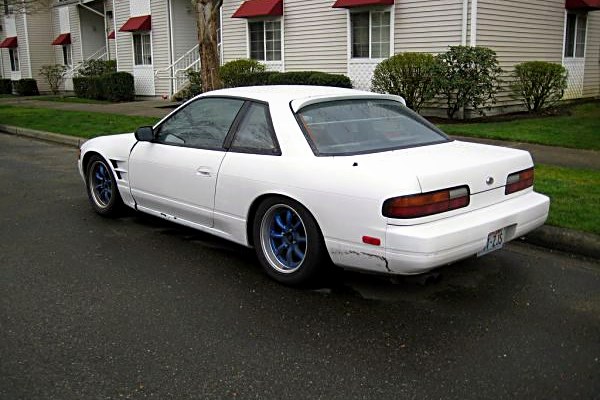
The wider, SR20DET-powered Silvia known in the US as the 240SX.
Made to order: your copy is researched, fact-checked, and typeset to our standard, then delivered within about two weeks. We'll email you the moment it's ready.
About the Nissan Silvia (S14)
The S14 Silvia is the mid-1990s chapter of Nissan's long-running S-platform, a front-engine, rear-wheel-drive coupe built from 1993 to 1998 and sold new only in Japan. It is wider and more grown-up than the S13 that came before it, and under the hood it carries the engine that made the car famous: the SR20DET, a 2.0 liter turbocharged twin-cam four. A naturally aspirated SR20DE version powered the entry J's and Q's trims, but the turbo K's is the one enthusiasts chase.
North American buyers never got the Silvia badge. They got the closely related 240SX, which shared the chassis but used the larger, non-turbo KA24DE engine. That difference is the whole reason the JDM Silvia became a legend: import it, and you get the turbo motor and the lighter feel that the US car was denied. Balanced, tunable, and endlessly modifiable, the S14 became a cornerstone of drift culture, which is both its appeal and, for a buyer, its biggest risk.
Specifications at a glance
| Years | 1993 to 1998 |
| Engine | 2.0 L SR20DET turbocharged inline-four (SR20DE non-turbo also offered) |
| Output | about 220 PS (zenki), about 250 PS (kouki, ball-bearing turbo) |
| Transmission | 5-speed manual or 4-speed automatic |
| Layout | front engine, rear-wheel drive |
| Curb weight | about 1,220 kg (K's Type S) |
Known issues to check before you buy
- Modified and abused examples. Most S14s have lived hard lives. Look for a stock, unmolested car, or one modified carefully with documentation. Boost that outruns the fueling, cheap ancillary parts, and hack wiring are all common and all expensive to unwind.
- Chassis and subframe damage. Drift use cracks and tears the rear subframe mounts and stresses the shell. Inspect for ripples, fresh welds, mismatched paint, and evidence of past crash repair.
- SR20DET turbo and internals. The timing chain guides wear and rattle, and the stock bottom end does not love sustained running much above 250 hp. Check for oil leaks, smoke on boost, and turbo shaft play.
- Clutch, gearbox, and rust. Clutches get worn out by clutch-kick driving, synchros can be tired, and JDM cars rust in the arches, floors, and around the rear quarters.
Owning one
A good S14 rewards patience in the buying, then repays it every time the turbo spools. This volume documents the Nissan Silvia (S14) specifically: verified specifications, the documented weak points and how to inspect each, the service data, and the parts and owner community that keep them on the road.
Inside this volume
Known issues & a survey guide
The documented weak points for this exact model, how to inspect each, and what a proper fix costs.
Full specifications
Every published figure, engine option, and running change, with the conflicts flagged, not guessed.
Systems & maintenance
Electrical, fuel, cooling, and drivetrain, plus service schedules and torque and fluid data.
Parts & community
Where the parts are, what cross-references, and the clubs and forums that keep the model alive.
Make it your car.
We fold in your year, your engine and options, your refits and modifications, your VIN, and your own car's photo on the cover. The book stops describing the car that left the factory and starts describing the one in your garage.