Vauxhall Firenza
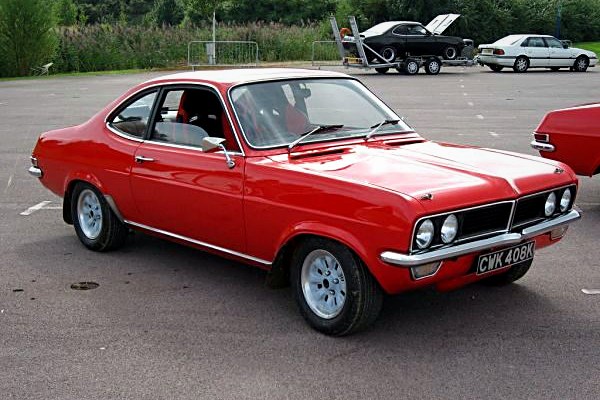
The aerodynamic Droop Snoot Firenza was a rare high-performance Vauxhall coupe.
Made to order: your copy is researched, fact-checked, and typeset to our standard, then delivered within about two weeks. We'll email you the moment it's ready.
About the Vauxhall Firenza
The Vauxhall Firenza was the two-door coupe version of the Viva HC, sold from 1971 to 1975 as a sportier, fastback-roofed alternative to the saloon. Through the 1973 to 1975 period it ran the family of overhead-camshaft slant-four engines shared with the Viva and Magnum, a practical British coupe that offered a bit of style on a familiar, easy-to-service platform.
The car most people remember from this era is the 1973 Firenza HP, universally nicknamed the "droopsnoot" for its dramatic aerodynamic glassfibre nose with faired-in quad headlamps. It was Vauxhall's halo car: a 2.3-litre slant-four fed by twin Stromberg carburettors, backed by the first five-speed gearbox Vauxhall ever fitted, a ZF unit. A looming fuel crisis and industrial disputes killed it almost immediately, and only 204 were built, which makes a genuine HP one of the rarest and most collectible British performance cars of the decade.
Specifications at a glance
| Years | 1973 to 1975 |
| Engine (HP) | 2.3 L OHC slant-four, twin Stromberg carburettors |
| Output (HP) | about 131 bhp |
| Transmission (HP) | 5-speed ZF manual |
| HP production | 204 units |
Known issues to check before you buy
- Bodyshell rust. The Firenza shares the Viva HC shell, which corrodes at the sills, floors, front valance, inner wings, and around the rear arches and screens. Check every seam, because sound original steel is now scarce.
- The droopsnoot nose. The HP's glassfibre front is unique to the car, prone to cracking and star crazing, and effectively unobtainable new. Inspect for damage and poor past repairs, and confirm the faired headlamp fittings and trim are present and correct.
- HP parts scarcity. With only 204 built, the twin-carburettor 2.3 setup, the ZF five-speed, and the HP-specific interior and badging are very hard to source. Verify the car is a real HP and not a standard Firenza dressed up as one.
- 1970s British electrics. Expect tired Lucas wiring, corroded earths, and failing switchgear and gauges. Budget for a careful sort-through of the loom, connectors, and charging system.
Owning one
A standard Firenza coupe is an approachable, mechanically simple classic, while the droopsnoot HP is a serious, well-documented collector car that rewards buying the most honest, complete example you can find. This volume documents the Vauxhall Firenza specifically: verified specifications, the documented weak points and how to inspect each, the service data, and the parts and owner community that keep them on the road.
Inside this volume
Known issues & a survey guide
The documented weak points for this exact model, how to inspect each, and what a proper fix costs.
Full specifications
Every published figure, engine option, and running change, with the conflicts flagged, not guessed.
Systems & maintenance
Electrical, fuel, cooling, and drivetrain, plus service schedules and torque and fluid data.
Parts & community
Where the parts are, what cross-references, and the clubs and forums that keep the model alive.
Make it your car.
We fold in your year, your engine and options, your refits and modifications, your VIN, and your own car's photo on the cover. The book stops describing the car that left the factory and starts describing the one in your garage.