American Champion 8KCAB Super Decathlon
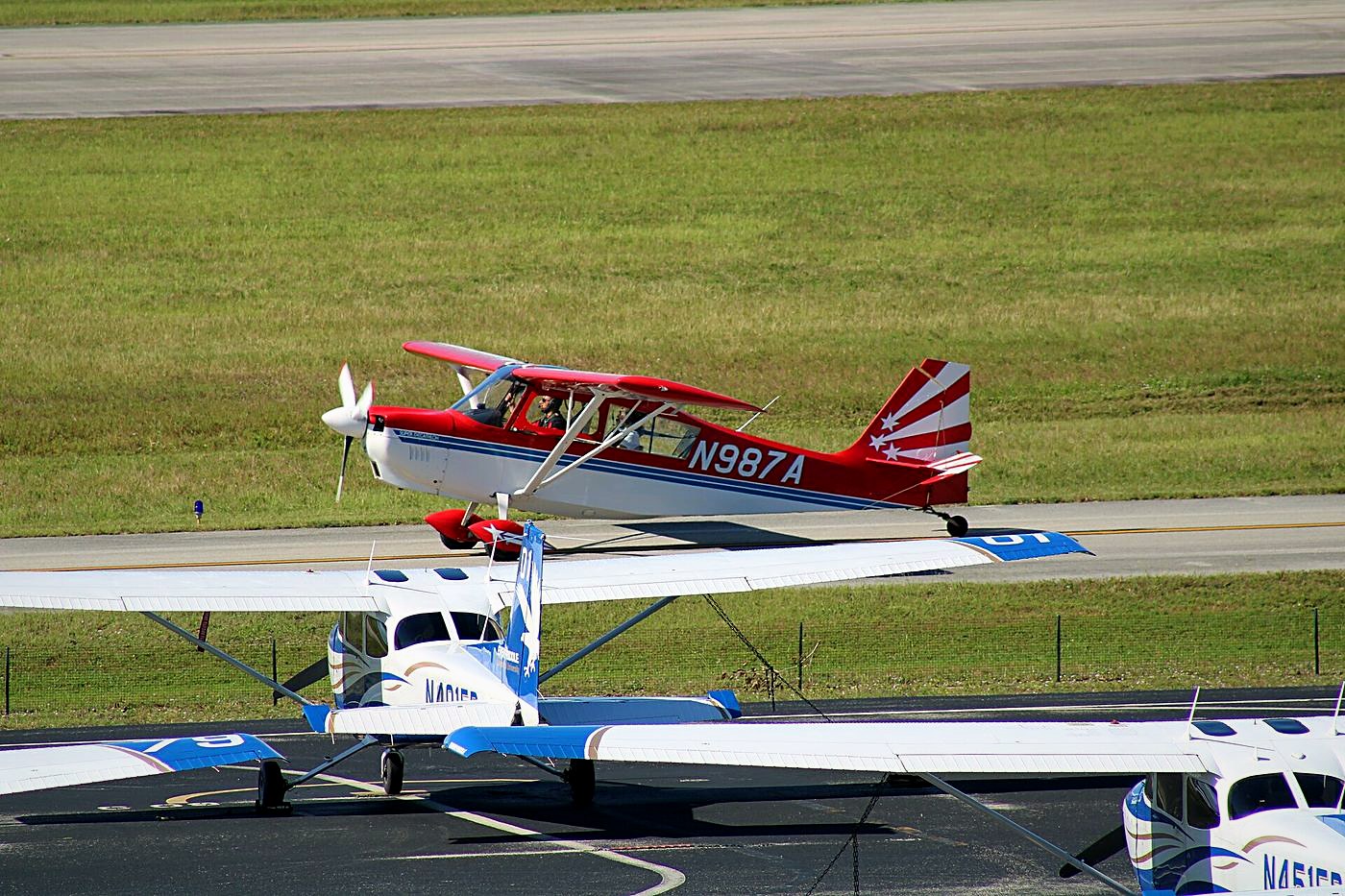
Tandem two-seat taildragger with a 180 hp engine and symmetrical wing, the standard entry-level aerobatic trainer at flight schools across the US.
Made to order: your copy is researched, fact-checked, and typeset to our standard, then delivered within about two weeks. We'll email you the moment it's ready.
About the American Champion 8KCAB Super Decathlon (1970-present)
The 8KCAB is the fully aerobatic member of the Citabria family, and the airplane flight schools reach for when a student wants real aerobatics. It is a fabric-covered, tandem two-seat taildragger with fuel injection and inverted fuel and oil systems, so it will fly sustained negative-g figures a Citabria cannot.
The type appeared in 1970 with a 150 hp engine, gained the 180 hp Lycoming that defines the Super Decathlon in 1976, and has been built by American Champion since 1990. The appeal is breadth of use: one airplane flies a competition sequence in the morning, gives tailwheel instruction in the afternoon, and still cruises at 141 mph to a grass strip on the weekend.
Specifications at a glance
| Years | 1970 to present (180 hp Super Decathlon from 1976) |
| Engine | Lycoming AEIO-360-H1B fuel-injected flat four |
| Horsepower | 180 hp at 2,700 rpm |
| Cruise | 141 mph (227 km/h) at 75 percent power |
| Gross weight | 1,950 lb (885 kg) normal, 1,800 lb (816 kg) aerobatic |
| Useful load | 645 lb (293 kg) |
| Seats | 2, in tandem |
| Wingspan | 32 ft (9.8 m) |
Known issues to check before you buy
- Wooden wing spars. Airframes built before the 1990s have wood spars, covered by AD 2000-25-02 R1: repeat inspection for compression cracks and cracks at bolt and nail holes. Confirm compliance, or that metal wings were retrofitted.
- Wing lift struts. Early aircraft used thin-wall (0.035 in) struts. AD 77-22-05 required heavier 0.049 in struts, and a placard limiting speed to 153 mph proves the old ones are still fitted.
- Steel tube structure. Rough-field and training use cracks the gear U-bolts and the longerons the gear bolts pass through, and the tubes low and aft corrode from the inside.
- Fabric. The Dacron covering is a wear item and sunlight does most of the damage. Ask for the covering date and a punch test result; a recover is a five-figure job.
- Hidden groundloop damage. Most have been groundlooped at some point, and the wing repair does not always reach the logbooks. Look for mismatched fabric and wrinkles near the gear.
Owning one
Running costs are modest for an aerobatic airplane, but the money is front-loaded onto inspection: the ADs, the fabric, and the tubing decide whether you bought a bargain or a project. This volume documents the American Champion 8KCAB Super Decathlon specifically: verified specifications, the documented weak points and how to inspect each, the service data, and the parts and owner community.
Inside this volume
Known issues & a pre-buy guide
The documented weak points for this exact type, the airworthiness directives and service bulletins that bite, and what a pre-buy should catch.
Full specifications
Every published figure, engine and airframe detail, weights, and performance data, with the conflicts flagged, not guessed.
Systems & maintenance
Powerplant, fuel, electrical, and airframe, plus inspection intervals and the operating numbers that keep it flying.
Parts, shops & type club
Where the parts are, what cross-references, and the type clubs and owner groups that keep the fleet in the air.
Make it your aircraft.
We fold in your year, your engine and avionics, your mods and STCs, your registration, and your own aircraft's photo on the cover. The book stops describing the type that left the factory and starts describing the one in your hangar.