American Legend AL3 Legend Cub
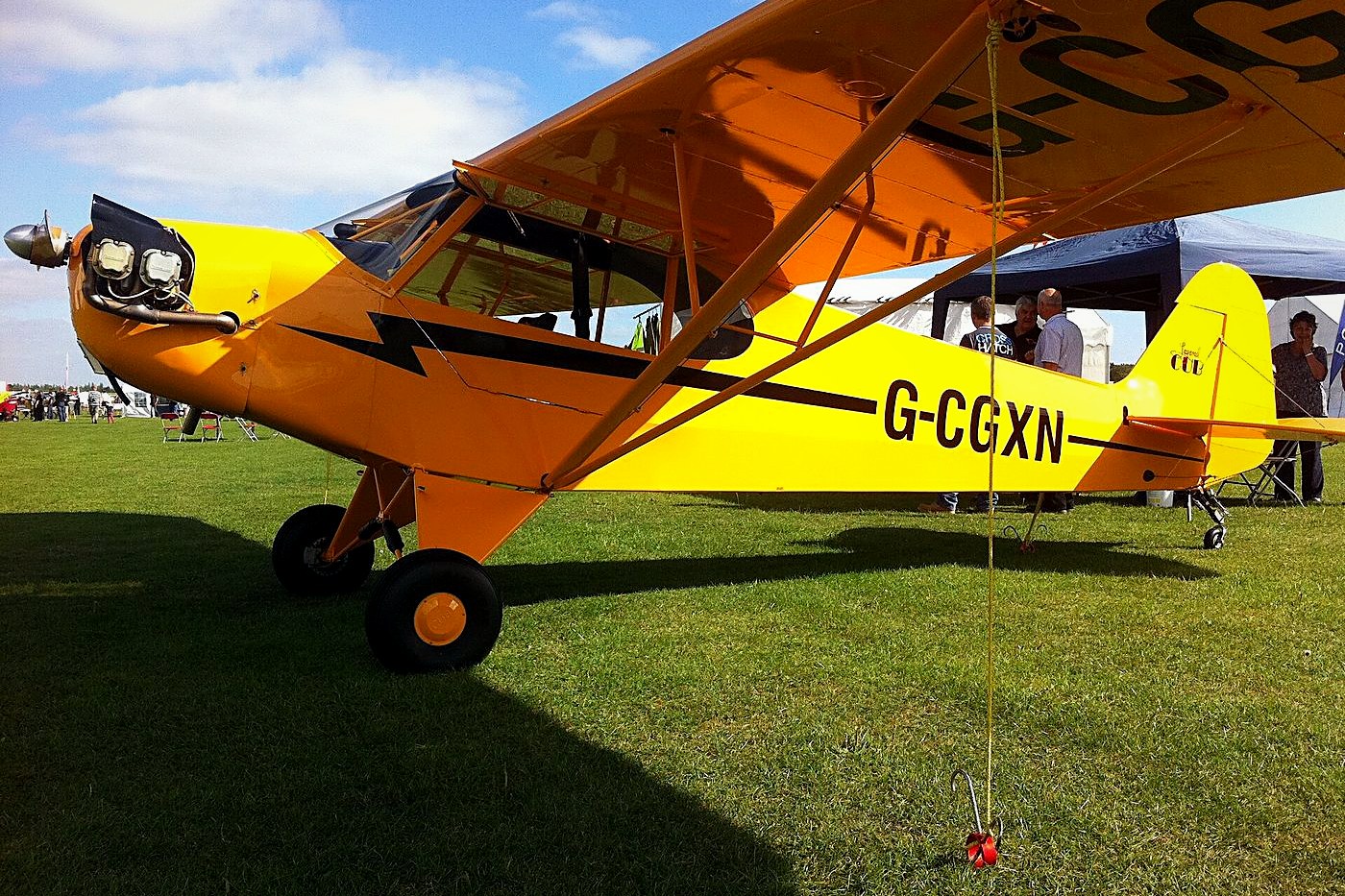
A faithful factory J-3 Cub reproduction with the door and windows opening together, offered in taildragger form to sport pilots.
Made to order: your copy is researched, fact-checked, and typeset to our standard, then delivered within about two weeks. We'll email you the moment it's ready.
About the American Legend AL3 Legend Cub (2005-present)
The AL3 is a brand new Piper Cub. American Legend Aircraft Company of Sulphur Springs, Texas flew the first one on March 10, 2005 and delivered the first customer aircraft that August, making it one of the earliest Special Light-Sport Aircraft on the market. It is welded 4130 steel tube with aluminum wing spars under Dacron fabric, shaped like a J-3 but wider in the cabin.
The appeal is a Cub you can fly on a sport pilot certificate, without the archaeology of a 1946 airframe. It borrows the postwar PA-11 layout, wing fuel tank and solo-from-the-front seating, then adds coil-spring landing gear in place of bungees, disc brakes and shoulder harnesses.
Specifications at a glance
| Years | 2005 to present |
| Engine | Continental O-200-D, 100 hp |
| Cruise | 95 mph (153 km/h) at 75 percent power |
| Gross weight | 1,320 lb (599 kg), 1,430 lb (649 kg) on floats |
| Empty weight | 820 lb (372 kg) |
| Useful load | 500 lb (227 kg) |
| Wingspan | 35 ft 6 in (10.8 m) |
| Seats | two, in tandem |
Known issues to check before you buy
- Which engine is fitted. Some earlier Legend Cubs left the factory with the six-cylinder Jabiru 3300, rated 120 hp. It had cooling and durability trouble and is no longer offered, so confirm the engine first.
- Fuel system bulletins. Legend has issued mandatory bulletins for fuel hose replacement (2022), fuel line support clamp verification (2022, aircraft from 2018 on) and a fuel tank flush (2007). Ask for signed compliance records.
- Continental service items. The O-200 has its own bulletin history, including a 2008 rocker shaft inspection. TBO is 2,000 hours, so ask hours since overhaul, not total time.
- Bulletin paperwork in general. On a Special Light-Sport Aircraft the maker's maintenance manual and bulletins are mandatory, not advisory. Gaps in that record can leave the aircraft unairworthy.
- What it will really carry. 500 lb of useful load, less 20 gallons of fuel at about 120 lb, leaves roughly 380 lb for two people and baggage. Floats, a parachute or a glass panel eat into that.
- Fabric and tailwheel history. The covering is Dacron fabric, so look for UV chalking and patch repairs. Read the logs for ground loops, prop strikes and replaced gear legs.
Owning one
A well kept AL3 is a simple airplane with a modern paper trail, and that trail is what you are really buying. This volume documents the American Legend AL3 Legend Cub (2005-present) specifically: verified specifications, the documented weak points and how to inspect each, the service data, and the parts and owner community.
Inside this volume
Known issues & a pre-buy guide
The documented weak points for this exact type, the airworthiness directives and service bulletins that bite, and what a pre-buy should catch.
Full specifications
Every published figure, engine and airframe detail, weights, and performance data, with the conflicts flagged, not guessed.
Systems & maintenance
Powerplant, fuel, electrical, and airframe, plus inspection intervals and the operating numbers that keep it flying.
Parts, shops & type club
Where the parts are, what cross-references, and the type clubs and owner groups that keep the fleet in the air.
Make it your aircraft.
We fold in your year, your engine and avionics, your mods and STCs, your registration, and your own aircraft's photo on the cover. The book stops describing the type that left the factory and starts describing the one in your hangar.