Beechcraft Bonanza A36
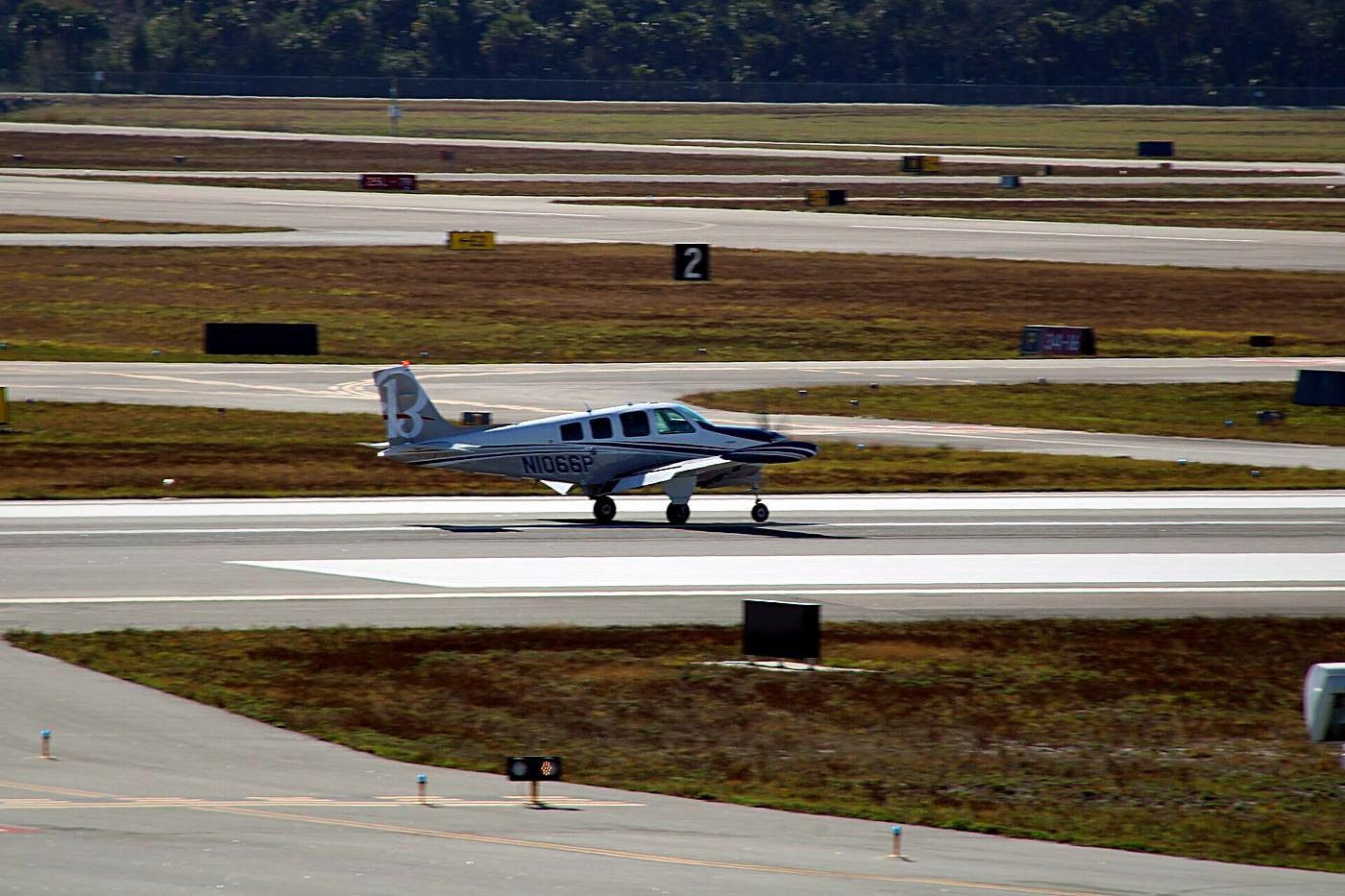
The six-seat straight-tail Bonanza with a club-seating cabin and double doors; widely considered the benchmark high-performance single, with type support to match.
Made to order: your copy is researched, fact-checked, and typeset to our standard, then delivered within about two weeks. We'll email you the moment it's ready.
About the Beechcraft Bonanza A36 (1970-2005)
The A36 is the stretched, six-seat, straight-tail Bonanza. Beech added a 10 inch (25 cm) plug to the smaller Bonanza's fuselage and cut double doors into the right rear side, first as the Model 36 in 1968, then from 1970 as the A36 with a cabin-class interior and club seating. It stayed in production for 35 years.
The appeal is load and build quality. The airframe is heavy, stable and honest, the aft double doors swallow bags, and a later 300 horsepower airplane trues out near 175 knots on roughly 15 gallons an hour. The American Bonanza Society is among aviation's strongest type clubs. Textron announced the end of Bonanza production in 2025, so every one on the market is used.
Specifications at a glance
| Years | 1970 to 2005 as the A36 (Model 36 1968, G36 2006 on) |
| Engine | Continental IO-520-B, 285 hp; IO-550-B, 300 hp from 1984 |
| Max cruise | 169 kt (194 mph), 175 kt (201 mph) from 1984 |
| Gross weight | 3,600 lb (1,633 kg), 3,650 lb (1,656 kg) from 1984 |
| Useful load | about 1,397 lb (634 kg), varies by airframe |
| Seats | six, club seating, double doors right rear |
| Wingspan | 33 ft 6 in (10.21 m) |
| Fuel | 50 US gal, 80 US gal (74 usable) from 1980 |
Known issues to check before you buy
- Right aileron cable end fittings. FAA airworthiness directive 2019-21-08, effective November 22, 2019, covers listed A36 serial numbers: a 10x inspection of the fittings that thread into the turnbuckle for cracks, pitting and corrosion. Seats and floorboards come out, so confirm the sign-off.
- Fuel bladders. The rubber fuel cells crack and seep with age, usually the left one first. Look for blue stains or fuel smell under the wing and at the root; replacement runs into thousands.
- Landing gear. The electric retract system wears predictably: gear motor and actuator, no-back spring, downlock springs, rod ends. A broken uplock cable has caused gear-up landings, so insist on a gear swing on jacks.
- Cylinders and crankcase. Continental 520 and 550 cases crack, early ones worse than later heavy-boss versions, and Continental's 2009 recall covered roughly 9,600 cylinder heads after cracks appeared at spark plug bosses past 400 hours.
- Fuel system handling. Accident records show repeated fuel-related power loss, some from the auxiliary boost pump flooding a healthy engine when the engine-driven pump already works.
Owning one
An A36 is a serious airplane with serious costs, so budget gear, bladders and cylinders as scheduled events, and buy on the logbooks. This volume documents the Beechcraft Bonanza A36 specifically: verified specifications, the documented weak points and how to inspect each, the service data, and the parts and owner community that keep them flying.
Inside this volume
Known issues & a pre-buy guide
The documented weak points for this exact type, the airworthiness directives and service bulletins that bite, and what a pre-buy should catch.
Full specifications
Every published figure, engine and airframe detail, weights, and performance data, with the conflicts flagged, not guessed.
Systems & maintenance
Powerplant, fuel, electrical, and airframe, plus inspection intervals and the operating numbers that keep it flying.
Parts, shops & type club
Where the parts are, what cross-references, and the type clubs and owner groups that keep the fleet in the air.
Make it your aircraft.
We fold in your year, your engine and avionics, your mods and STCs, your registration, and your own aircraft's photo on the cover. The book stops describing the type that left the factory and starts describing the one in your hangar.