Beechcraft Bonanza V35 (V-tail)
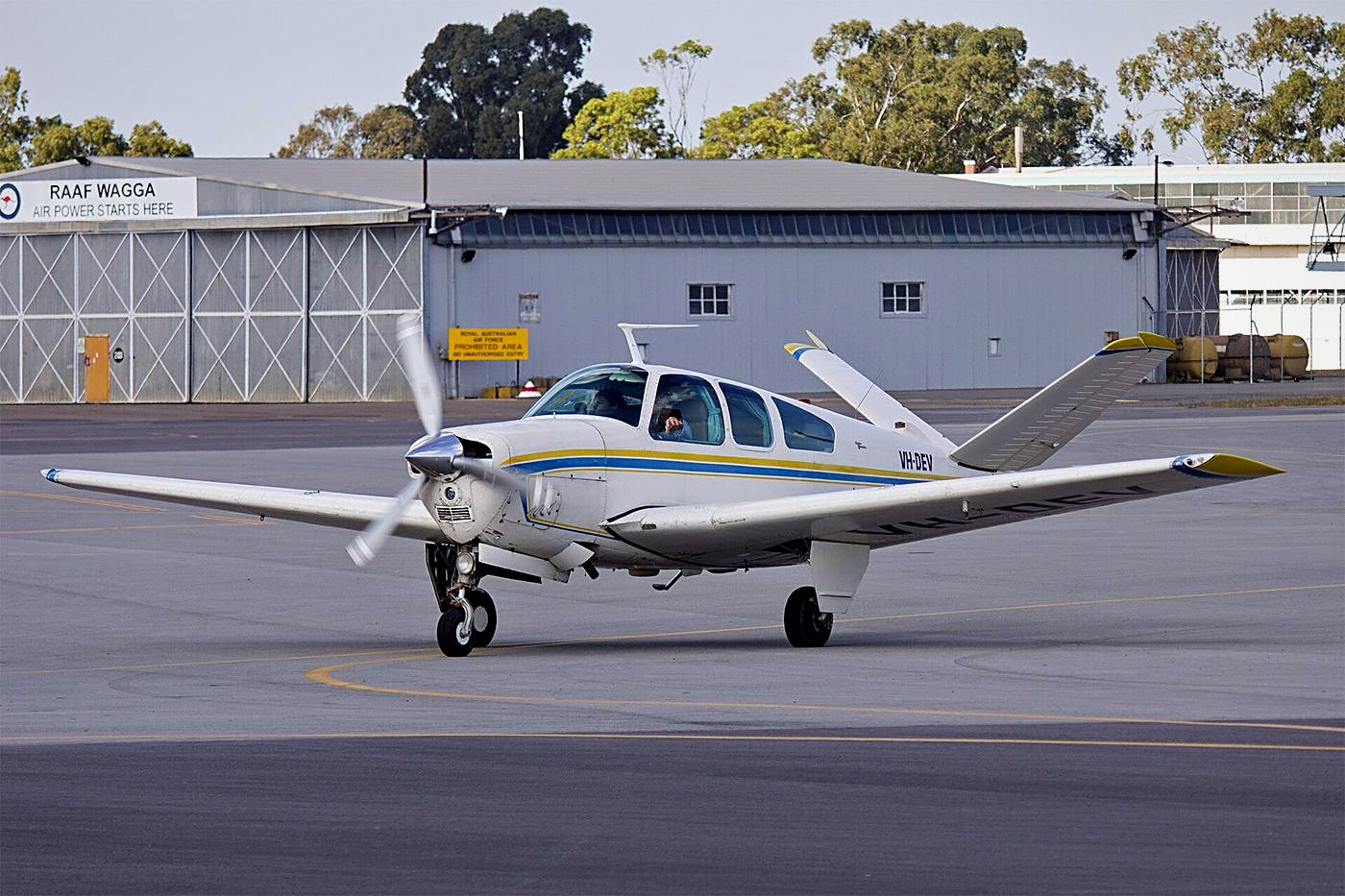
The iconic V-tail Bonanza, fast and beautifully built; buyers weigh the tail's storied AD history and the ruddervator maintenance against its speed and ramp appeal.
Made to order: your copy is researched, fact-checked, and typeset to our standard, then delivered within about two weeks. We'll email you the moment it's ready.
About the Beechcraft Bonanza V35 V-tail (1947-1982)
The V-tail Bonanza defined the fast personal airplane. It arrived in 1947 with retractable gear, an all-metal airframe and that butterfly tail, and stayed in production until 1982, longer than any other. The American Bonanza Society counts 10,402 built. A V35 still cruises at 176 kt.
The appeal is that performance for antique-airplane money, backed by a strong owner community. The tail's reputation deserves a straight answer. Of 148 in-flight structural failures documented in Beech 33, 35 and 36 airframes from 1962 to 2007, 136 were Model 35 V-tails and none were Model 33s. The leading factors were VFR flight into instrument conditions and thunderstorms, and the FAA addressed the tail structure itself by airworthiness directive.
Specifications at a glance
| Years | 1947 to 1982 |
| Engine | 165 hp Continental E-185 (1947), 285 hp IO-520-B (V35 on) |
| Max cruise | 176 kt (202 mph), V35 on |
| Gross weight | 2,550 lb (1,157 kg) Model 35, 3,400 lb (1,542 kg) V35 on |
| Useful load | about 1,459 lb (662 kg), V35 |
| Wingspan | 33 ft 6 in (10.21 m) |
| Built | 10,402 V-tails |
Known issues to check before you buy
- The tail AD, 94-20-04 R1. It covers C35 through V35B, all serials, and exists to prevent structural failure of the V-tail: a one-time stabilizer reinforcement kit and larger ruddervator tab cables, plus inspection of the empennage and ruddervator controls every 100 hours. The earliest airplanes (35, 35R, A35, B35) fall under a separate AD.
- Ruddervator balance. The same AD requires the ruddervators (the combined elevator and rudder surfaces) rebalanced before further flight whenever they are repaired or repainted, even touched up: out of balance invites flutter.
- Magnesium ruddervator skins. They corrode, and replacements were unobtainable for years, parting out good airframes. The Bonanza Society funded a $528,110 prize in 2025 to restart production. Look for blistered paint and powdery corrosion.
- Wing spar carry-through cracks, AD 95-04-03. H35 through V35B, serials D-4866 to D-10403: dye-penetrant inspection of the forward spar carry-through frames by 1,500 hours, then every 500.
- Landing gear. The retract system is a known wear item: motor, actuator, no-back spring, rod ends and rigging. Ask for a gear swing on jacks.
Owning one
A sorted V-tail is one of aviation's best values; a neglected one is a project with expensive magnesium. The paperwork is the airplane: the tail AD complied with, the spar inspection current, a ruddervator balance record. This volume documents the V-tail Bonanza (1947-1982) specifically: verified specifications, the weak points and how to inspect each, service data, and the owner community.
Inside this volume
Known issues & a pre-buy guide
The documented weak points for this exact type, the airworthiness directives and service bulletins that bite, and what a pre-buy should catch.
Full specifications
Every published figure, engine and airframe detail, weights, and performance data, with the conflicts flagged, not guessed.
Systems & maintenance
Powerplant, fuel, electrical, and airframe, plus inspection intervals and the operating numbers that keep it flying.
Parts, shops & type club
Where the parts are, what cross-references, and the type clubs and owner groups that keep the fleet in the air.
Make it your aircraft.
We fold in your year, your engine and avionics, your mods and STCs, your registration, and your own aircraft's photo on the cover. The book stops describing the type that left the factory and starts describing the one in your hangar.