Beechcraft King Air 350
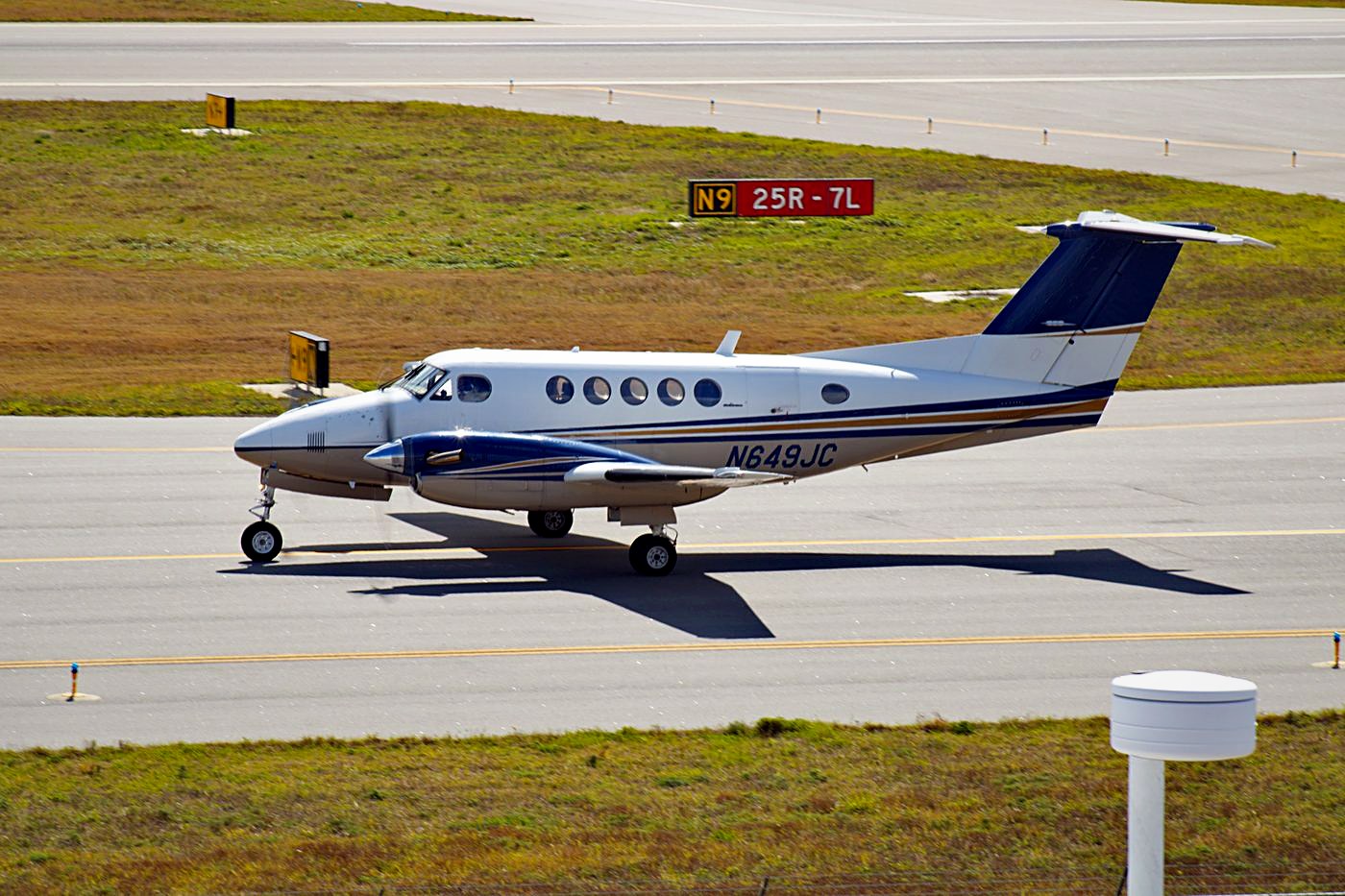
The stretched, higher-gross King Air seating up to eleven, often flown single-pilot under waiver.
Made to order: your copy is researched, fact-checked, and typeset to our standard, then delivered within about two weeks. We'll email you the moment it's ready.
About the Beechcraft King Air 350 (1988-present)
The King Air 350 is the biggest and best known of Beechcraft's twin turboprops. Work began in 1988 on a replacement for the King Air 300: a fuselage stretched by nearly three feet, two more cabin windows per side, winglets, and a 15,000 lb maximum takeoff weight. Certified as the Model B300 and sold from 1990 as the Super King Air 350, it became the default airplane for corporate flight departments, air ambulance operators, and special-mission fleets.
The appeal is jet-like capability without jet economics. Two PT6A-60A turboprops give a 312 knot cruise and roughly 1,800 nautical miles of range while still working off a 3,300 ft runway, and the PT6 has one of the deepest support networks in aviation. The 350i of December 2009 brought a quieter cabin; the King Air 360 took over in 2020.
Specifications at a glance
| Years | 1988 design, in service 1990 to 2020 |
| Engines | two Pratt and Whitney Canada PT6A-60A turboprops |
| Power | 1,050 shp (780 kW) each |
| Max cruise | 312 knots (578 km/h) |
| Max takeoff weight | 15,000 lb (6,804 kg) |
| Useful load | 5,145 lb (2,334 kg) |
| Seats | 2 crew plus 8 to 11 passengers |
| Wingspan | 57 ft 11 in (17.65 m) |
Known issues to check before you buy
- Wing spar and wing-to-fuselage attach structure. FAA airworthiness directive 2026-15-05 (August 2026) tightened crack-inspection intervals on the B300 after Textron found wrong figures in its own limitations manual for the heavier 16,500 lb airplanes. Confirm compliance.
- Engine reserves. The PT6A-60A runs 3,600 hours between overhauls, with a hot section inspection at 1,800. An overhaul costs on the order of half a million dollars per engine, so hours remaining matter more than the paint.
- Landing gear retract actuators. The actuator screw and nut assembly strips its threads if scheduled lubrication is skipped, which can leave the gear stuck. Ask for the lubrication and overhaul records.
- Weak cabin heat and pressurization. Most complaints trace to tired flow packs, leaking valves, or a high cabin leak rate, not the pressurization controller. Watch the cabin schedule at altitude on the acceptance flight.
- Logbook gaps. Missing entries hide corrosion repairs and damage history, and salt-air airplanes show it first. Review the books before paying for a full pre-purchase inspection.
Owning one
A King Air 350 is easy to fly and expensive to neglect. The money sits in engine reserves, phase inspections and structural compliance, all predictable if the records are complete. This volume documents the King Air 350 specifically: verified specifications, the documented weak points and how to inspect each, the service data, and the parts and owner community that keep them flying.
Inside this volume
Known issues & a pre-buy guide
The documented weak points for this exact type, the airworthiness directives and service bulletins that bite, and what a pre-buy should catch.
Full specifications
Every published figure, engine and airframe detail, weights, and performance data, with the conflicts flagged, not guessed.
Systems & maintenance
Powerplant, fuel, electrical, and airframe, plus inspection intervals and the operating numbers that keep it flying.
Parts, shops & type club
Where the parts are, what cross-references, and the type clubs and owner groups that keep the fleet in the air.
Make it your aircraft.
We fold in your year, your engine and avionics, your mods and STCs, your registration, and your own aircraft's photo on the cover. The book stops describing the type that left the factory and starts describing the one in your hangar.