Beechcraft King Air B200
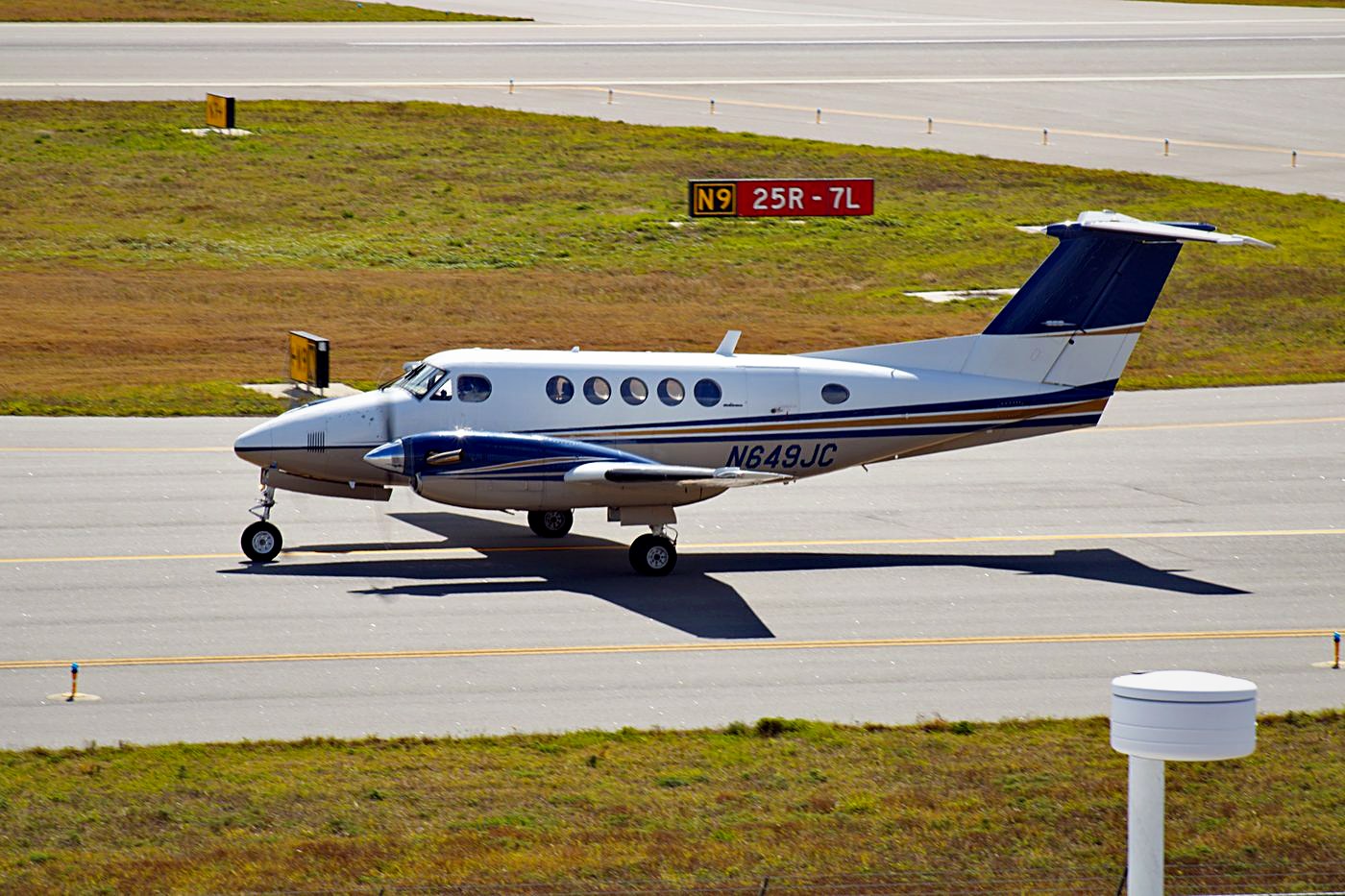
The best-selling King Air, prized for its ramp presence, load flexibility, and deep parts support.
Made to order: your copy is researched, fact-checked, and typeset to our standard, then delivered within about two weeks. We'll email you the moment it's ready.
About the Beechcraft King Air B200 (1981-present)
The B200 is the aircraft most people picture when they hear "turboprop twin." Beechcraft introduced it in 1981 as a development of the 1974 Model 200, with 850 shp Pratt & Whitney PT6A-42 engines replacing the PT6A-41. It became the backbone of corporate flight departments, air ambulance fleets and survey operators worldwide, and the line still runs as the King Air 260.
The appeal is that it does everything well and nothing badly. It carries nine passengers in a pressurized cabin, works off short unpaved strips no jet can touch, climbs to 35,000 ft, and has more mechanics and parts behind it than any other turboprop.
Specifications at a glance
| Years | 1981 to 2007 as the B200 |
| Engines | two PT6A-42, 850 shp each |
| Max cruise | 270 to 290 kt (311 to 334 mph) |
| Max takeoff weight | 12,500 lb (5,670 kg) |
| Useful load | 4,962 lb (2,251 kg), full fuel limits payload |
| Seats | two crew plus up to nine passengers |
| Wingspan | 54 ft 6 in (16.61 m) |
| Built | 1,157 B200s through end of 2009 |
Known issues to check before you buy
- Wing bolts. A 1980 emergency AD grounded every 200 over one cracked wing attach nut. The inspection still recurs: eddy current testing of bolts and bathtub fittings every three to five years, lower forward bolts replaced at five.
- Wing tanks. The panels sealing the nacelle tanks are the fleet's worst corrosion spot, and the auxiliary tanks share the design. The box-section tanks are rubber cells, often original: look for blue dye on the lower wing skin.
- Landing gear. Beechcraft calls for gear inspection every 8,000 flight hours or six years, plus an actuator screw and nut end-play check every 1,000 cycles or 30 months.
- Empennage spar caps. Beechcraft's repair office reported roughly 100 structural corrosion repairs across a decade, worst on the rear spar caps of the horizontal and vertical stabilizers. Coastal aircraft need extra attention.
- Engine time. PT6A-42 TBO is 3,600 hours, and an overhaul costs hundreds of thousands of dollars: hours remaining, not paint or avionics, sets what a B200 is worth.
Owning one
A B200 is only as good as its inspection status: wing bolts, gear, corrosion and engine time set the real price. Budget for the calendar items and it flies for decades. This volume documents the King Air B200 specifically: verified specifications, the documented weak points and how to inspect each, service data, and the parts and owner community that keep them flying.
Inside this volume
Known issues & a pre-buy guide
The documented weak points for this exact type, the airworthiness directives and service bulletins that bite, and what a pre-buy should catch.
Full specifications
Every published figure, engine and airframe detail, weights, and performance data, with the conflicts flagged, not guessed.
Systems & maintenance
Powerplant, fuel, electrical, and airframe, plus inspection intervals and the operating numbers that keep it flying.
Parts, shops & type club
Where the parts are, what cross-references, and the type clubs and owner groups that keep the fleet in the air.
Make it your aircraft.
We fold in your year, your engine and avionics, your mods and STCs, your registration, and your own aircraft's photo on the cover. The book stops describing the type that left the factory and starts describing the one in your hangar.