Boeing Stearman
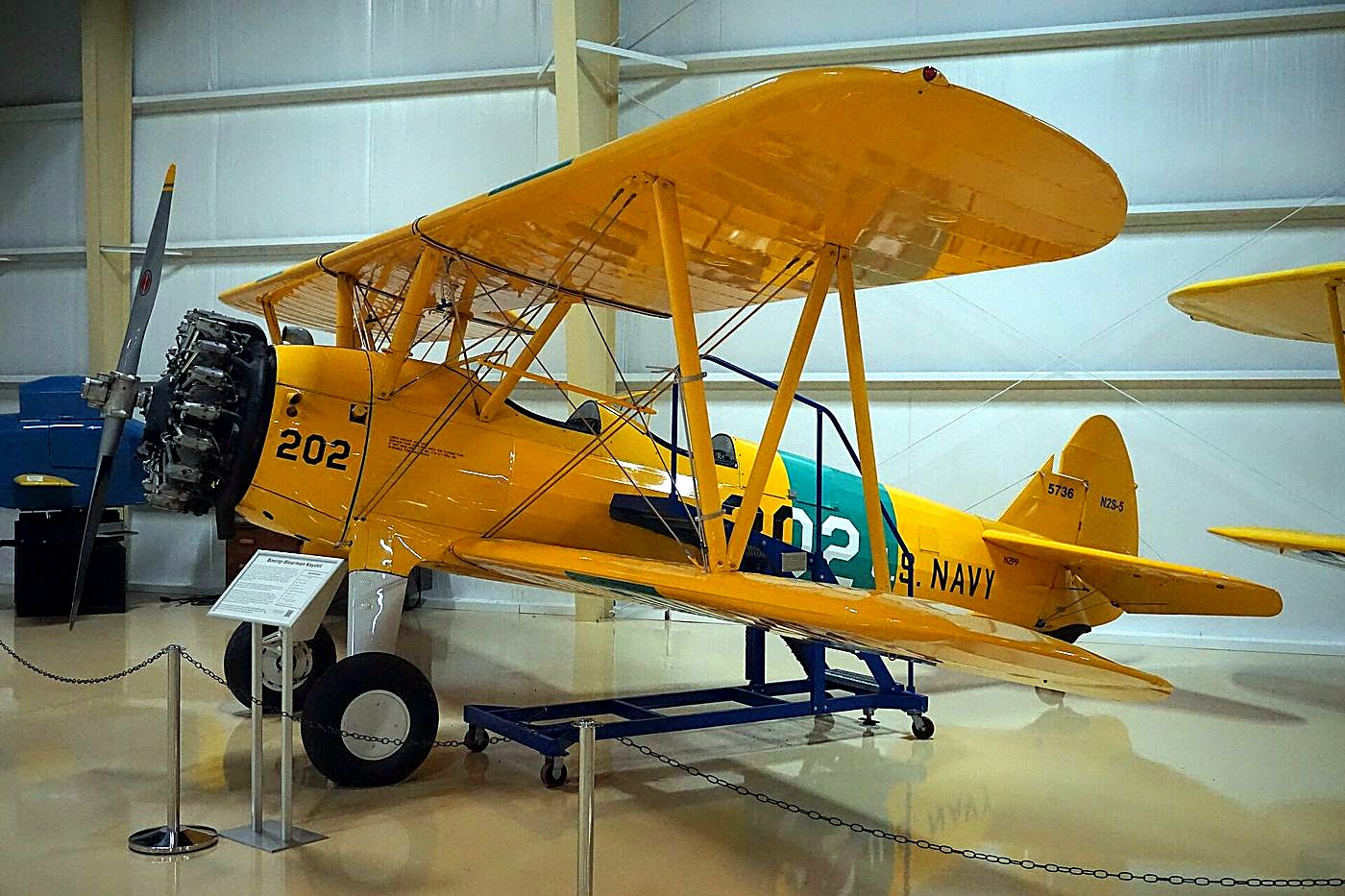
An open-cockpit biplane trainer with deep parts support, popular for sport flying and formation work.
Made to order: your copy is researched, fact-checked, and typeset to our standard, then delivered within about two weeks. We'll email you the moment it's ready.
About the Boeing Stearman (1934-1945)
The Stearman Model 75 is the biplane most Americans picture when they picture a biplane. Designed by the Stearman Aircraft Company (bought by Boeing in 1934), it taught tens of thousands of Army and Navy pilots to fly, wearing designations like PT-13, PT-17 and N2S depending on the engine and the service that ordered it.
The appeal is honesty: a steel-tube fuselage, wood-and-fabric wings, two open cockpits in tandem and a radial engine out front. It does not flatter a pilot: it demands real rudder work, it is unforgiving on the ground, and it rewards you with open-cockpit flying nothing modern replicates. Thousands survived as postwar crop dusters, which is why so many are still airworthy and why provenance matters so much.
Specifications at a glance
| Years | 1934 to 1945 |
| Engine | Continental R-670-5 seven-cylinder radial (PT-17) |
| Horsepower | 220 hp (164 kW) |
| Seats | 2, tandem open cockpits |
| Wingspan | 32 ft 2 in (9.80 m) |
| Empty / gross weight | 1,931 lb (876 kg) / 2,635 lb (1,195 kg) |
| Cruise | 96 mph (154 km/h), top speed 124 mph (200 km/h) |
| Number built | 2,942 PT-17s, of more than 10,000 Model 75 airframes |
Known issues to check before you buy
- Center-section spar rot (AD 50-06-02). The fuel tank sits on the wooden center section above your head, and water in that joint rots the spar. The directive requires pulling the tank to inspect the spars unless the gap has been sealed with doped fabric, so ask which method the logbooks show. AD 46-24-01 separately calls for drain holes at the aileron gap.
- Lower wing spars and fittings. The lower wings take the hard landings, and wood cracks or glue joints let go around the wing-attach and N-strut fittings. Pull the gap covers and inspect.
- Crop-duster history. Many were converted for spray work, and those chemicals corrode the steel-tube fuselage from inside, hidden under fabric. Ask what the airplane did between 1946 and 1980.
- Ground-loop repairs. Narrow gear and no forward view make it easy to ground loop, usually to the left, damaging the right lower wingtip and aileron. Look for mismatched repairs there.
- Fabric age and engine disuse. A recover is a five-figure job, so get the date of the last one. Radials suffer more from sitting than flying, so ask how often it actually runs.
Owning one
A Stearman needs hangar space, a tailwheel-current pilot and a mechanic comfortable with wood, fabric and radials, and a good one is cheaper to buy than a bad one is to fix. This volume documents the Boeing Stearman (1934-1945) specifically: verified specifications, the documented weak points and how to inspect each, service data, and the parts and owner community that keep them flying.
Inside this volume
Known issues & a pre-buy guide
The documented weak points for this exact type, the airworthiness directives and service bulletins that bite, and what a pre-buy should catch.
Full specifications
Every published figure, engine and airframe detail, weights, and performance data, with the conflicts flagged, not guessed.
Systems & maintenance
Powerplant, fuel, electrical, and airframe, plus inspection intervals and the operating numbers that keep it flying.
Parts, shops & type club
Where the parts are, what cross-references, and the type clubs and owner groups that keep the fleet in the air.
Make it your aircraft.
We fold in your year, your engine and avionics, your mods and STCs, your registration, and your own aircraft's photo on the cover. The book stops describing the type that left the factory and starts describing the one in your hangar.