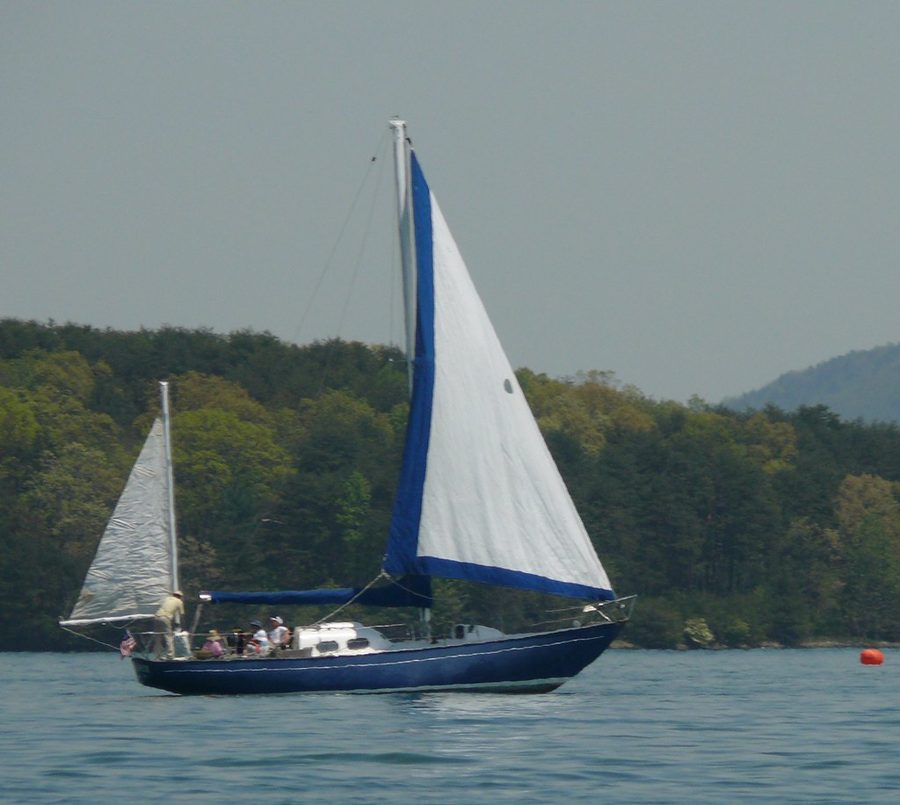
Pearson Triton
Every documented weak point for this model, in the order to check them, plus the general inspection, the sea trial, the haulout and what each finding costs to put right.
- 93 checks, 10 specific to this model
- 17 repair-cost reference lines
- Printable, or works on a phone with no signal
- $19 credited if you buy the full volume later
The Triton is a boat you buy from the deck down: the solid hand-laid hull is nearly bulletproof, so what you are really assessing is everything bolted to it, cored into it, or plumbed through it after six decades of water finding wood. On this boat the purchase price is trivial next to the restoration cost, so buy the driest, most-already-refit hull you can find.
What you get
- Every documented weak point for this exact model, in the order to check them.
- A full system-by-system walk of the boat, written to be worked through on your knees with a flashlight.
- What each finding typically costs to put right, so a soft deck stops being a feeling and becomes a number.
- The questions and documents to get before you drive four hours to see it.
- The findings that are not negotiations. Nine reasons to walk away and buy the next one.
Three of the 10 model-specific checks
These are free, and always will be. The kit has all 10 for this model, plus 83 general checks covering the fast screen, every system, the sea trial and the haulout, 17 repair-cost reference lines, and the walk-away list.
East Coast boats have balsa-cored decks (the defining rot problem) plus wood trim and bronze ports, while West Coast Aeromarine boats have solid-glass decks that sidestep that entire failure mode, so the coast tells you which survey you are running.
Pearson never sealed the balsa core edges, so 60 years of leaking penetrations rot the core into a spongy, oil-canning deck, and a dull thud instead of a sharp ring at the chainplate covers, stanchions, handrails, and mast step means wet core.
Leaking chainplate seals rot the plywood bulkhead the plate bolts to, and because the structural attachment is to that wood, a rotted bulkhead lets the rig pull out under load.
Straight answers
- Is this a substitute for a surveyor?
- No, and it does not try to be. A professional survey is what your insurer and your lender will require, and you should buy one. This kit is for the trip before that: deciding which boat is worth paying a surveyor to look at, and walking aboard able to see what is actually in front of you. It also makes you a far better client, because you will know what to ask the surveyor to focus on.
- What form does it come in?
- A web page built for the job: checkboxes, note lines, and a print layout that comes out clean on paper if you would rather carry it. It works on a phone in a bilge with no signal once the page has loaded. No app, no account.
- Are the cost figures reliable?
- They are broad US ranges at yard labour rates, and the kit says so on the page. They exist to tell you whether a finding is a $500 problem or a $30,000 problem, which is the decision you are actually making on the dock. Get a local quote for anything you intend to negotiate on.
- What if I buy the kit and then buy the book?
- The $19 comes off. The kit price is credited automatically against the digital edition of Pearson Triton at checkout, so nobody pays twice for the same research.
- What if I do not end up buying this model?
- Then it did its job. Most of the value in a kit like this is the boats it talks you out of, and the general sections, the sea trial, the haulout and the walk-away list apply to any boat of this era.
Take it aboard this weekend
Instant access. If it does not tell you something useful about the boat you are looking at, reply to the receipt and we will refund it.