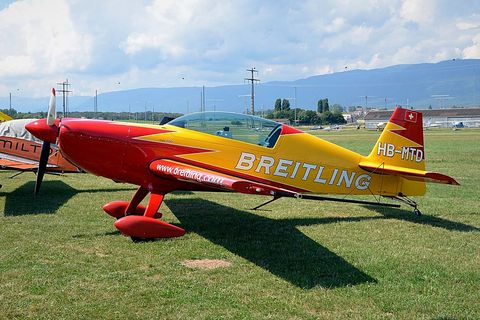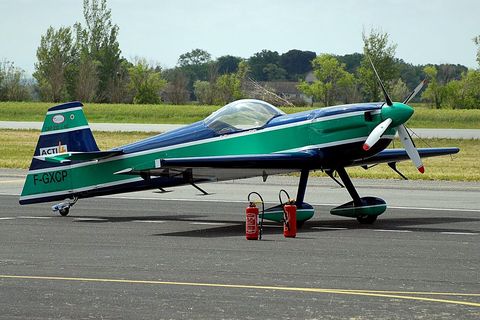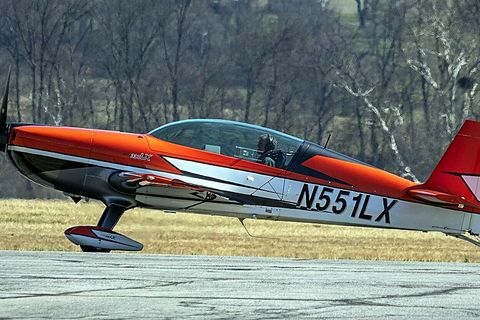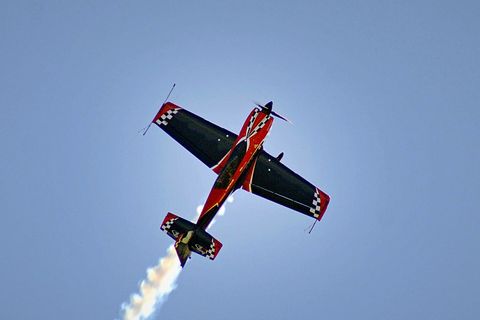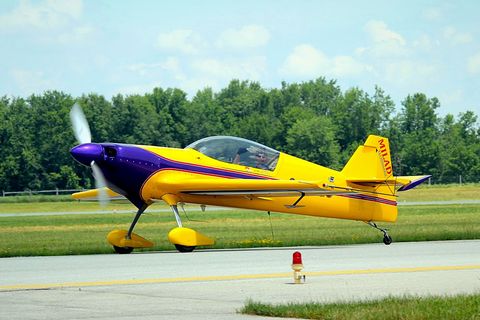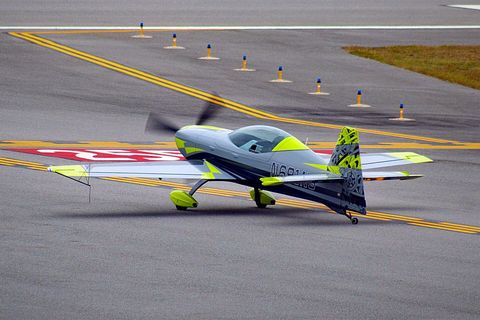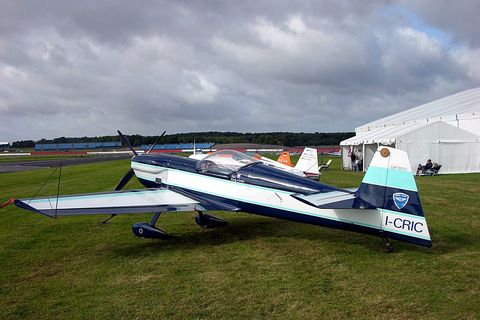
An aerobatic airplane is built to do one thing that ordinary aircraft cannot: fly hard maneuvers, upright and inverted, under loads that would fold a normal wing. That means a symmetrical airfoil that flies as well upside down as right side up, a structure certified for high positive and negative g (typically plus or minus 10 on a competition monoplane), an inverted fuel and oil system so the engine keeps running when the world flips, and controls light and powerful enough to snap the airplane through a figure in a heartbeat. There is a wide gulf between a sport aerobatic mount, meant for weekend loops and rolls, and an Unlimited competition machine tuned for a vertical roll rate that most pilots will never fully use. This is a guide for owner-pilots who already hold real aerobatic training and want to understand the top of the class. None of it is a substitute for a good instructor, a parachute, and a disciplined respect for altitude.
The Extra EA-300L is the airplane most people picture when they think aerobatics. Its low, mid-spar wing and 300 hp Lycoming make it a friendly-yet-serious two-seater that trains new competitors, flies air shows, and holds value like few aircraft do. It is the safe default: plentiful, supported, and honest in the air. Budget for the wing spar and airframe inspections that keep any hard-flown Extra legal.
The original Extra EA-300 is where the modern era began. Walter Extra's steel-tube two-seater set the template every rival chased. Early airframes are more affordable entry points, but they are also older and worked hard, so a thorough logbook review and spar compliance check matter more here than on almost anything else you might buy.
The CAP 232 is the French carbon-wing single-seater that won multiple world Unlimited titles in national-team hands. It is a precise, demanding airplane with a fierce roll rate. Parts and factory support are thinner than for the Extra line, and a used competition example may have a hard life behind it, so a specialist pre-buy is not optional.
The two-seat Extra EA-330LX is the current-production choice for owners who want the best and can pay for it. A lighter composite wing and 315 hp give it a sharper, more responsive feel than the 300L while keeping a second seat for training and rides. New examples are expensive, and even used ones command strong money.
For the single-seat competitor, the Extra EA-330SC is the tool of choice. Its carbon wing and stripped, one-person focus make it a genuine world-class Unlimited mount flown by national and world competitors. This is not a first aerobatic airplane; it rewards a current, well-trained pilot and punishes a rusty one.
The MX Aircraft MXS is the extreme end of the spectrum: an all-carbon single-seater with a blistering roll rate and very light wing loading, flown by top air show and Unlimited pilots. That performance comes with sensitivity. It moves fast and asks for precise, confident hands, and its specialized construction means repairs go to people who know composites.
The Giles G-202 proves you do not need a factory budget to fly Advanced and Unlimited. Richard Giles designed this composite single-seat kit for a high roll rate at a homebuilder's price. The tradeoff is the experimental amateur-built path: build quality, documentation, and maintenance all depend on the individual airplane, so buy on inspection, not on the type name alone.
The Staudacher S-300 was an early American answer to the European monoplanes, built by Jon Staudacher into a fast, capable air show mount. These are relatively rare, often individually finished machines, so each one is its own story. Value and condition vary widely, and support is builder-dependent.
At the newest and most premium end sits the Extra NG, the factory's all-composite next-generation two-seater. It is the state of the art and priced accordingly. For a well-funded owner who wants the latest airframe with modern construction and a factory behind it, nothing else in the Extra range is newer.
Finally, the Mudry CAP 231 is the forerunner to the 232, a single-seat French Unlimited monoplane flown by the national team in its day. As a piece of competition history it is compelling, but it is also old, out of production, and reliant on scarce parts. Buy one because you love it and can support it, not as a practical everyday flyer.
A few honest truths tie these together. Every one of these airplanes demands recurrent training, a serviceable parachute, and altitude discipline; the machine is never the weak link, the pilot's currency is. Running costs are real: high-output engines, inverted systems, and mandated inspections add up whether or not you compete. Buy the airplane that matches your actual skill and mission, get a type-specific pre-buy from someone who knows the model, and treat the maintenance schedule as gospel.
Garage, Galley & Hangar publishes a model-specific owner's reference for each of these aircraft, covering systems, inspection points, and the ownership details that matter. Browse the full collection at /hangar/.