Ask ten sailors to name the best bluewater sailboat and you will get ten answers, but they will agree on what the phrase means. A bluewater boat is built to keep a small crew safe and sane a long way from help, in weather they cannot choose. That comes down to a few things. Hull form matters: a moderate to heavy displacement, a sea-kindly motion that does not throw the crew around, and a keel and rudder configuration (often a full keel or a long fin with a skeg) that tracks straight and shrugs off a knockdown. Build matters more: solid or well-engineered laminate, strong bulkhead tabbing, chainplates and rudder gear you can inspect, and tankage for the fuel and water a passage actually needs. None of it means much without motion comfort, because a boat that exhausts its crew is not safe no matter how strong it is.
This is a list for people who plan to cross something: an ocean, a gulf, a long stretch of coast with no bailout. Coastal cruisers are a different article. Here are seven boats that have earned offshore trust, and what an owner should know before trusting one.
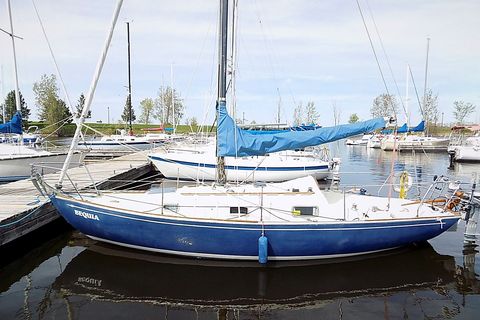
The Contessa 26 is proof that a small boat can go anywhere. This is the design that carried Tania Aebi around the world as a teenager. Full-bodied and easily driven, it is cheap to buy and cheap to keep, and its size makes it forgiving to single-hand. The honest tradeoff is space: two people and a passage's worth of stores fill it completely, and the low freeboard that makes it sea-kindly also makes it wet. You go simple, or you do not go.
The Contessa 32 is the boat that made David Sadler famous. In the 1979 Fastnet storm, when much of the fleet was overwhelmed, every Contessa 32 that started finished. That is the whole pitch. It is narrow by modern standards with a deep, safe motion and a fine entry that punches upwind in a seaway. Owners should know that the same narrow hull gives up interior volume and initial stiffness, so it heels early and rewards reefing sooner than you would expect. It is a sailor's boat, not a condo.
The Morris 36 is a Chuck Paine design built in Maine to a finish standard most production yards never touch. It combines traditional good looks with genuine offshore ability and holds its value accordingly. That is also the catch: you pay for the pedigree, both to buy and to maintain, and the yacht-grade joinery and systems expect an owner who keeps them to standard. Bought right and kept right, it is a boat you hand down.
The Passport 40 is Robert Perry's answer to sailors who wanted a real passagemaker that still sailed like a boat. Its performance-cruiser hull moves well in light air, a rare virtue in this company, and the build quality has a reputation that rivals yachts costing far more. The tradeoff is age and complexity: these are older boats now, and a 40-footer with cruising systems means a longer survey and a bigger refit budget. Buy the best-maintained example you can find rather than the cheapest.
The Shannon 38 is Walter Schulz's Rhode Island cutter (or ketch), and the word owners use is heavy. It is built go-anywhere solid, with the tankage and stowage a long passage demands and a cutter rig that breaks the sail plan into manageable pieces for a short-handed crew. The flip side of all that structure is that it is not quick, and it wants wind to come alive. In a blow, that is exactly the point.
The Tayana 37 may be the definitive affordable bluewater cruiser. Perry's double-ended cutter was built in Taiwan in huge numbers over more than three decades, which means a deep used market and endless customization. No two are identical, and that is the warning as much as the appeal: teak decks, wiring, and owner modifications vary wildly, so each boat must be judged on its own survey, not the model's reputation. Find a good one and it is hard to beat for the money.
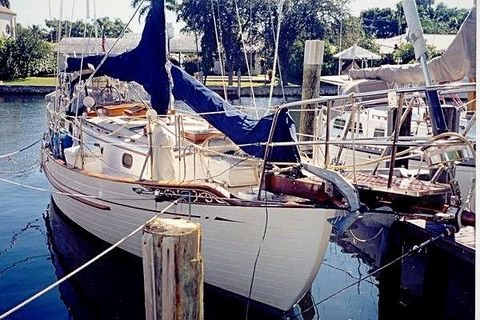
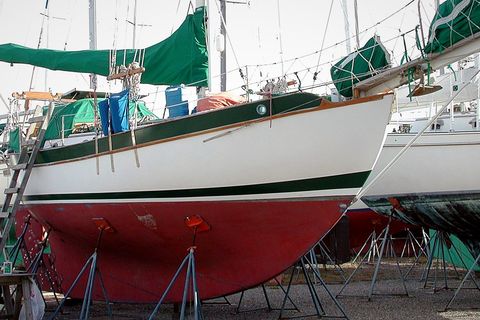
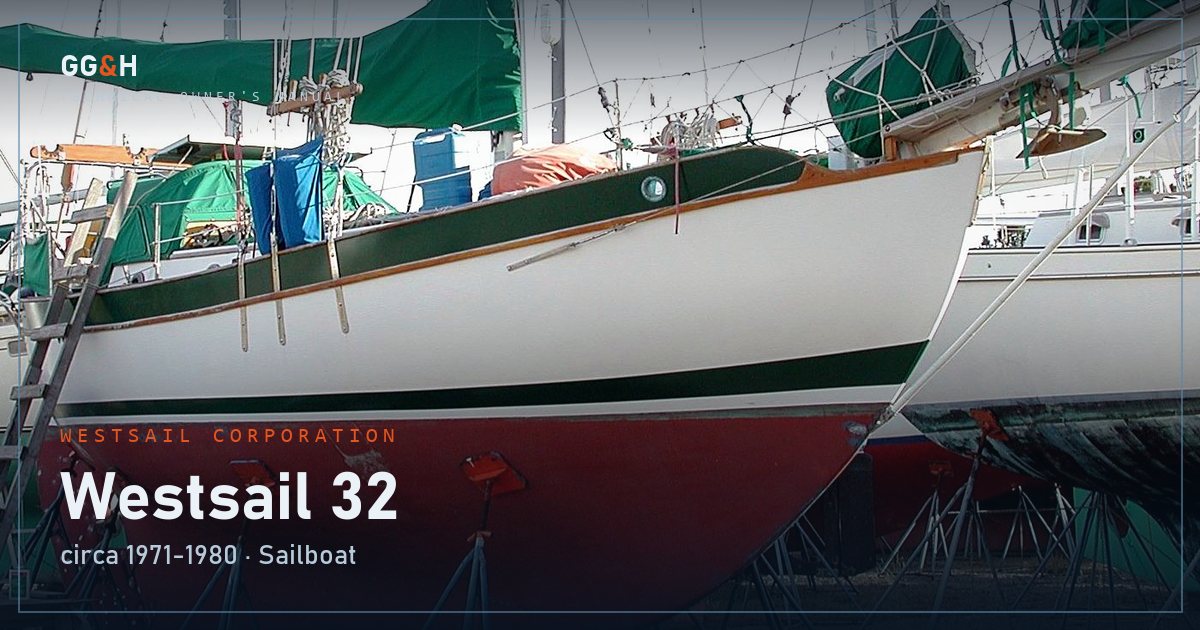
The Westsail 32 is the boat that launched the American bluewater dream. A heavy, full-keel, double-ended cutter with Colin Archer and William Atkin in its bloodline, rendered in thick solid glass, it was so associated with running away to sea that Time magazine put it on a cover. It will ride out almost anything. It is also famously slow, so slow that "Wet Snail" became an affectionate joke, and it demands patience and a strong autopilot or windvane. For sailors who value seaworthiness over speed, few boats are more reassuring.
There is no single best bluewater sailboat, only the right one for your crew, your budget, and the water you mean to cross. Garage, Galley & Hangar publishes a model-specific owner's reference for each of these boats, the kind of book you keep aboard for the systems, the quirks, and the maintenance that keeps a passage boat safe. Browse them all in the boats catalog, and then go choose a horizon.