A trawler trades the sailor's silence and fuel economy for something a lot of cruising couples decide they want more: standing headroom everywhere, a real galley, a genuine berth you do not have to climb over, and heat, refrigeration, and hot water that run without apology. You give up the free ride of the wind and take on a diesel, a fuel budget, and more systems to maintain, but you gain a boat you can actually live on year round and, in the right hull, cross oceans in. This guide is for anyone weighing that trade, whether the plan is a marina liveaboard, the Great Loop, or a passage to another continent.
The Monk 36 is where many people start, and for good reason. It is a single-engine sedan trawler with a wide walkaround deck, a sensible layout, and a fiercely active owner association that has documented nearly every fault and fix online. Expect trawler speeds of seven or eight knots and a fuel burn measured in a couple of gallons an hour. Watch for soft decks and older wiring on early hulls, but a sorted Monk 36 is one of the most boat-for-the-dollar liveaboards on the water.
If the goal is genuinely crossing oceans, the Nordhavn 46 is the reference point. It launched the brand and completed an around-the-world rally, and it remains the small trawler serious voyagers measure others against. This is a full-displacement passagemaker with the tankage to match, so budget accordingly for fuel, and understand that its heavy, sea-kindly hull is built for endurance rather than speed.
The later Nordhavn 47 refines that formula with active stabilizers, a walk-in engine room, and enough fuel for transoceanic legs on a single engine. The single-engine layout unsettles some buyers, but Nordhavn's get-home strategy and the walk-in machinery space mean you can actually reach and service everything at sea. It is a lot of boat and a lot of money, and it rewards an owner who is mechanically engaged.
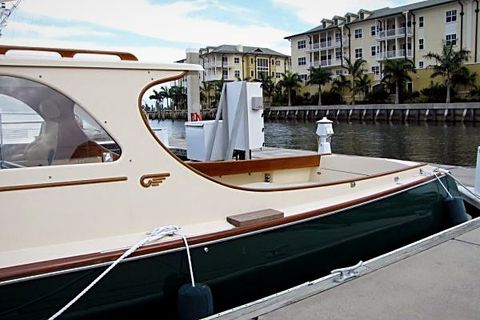
For coastal living with style, the Hinckley Picnic Boat is in a class of its own. Its JetStick waterjet drive gives you skinny-water running and true joystick docking, which is a revelation for anyone who has fought a crosswind alone. The honest tradeoff is cost of ownership: budget for jet impeller and intake service, and expect the Hinckley name to keep both purchase and upkeep prices high.
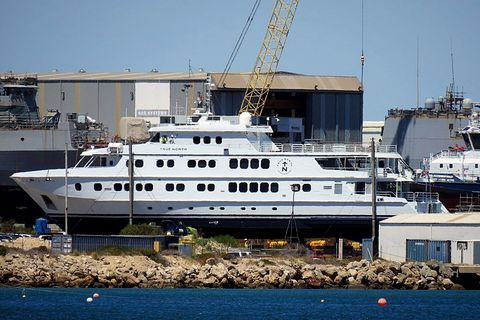
The True North 34 is a Downeast express designed by C. Raymond Hunt Associates, and its deep-V hull earns its keep when the water turns up. Offered with pod drives or conventional shafts, it will cruise far faster than a displacement trawler, which is exactly the point, though you will pay for that speed at the fuel dock. Choose the drive package with your service reality in mind, since pods add capability and complexity in equal measure.
The Legacy 28, built by Freedom Yachts, is the sensible single-diesel Downeast for a couple who wants easy solo handling and modest fuel burn. It is small enough to be affordable and simple, and big enough for weekends and coastal hops. The Fortier 26 is smaller still, a tough Massachusetts-built hull that owners trust in rough Buzzards Bay chop and happily use as a fishing platform. Neither is a full liveaboard, but both are honest, low-drama entries into the powerboat cruising life.
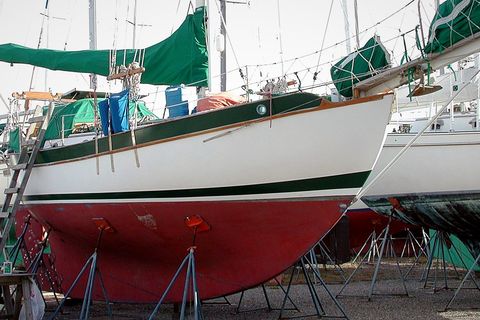
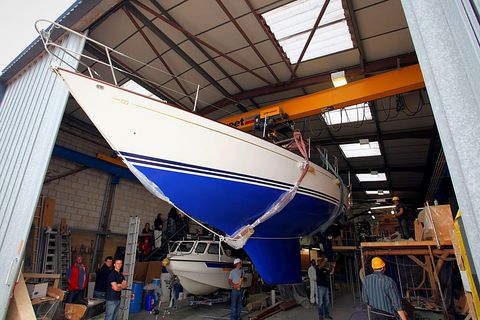
It is worth remembering that the liveaboard dream started under sail, and a few of these boats make the case better than any trawler. The Passport 40 is a Robert Perry performance cruiser built to a standard that rivals yachts costing far more, and it will sail you across an ocean on a fraction of a trawler's fuel. The Westsail 32 is the heavy, full-keel, double-ended cutter that defined the 1970s bluewater dream: slow, immensely strong, and cheap to find, though its thick solid glass and modest sail area ask for patience. The Contessa 32 earned its legend surviving the 1979 Fastnet storm when much of the fleet did not, and it remains a small, seakindly boat with real offshore credentials.
The right choice comes down to honest questions: how far do you really intend to go, how much diesel are you willing to buy, and how much system complexity do you want to own and maintain? A Monk 36 and a Nordhavn 47 are both trawlers, but they are answers to very different lives.
Garage, Galley & Hangar publishes a model-specific owner's reference manual for each of these boats, written around the systems, faults, and fixes that actually matter to an owner. Browse the full boats catalog to find yours.