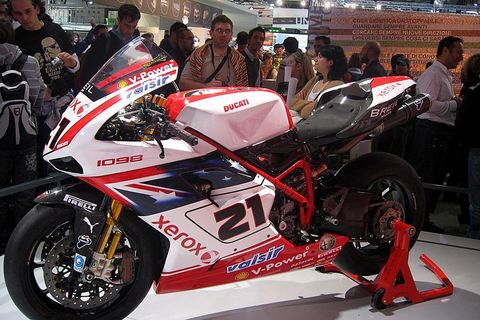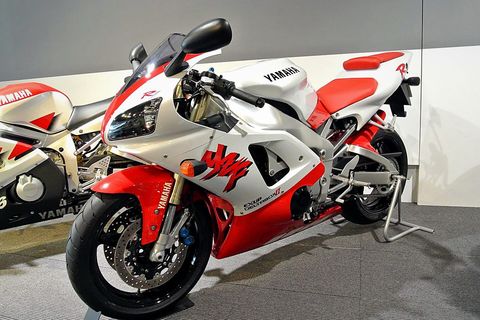
Ask a room of riders whether a great superbike should shove or spin, and you have started the oldest argument in the paddock. On one side sits the Italian V-twin, all torque and drama and mechanical honesty. On the other sits the Japanese inline-four, revving hard and building revs like a turbine. The Ducati 1098 and the first-generation Yamaha YZF-R1 are the cleanest way to feel that split. Both are liter-class sportbikes, both are landmark designs, and yet they ask you to ride in almost opposite ways. This is for the rider deciding not just which bike is faster on paper, but which one they actually want to live with.
Ducati 1098: the twin that hits like a hammer
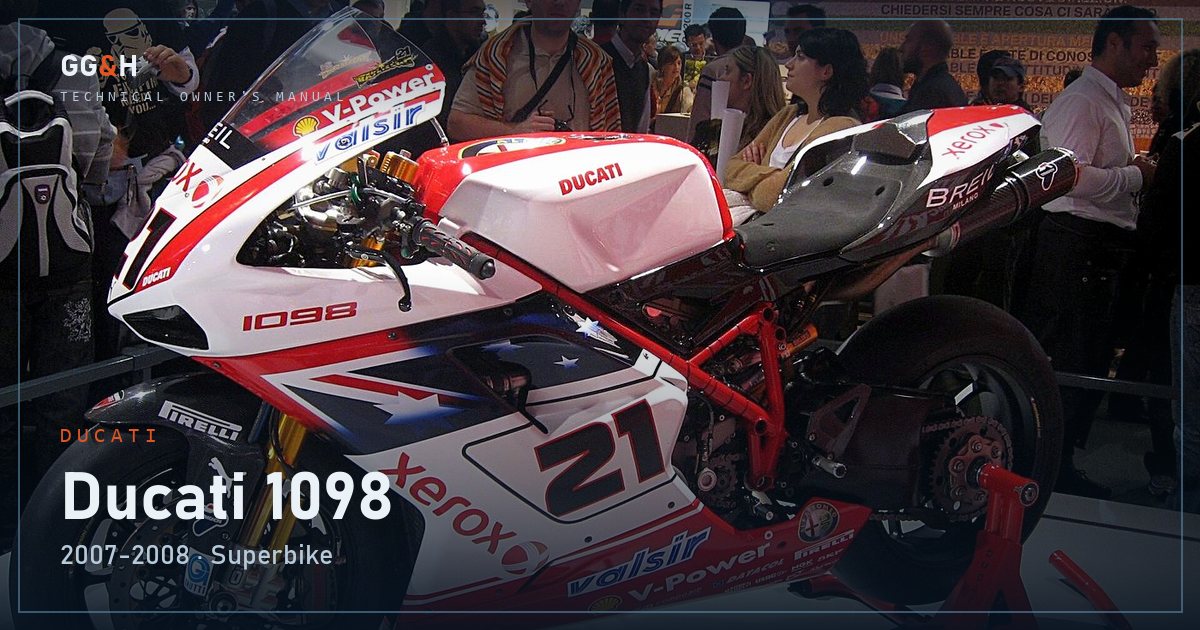
The 1098 was Ducati swinging for the fences. It brought back the single-sided swingarm, wrapped it in some of the best-looking bodywork Bologna ever drew, and dropped in a 1099cc L-twin with a claimed 160 horsepower. What you feel first is not the peak number, it is the shove. The big twin makes its case low and in the midrange, so you get a wall of drive out of a corner rather than a frantic chase to redline. The bike talks to you constantly: you feel each combustion event, you feel the chassis load up, and you feel exactly where the grip is.
What an owner should know is that this personality has a service bill attached. These are desmodromic engines, which means the valves are closed mechanically rather than by springs, and checking that valve clearance is a real, scheduled job that wants a knowledgeable Ducati tech. The older dry clutch (on early builds) is loud by design and is a wear item. Budget for the belt-driven cam service on schedule, because skipping it is how a twin turns into an expensive paperweight. The honest weak points: heat off that rear cylinder in traffic is genuinely uncomfortable, the ergonomics are committed and hard on the wrists at low speed, and parts and labor cost more than the Japanese norm. None of that is a defect. It is the price of the character.
Yamaha YZF-R1: the four that rewrote the rules
The 1998 R1 is a landmark for a reason. Yamaha stacked the gearbox shafts to shorten the engine front to back, which let them keep the wheelbase tight while getting weight where they wanted it. The result was a liter-bike that steered and flicked in a way nothing else did at the time, and it set the handling template that the whole class chased for years. The inline-four wants revs. Power builds cleanly and keeps climbing, and the reward is up top where the engine comes alive with a hard, addictive rush. It is less about brute drive off the corner and more about carrying speed and revs and being precise.
What an owner should know is that this is, mechanically, the friendlier machine to keep. Valves are spring-closed with generous inspection intervals, the four is famously durable, and Yamaha parts are cheap and everywhere. The honest weak points are the ones you would expect from a first-generation bike from the late 1990s: the fueling on the earliest carbureted setup can feel abrupt just off closed throttle, the chassis is quick to the point of feeling nervous by modern standards, and there are no electronic rider aids at all, so traction and wheelie control are your right wrist. Check for crash history, corroded fasteners, and honest maintenance records, because clean, unmolested first-gen R1s are getting harder to find.
How to choose
Be honest about how you ride. If you want theater, torque you can feel everywhere, and a machine that rewards you for learning its rituals (and you can stomach the service costs), the Ducati 1098 is the more emotional, more special bike. If you want a lighter service load, screaming top-end power, razor steering, and running costs that will not scare you, the first-gen R1 is the smarter daily companion and a genuine piece of history.
There is no wrong answer here, only a wrong answer for you. The twin asks more of your wallet and gives back drama. The four asks more of your right wrist and gives back speed and simplicity. Ride both if you possibly can, because the difference is something you feel in the first hundred yards.
Whichever way you lean, know the machine before you buy it. GG&H publishes a model-specific owner's reference for both the Ducati 1098 and the Yamaha YZF-R1, with the maintenance schedules, known issues, and inspection checklists that make ownership a lot less of a gamble. Browse the motorcycle catalog to find the one that matches your bike.