Few arguments in the car world are older or friendlier than Mustang against Camaro. Ford lit the fuse in 1964 with a sporty, affordable coupe on humble Falcon underpinnings, and the whole industry scrambled to answer. Chevrolet's reply arrived for 1967, sharper and later to the party but built with the benefit of watching Ford's homework. This piece is for the person deciding which early pony car to actually own and drive, not the person looking to win a forum thread. Both are honest, rewarding cars. They just reward you for different things.
Ford Mustang (1964-1966)
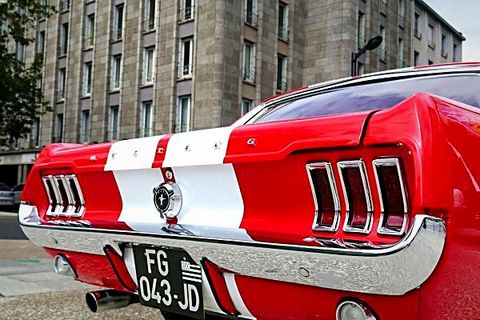
The first-generation Mustang is the car that created the segment, and it still carries that easy, likable character. Engines ran from the mild 260 and 289 two-barrel up to the genuinely quick Hi-Po 289, so there is a version for cruising and a version that will surprise people. The styling is clean and instantly readable, the driving position is friendly, and nothing about the car intimidates a first-time classic owner.
What an owner should know: parts support is arguably the best in the entire classic-car world. Almost everything, from sheet metal to trim to complete engines, is reproduced and inexpensive. That makes the Mustang the low-anxiety choice for someone learning to wrench.
Honest weak points: the early cars use a generation-one platform with drum brakes as standard and modest chassis rigidity, especially in the convertible. Handling is soft by modern standards, and the sheer number built means a plain six-cylinder car is common rather than special. If you want stopping power and cornering, budget for a front disc conversion and suspension refresh.
Chevrolet Camaro (1967-1969)
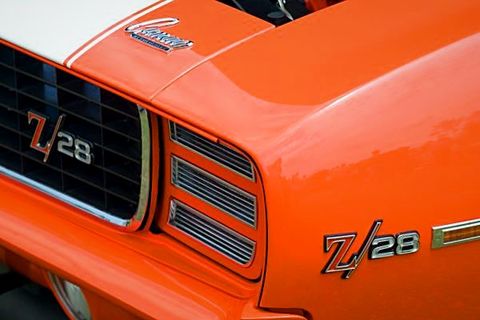
The first-generation Camaro is the archetype that many people picture when they hear "pony car." Chevrolet offered a deep menu: small-block SS cars, big-block 396 muscle, and the road-course-bred Z/28 with its high-revving 302. The result is a car with more visual aggression and, in the right trim, more straight-line and handling potential than the equivalent Mustang.
What an owner should know: the 1969 restyle is the most sought-after single year, and the aftermarket is nearly as deep as the Mustang's, so restoration parts are easy to source. The breadth of drivetrains means you can buy exactly the flavor you want, from mild cruiser to serious performer.
Honest weak points: that desirability cuts both ways. Genuine SS, Z/28, and big-block cars command real money and are frequently cloned, so documentation matters and verification is essential before you buy. The early Camaro also inherited GM's mono-plate rear leaf setup, which can suffer wheel hop under hard launches, a known quirk owners address with traction aids.
How to choose
Buy the Mustang if your priorities are approachability, running costs, and the sheer ease of finding parts and help. It is the friendlier entry point, the better value in base and mid trims, and the car that asks the least of a new owner. It is also the one with the deeper claim to originating the whole idea.
Buy the Camaro if you want more visual muscle, a wider spread of high-performance options, and the sharper end of period handling with the Z/28. Just go in with your eyes open on price and provenance, because the desirable trims attract clones.
Neither choice is wrong. Match the car to how you will use it: the Mustang for relaxed, low-stress classic ownership, the Camaro for a car with more edge and more headroom to chase performance. Whichever you land on, Garage, Galley & Hangar publishes a model-specific owner's reference manual for both, so you can dig into the details before you buy and keep it close once you own one. Browse the full lineup in the Garage catalog.