If you want an affordable, rear-drive, top-down sports car that puts the driver first, two Japanese icons top almost every list: the Mazda MX-5 Miata and the Honda S2000. They chase the same feeling, wind and steering and a manual gearbox, but they get there in opposite ways. One is a friendly featherweight you can wring out at any speed. The other is a high-strung, high-revving machine that rewards commitment. This is for the buyer trying to decide which of those characters fits the way they actually drive.
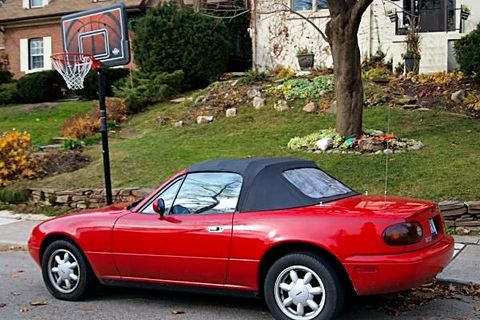
Mazda MX-5 Miata (1989-1997)
The original NA Miata is the car that revived the affordable lightweight roadster, and it remains the reference point for the whole idea. Pop-up headlights, a snug two-seat cabin, and a curb weight around a ton give it a lightness you feel in every input. The 1.6 and later 1.8 liter twin-cam fours are modest on paper (roughly 116 to 133 horsepower), but the point was never straight-line speed. The point is balance: quick, honest steering, a slick short-throw shifter, and a chassis that talks to you constantly.
Its great strength is accessibility. You can enjoy a Miata completely at legal speeds, and the running costs are low. Parts are cheap and everywhere, the mechanicals are simple, and the aftermarket is bottomless. What an owner should know: rust is the enemy, especially in the rockers, frame rails, and around the battery tray, so inspect underneath carefully. The soft top plastic rear window on early cars yellows and cracks. Honest weak points: it is genuinely slow by modern standards, the cabin is tight for tall drivers, and clean, unmodified examples are getting harder to find as many have been tracked or heavily altered.
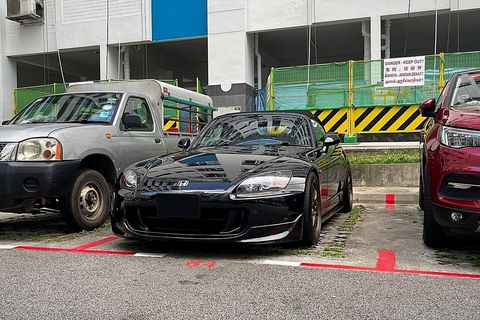
Honda S2000 (1999-2009)
Built to mark Honda's 50th anniversary, the S2000 is the intense one. Its 2.0 liter F20C (later 2.2 liter F22C) is a masterpiece of naturally aspirated engineering, spinning to a 9,000 rpm redline and making around 240 horsepower without a turbo. The six-speed gearbox is one of the best ever fitted to any car, and the front-mid engine layout gives it serious cornering ability. Where the Miata whispers, the S2000 demands: you keep it on the boil, above roughly 6,000 rpm, to feel its full ferocity.
Its strength is that peak experience. Few cars at any price deliver the S2000's combination of a shrieking VTEC top end, precise controls, and stout Honda reliability. What an owner should know: early AP1 cars (through 2003) have snappier limit handling that caught out unwary drivers, while the later AP2 softened it. Check for accident history, and confirm the top mechanism and the notoriously fussy convertible top are healthy. Honest weak points: it can feel peaky and demanding in daily traffic, there is little low-end torque, values have climbed steeply so bargains are gone, and clutches and tires are consumables on a car this eager.
How to Choose
Pick the Miata if you want an everyday sports car: a friendly, forgiving, inexpensive roadster you can drive hard within the speed limit, wrench on yourself, and keep for years without drama. It is the better first sports car and the better budget buy.
Pick the S2000 if you want the sharper, faster, more serious machine and you are willing to pay more up front and rev it to enjoy it. It is the choice for the experienced driver who wants a naturally aspirated Honda legend and treats every drive as an event.
Neither is a wrong answer. The Miata is the one you drive more often. The S2000 is the one you plan your weekend around.
Whichever you land on, Garage, Galley & Hangar publishes a model-specific owner's reference manual for both the Mazda MX-5 Miata and the Honda S2000, covering the systems, service intervals, and known trouble spots that matter for the years above. Browse both in the Garage catalog.