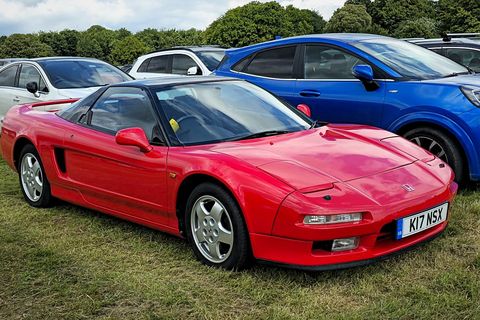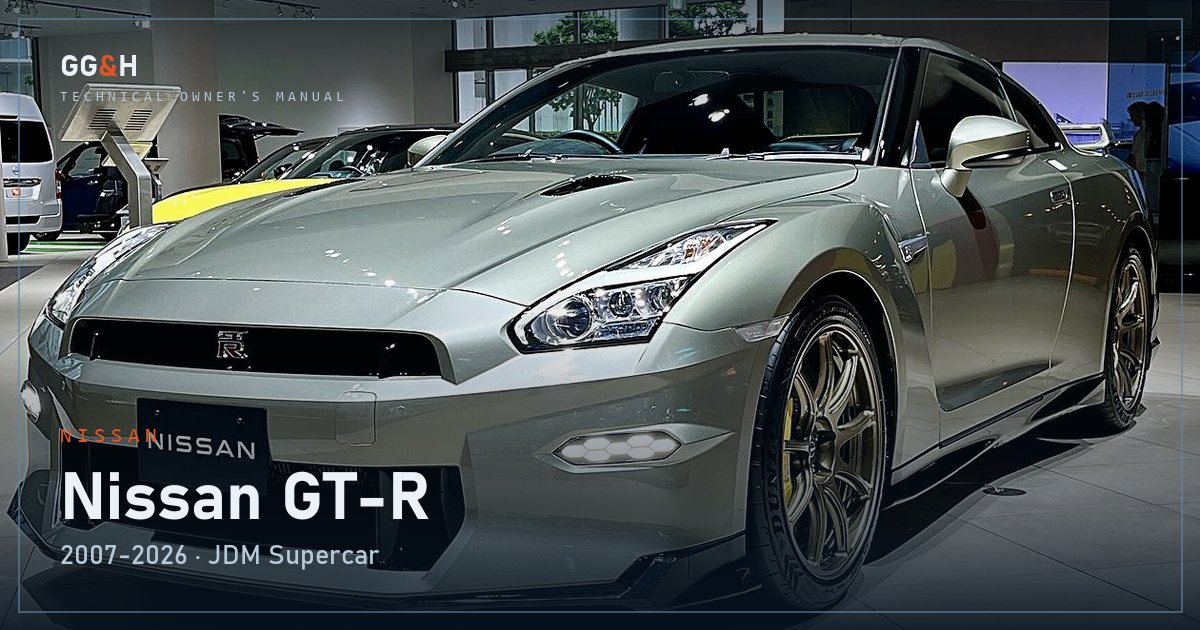
Ask two enthusiasts to name the Japanese supercar and you will start an argument. One will point at the Nissan GT-R, the twin-turbo bruiser that has spent nearly two decades embarrassing cars that cost three times as much. The other will point at the original Honda NSX, the aluminum mid-engine exotic that a young Ayrton Senna helped sort at Suzuka, the car that told Ferrari a supercar could also be usable on a Tuesday.
They chase the same goal from opposite directions. The GT-R is about force and data: measure everything, control everything, go faster. The NSX is about feel and restraint: less mass, more clarity, drive it forever. This is for the buyer trying to decide which philosophy they actually want in the garage, not just which one wins a magazine bar chart.
Nissan GT-R: the giant-killer
The GT-R (R35, sold from 2007 well into the 2020s) is a technology statement. Its hand-assembled twin-turbo VR38DETT V6 drives all four wheels through a rear-mounted dual-clutch transaxle, and layers of electronics turn brute output into repeatable, almost anyone-can-do-it lap times. That is the appeal: it is savagely quick and unusually forgiving of an ordinary driver.
What an owner should know is that the engineering that makes it fast also makes it expensive to keep. The dual-clutch transaxle and the AWD system are not cheap to service, tire and brake wear is real if you use the performance, and the recommended fluid intervals are strict. Early cars had known transmission quirks that later software and hardware revisions addressed, so service history matters more here than badge year. Honest weak points: the cabin and infotainment feel their age, the ride is firm, and the sheer capability means it rarely feels engaging below felony speeds. Buy on documented maintenance, not on mileage alone.
Honda NSX: the everyday exotic
The first-generation NSX (1990 to 2005) took the opposite bet. An all-aluminum monocoque, a naturally aspirated V6 mounted amidships, VTEC, and a chassis honed with Senna's input produced a car that was light, communicative, and genuinely reliable in a class that usually was not. It does not overwhelm you with numbers. It rewards you with steering feel, visibility, and a powertrain that will run for a very long time if maintained.
What an owner should know is that condition and originality now drive value hard, because these are appreciating collector cars. The mechanicals are robust, but the timing belt service is a scheduled, labor-intensive job (the engine sits sideways behind you), and it must be done on time. Aluminum bodywork means accident repair is specialist work, so a clean, unmodified example is worth chasing. Honest weak points: it is slower in a straight line than almost any modern performance car, early cars have a somewhat dated interior, and clean examples now cost real money. The running costs are lower than the GT-R's in normal use, but the buy-in is high and rising.
How to choose
Pick the GT-R if you want maximum, repeatable pace and you treat depreciation and service bills as the price of that performance. It is the sharper tool and the better value per horsepower, as long as you budget honestly for upkeep. Pick the NSX if you want feel, longevity, and a car that is already a blue-chip classic: you will be slower, but you will enjoy every mile and likely watch its value hold or climb. Neither is a mistake. The GT-R is the weapon, the NSX is the heirloom, and the right answer is simply which of those two things you actually came for.
Whichever way you lean, know the car before you buy. Garage, Galley & Hangar publishes a model-specific owner's reference manual for both the Nissan GT-R and the Honda NSX, covering the systems, service intervals, and known trouble spots that decide whether a given example is a bargain or a headache.