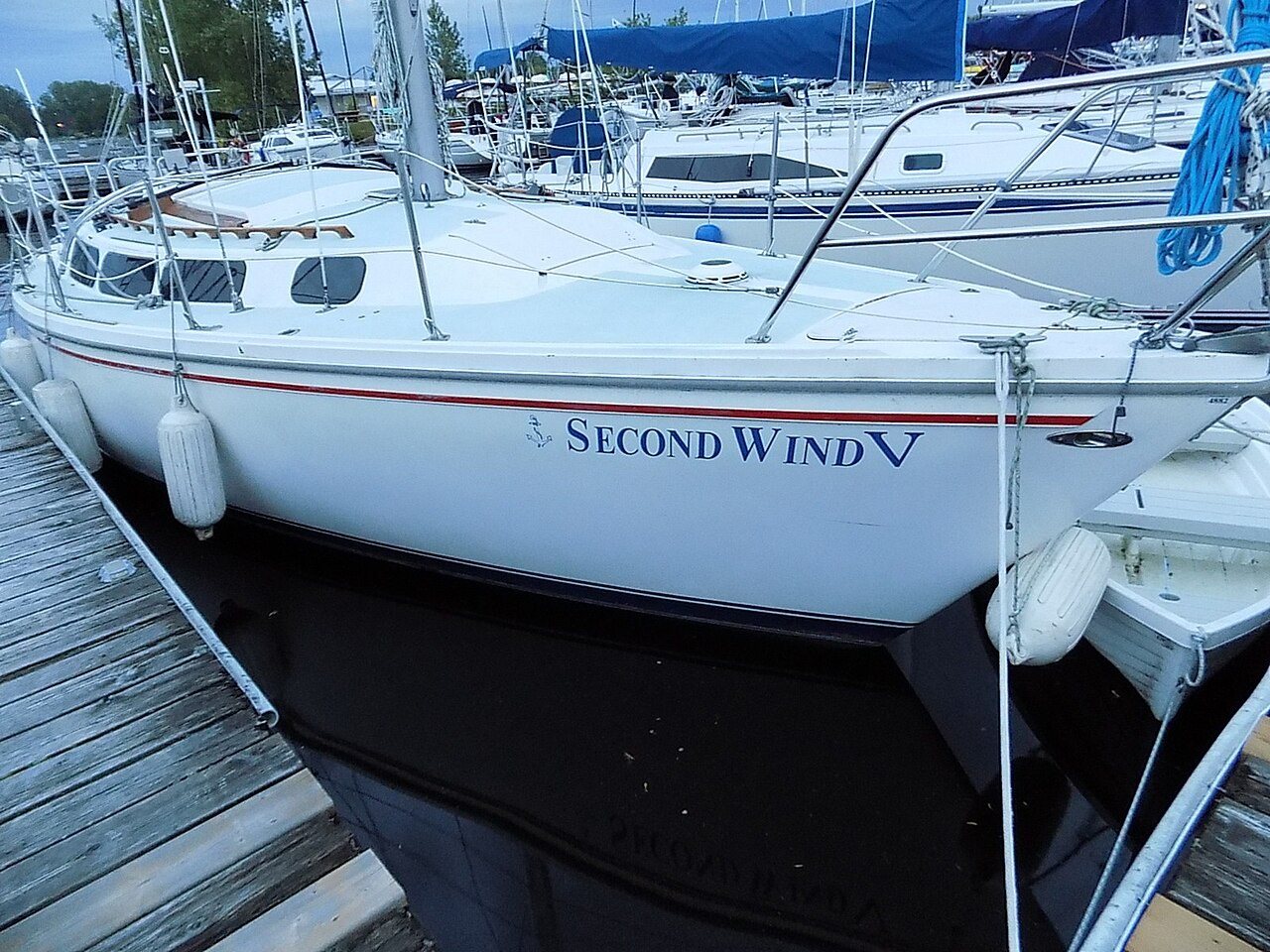
Catalina 30
About This Book
This is a sourced owner's companion to the Catalina 30, one of the best-selling auxiliary sailboats ever built, produced by Catalina Yachts from the mid-1970s into 2008. It is not a factory service manual, and it is not a substitute for a qualified surveyor, rigger, or mechanic. Read this chapter first, because before any advice that follows can help you, you need to know exactly which Catalina 30 you own.
1.1 What this book is, and what it isn't
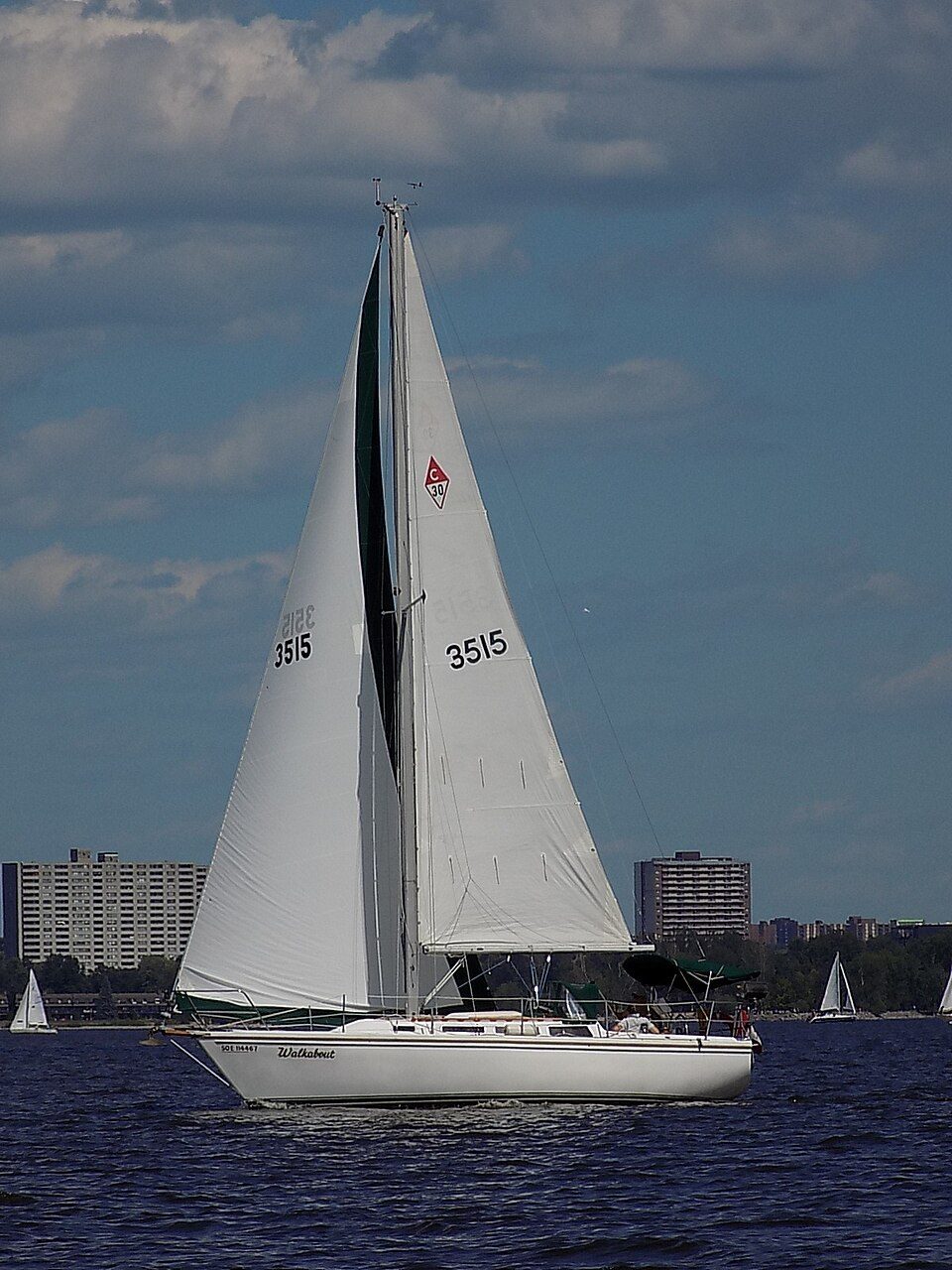
Welcome aboard. Whether you already own a Catalina 30 or you are sizing one up at a broker's dock, this book is meant to live in the chart table and earn its keep there.
This is an owner's reference, assembled from the public record: the Practical Sailor and SpinSheet used-boat reviews, the International Catalina 30/309 Association's own history, the sailboatdata, Wikipedia, and Good Old Boat specification sets, the Catalina Direct parts catalog, and years of owner discussion on the Sailboat Owners forums. Every factual claim traces back to one of those. Where the sources disagree, this book gives you the best-supported figure and tells you what to confirm on your own boat.
What this book is not:
- It is not a factory manual. Catalina never published the shop documentation an automaker would, and much of the original paperwork has scattered over four-plus decades and roughly 6,400 hulls. Where a factory torque spec or tank capacity would help, we often do not have one, and this book will say so rather than invent a number. The owners themselves note that some running changes, tankage among them, "were not recorded."
- It is not a substitute for a professional. A book cannot put a moisture meter on your side deck, probe your compression post block with an awl, or listen to your M-25 run under load. When a decision carries real safety or real money, this book points you to a surveyor, a rigger, or a mechanic, and you should go.
- It is not gospel on your specific hull. Two Catalina 30s built a year apart, kept on opposite coasts, can be genuinely different boats. Use this book to know what to look for. Use your own eyes, and a professional's, to confirm what is actually there.
Think of it as the knowledgeable friend who has read everything and will tell you plainly when the answer is "it depends, go check."
1.2 How to use this book
The chapters ahead move from identity to systems to problems to upkeep. You do not have to read them in order, but read this chapter in full, because almost every later chapter branches on the questions below. The keel advice, the sail dimensions, the engine access notes, the rig tuning, all of it depends on which version of the boat you have.
A few conventions to know:
- Measurements are imperial first, metric in parentheses. A draft of 5.25 ft (1.60 m), for example.
- [SAFETY] flags something that can hurt you or sink the boat. These carry an inline source note so you can weigh the evidence yourself.
1.3 The one thing to know first: your mast is deck-stepped
Before the four axes, learn the Catalina 30's signature structural fact, because it colors every survey.
The Catalina 30 is deck-stepped, not keel-stepped. The mast step sits on the cabin trunk, the spar lands on deck, and its downward load is carried below through a wooden compression post to a support block sitting on the keel in the bilge. Practical Sailor states it plainly: "the mast is stepped on deck and supported by a wooden compression column belowdecks" (source: practical-sailor.com; catalina30.com). You will see the boat loosely called "keel-stepped" in some write-ups, but that is imprecise: the mast does not run to the keel, the compression post does. Treat your boat as deck-stepped with a keel-landed post, because the distinction changes what you diagnose.
Here is why it matters. [SAFETY] That support block is white oak fiberglassed into the bilge (source: catalina30.com, confirmed by Catalina Yachts reps). Sitting in bilge water, oak rots. When it does, the post subsides, the rig settles, and the symptoms show up as deck deflection at the mast collar and, tellingly, head and V-berth doors that suddenly bind or will not latch. One research note reports the block changed to aluminum around 1988, but the class association and Catalina's own reps describe the white-oak block as used on all Catalina 30s regardless of year, so do not assume a newer boat is different: confirm the block on your own hull. For now, carry the fact: deck-stepped, a rot-prone wood block down in the bilge, and doors that stick are a structural tell, not a joinery quirk.
1.4 Identify your boat: the four axes
The Catalina 30 was built by Catalina Yachts, designed by Frank Butler, the company's founder, and produced from roughly 1974 into 2008, with the final hull, #6454, completed in May 2008 (source: catalina30.com; roughly 6,400 to 6,500 hulls is the honest range). The start year is given as 1972 (Wikipedia) or 1974 (the association and Practical Sailor); the safe reading is design origin around 1972 to 1974, first deliveries mid-1970s. Butler's whole design philosophy, maximum interior volume and value in a beamy, moderate-displacement coastal cruiser, is exactly what this boat embodies: 10.83 ft (3.30 m) of beam on a 29.92 ft (9.12 m) hull, 6 ft 4 in of headroom, and up to seven berths.
Within that one model name live four real forks. Nail these down and the rest of the book snaps into focus.
1. Generation: Mark I, Mark II, or Mark III
The boat evolved through three generations over the same basic hull (source: catalina30.com; sailboatdata):
- Mark I (1975 to 1986): straight (non-notched) cockpit, tiller steering, and end-boom mainsheet. The earliest boats used external wire-rope halyards, and Practical Sailor warns the very first hulls "lacked reinforced lower shroud chainplates."
- Mark II (September 1986 to 1993): the big visible change is a T-shaped cockpit with pedestal (wheel) steering, plus internal halyards led aft. The Mark II starts around hull #3300.
- Mark III (1994 to 2008): a walk-through transom with a boarding platform became standard, along with wider cockpit coamings, an expanded galley, and three added hull ports for light. The wing keel became standard on the Mark III.
Wikipedia notes an open transom "added in 1990," while the association ties the standard walk-through transom to the 1994 Mark III; the likely truth is that it was available around 1990 and standard from 1994. Independent of generation, a bowsprit was a factory option on both rigs, which is why you will see listings like "MkII Tall Mast Bow Sprit." The bowsprit is a rig option, not a separate model.
2. Rig: standard or tall (and the bowsprit)
The Catalina 30 is a masthead sloop, and it came in two rig heights (source: goodoldboat.com; catalina30.com):
- Standard rig: I = 41 ft, P = 35 ft, E = 11.5 ft. Working sail area lands around 430 to 446 ft². Easygoing and stiff; Practical Sailor calls it slightly undercanvassed in light-air venues.
- Tall rigTall rig: roughly two feet more mast. The association's rule is that the tall spar adds 24 in to the I dimension and 6 in to the boom (E). Sail area runs around 505 to 517 ft², and Practical Sailor rates the tall rig "substantially faster" on PHRF, the choice for light-wind sailing and club racing.
Published "total sail area" numbers vary widely, from about 433 to 517 ft², because sources mix rig heights and measurement conventions. Never trust a single sail-area figure without knowing which rig it describes. The bowsprit option adds about 32 in to the foretriangle (J) on either rig. Because I, J, P, and E all differ by rig, your sails, furler, and standing rigging are rig-specific: measure your actual foretriangle before ordering anything.
3. Keel: fin, shoal, or wing
Three keels were offered, all lead ballast on an externally bolted fin (source: catalina30.com; practical-sailor.com):
- Deep fin (standard): draft 5 ft 3 in / 5.25 ft (1.60 m). The best upwind performer.
- Shoal keelShoal: draft 4 ft 5 in (1.35 m), about 11 in shallower, popular in Florida and the Chesapeake.
- Wing: draft 3 ft 10 in (1.17 m), introduced November 1986 and standard on the Mark III.
One secondary summary calls the keel cast iron, but Practical Sailor and the weight of evidence say external lead. Verify on your hull, because it changes what you expect from the keel bolts. Note two more year-driven points that stack on older boats: keel bolts changed from mild steel to stainless on the Mark II (around 1987), and blister-resistant vinylester gelcoat did not arrive until the late 1980s or early 1990s. A pre-1988 boat therefore tends to carry mild-steel keel bolts and a more blister-prone hull, with a mast-step block that has had the longest time to soak, all at once.
4. Engine: Atomic 4 gas, or Universal diesel
Two eras, two engine worlds (source: practical-sailor.com; catalina30.com; spinsheet.com):
- Early boats (mid-1970s to mid-1980s): gasoline. The mainstay was the 65-cubic-inch Atomic 4 gas engine, adequate to reach hull speed. A small optional Atomic diesel, plus early Yanmar and Universal 5411 fits, also appear, most of them underpowered for a 10,200 lb (4,627 kg) boat.
- Later boats: diesel. The 3-cylinder Universal M-25 (about 21 hp, a marinized Kubota D850) became standard through the mid-1980s and the sole option from October 1988. The uprated M-25XP (about 23 hp, Kubota D950) followed in the late 1980s and is the diesel reviewers recommend. The exact Catalina 30 year the XP superseded the M-25 is not documented; the late-1980s timing is inferred from sister ships, so confirm against your own engine.
Lift the engine box and read the plate. On any Catalina 30 the engine sits amidships in a low, tight bay under the dinette, which makes it vulnerable to bilge water and hard to soundproof, a detail that shapes both survey and daily life aboard.
1.5 Know your hull: a quick checklist
Before you turn another page, fill in your own answers. Keep them handy; the rest of the book will ask.
- Generation: Mark I (tiller, straight cockpit), Mark II (wheel, T-cockpit, from Sep 1986), or Mark III (walk-through transom, from 1994)?
- Rig: standard or tall? Bowsprit fitted? Actual foretriangle measured?
- Keel: deep fin (5.25 ft / 1.60 m), shoal (4 ft 5 in / 1.35 m), or wing (3 ft 10 in / 1.17 m)?
- Engine: Atomic 4 gas, or Universal diesel (M-25 or M-25XP)? Plate confirmed?
- Mast block: probed for softness or rot? Original white oak, or already replaced? Do the head and V-berth doors close cleanly?
- Keel bolts: mild steel (pre-1987) or stainless? Any "smile" at the hull-to-keel joint?
If you can answer all six, you are ready for everything that follows.
1.6 A word on liability
This book is a companion, not a command. It gathers what the public record says about a mass-produced boat now decades old, and it does its honest best to separate what is well established from what is one owner's story. But it has never seen your boat.
Nothing here replaces a qualified marine surveyor, rigger, mechanic, or naval architect. Standing rigging, chainplates, keels, the mast step and its compression post, engines, fuel systems, and steering are life-safety items; when this book flags one, that is your cue to bring in a professional and to trust their hands-on inspection over any general statement printed here. Specifications, procedures, and figures may contain errors, may not match your specific hull, and may have been superseded across a thirty-year production run. Verify anything load-bearing before you act on it.
You, and the professionals you hire, are responsible for the safe condition and operation of your vessel. The authors and publisher of Garage, Galley & Hangar accept no liability for any loss, damage, or injury arising from the use of this book. Use it to ask better questions. Go get the real answers on the water.
History & Identity
The Catalina 30 is the boat that taught a couple of generations of American sailors what an affordable, roomy, easy-to-handle family cruiser could be. Roughly 6,400 to 6,500 of them left the factory over a run that stretched from the mid-1970s into 2008, which puts it among the best-selling auxiliary sailboats ever built. This chapter is about where your boat came from, how it changed across three distinct generations, and why so many of them are still out there sailing. Knowing which era and which options you own is the single most useful piece of background you can carry into every other chapter of this book.
2.1 The designer and the company
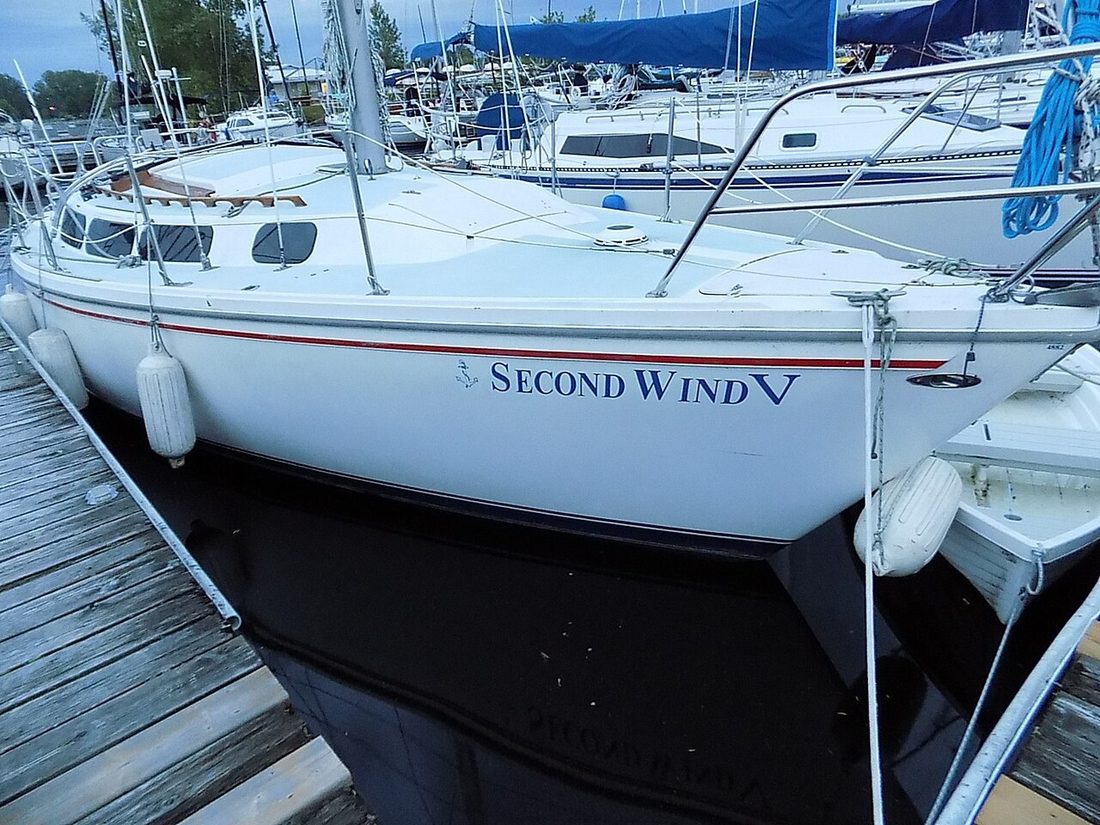
Your boat is the work of one man's philosophy. The Catalina 30 was designed by Frank Butler, the founder of Catalina Yachts, and it was built in the United States at the company's Woodland Hills, California operation (International Catalina 30/309 Association, catalina30.com; Wikipedia, "Catalina 30").
Butler was not a naval architect in the academic sense, and he ran Catalina in a way that showed. Across the whole Catalina line the guiding idea was the same: maximize interior volume and value in a beamy, moderate-displacement coastal cruiser, and keep the price low enough that a working family could actually buy one. The Catalina 30 is that idea in its purest form. Almost every distinctive thing about the boat, from its unusually wide beam to its seven berths to its famously reasonable sticker price, traces straight back to that priority.
It is worth understanding how Catalina kept the price down, because it is part of the boat's identity and not just a footnote. The company "notably avoided advertising entirely, instead relying on dealer networks and word-of-mouth," a choice that Practical Sailor estimates "helped keep costs down by approximately $1,000 to $2,000 per boat compared to competitors who spent 5 to 10 percent of revenues on marketing" (Practical Sailor, "Catalina 30" used-boat review). That is why the Catalina 30 has always ranked among the lowest-priced 30-foot cruiser-racers you can find. You were never paying for a marketing department.
2.2 When your boat was built
The sources genuinely disagree on when production started, and the year is reported two ways:
- 1972, per Wikipedia's entry for the Catalina 30.
- 1974, per both the owners' association (which describes the boat as "designed around 1974") and Practical Sailor (which says the boat "entered production in 1974").
The most likely reconciliation is that design work began in the earlier window, around 1972 to 1974, and the first hulls launched in the mid-1970s. A representative early build year of 1976 shows up in the sailboatdata record for the standard-rig boat (via the goodoldboat data mirror). The safe framing, and the one this book uses, is an early-to-mid-1970s introduction with roughly 1974 first deliveries. If the exact birth year of your particular hull matters to you, verify it against your Hull Identification Number rather than trusting a round decade, because the two-source split above means no single published start year is authoritative.
The end of the run is not in dispute. The final hull, number 6454, was completed on May 15, 2008 (International Catalina 30/309 Association). That is a production life of more than three decades on essentially one hull design, which is remarkable and is a large part of why the boat matters.
2.3 How many were built
The total number of hulls is cited several ways, and you will see all of them repeated online:
- More than 6,000, per the sailboatdata / goodoldboat descriptive note, which calls the boat "one of the most successful production sailing yachts in history."
- 6,430, per Wikipedia.
- Nearly 6,500, with the final hull numbered 6454, per the International Catalina 30/309 Association.
- A lower roughly 4,000 "since 1975" appears in one Practical Sailor figure, which almost certainly reflects a partial count taken mid-production rather than the full run.
These reconcile cleanly if you read them as a total of about 6,400 to 6,500 hulls, with the last one numbered 6454. This book treats the precise count as approximate and uses "roughly 6,400 to 6,500." However you round it, the headline is the same: the Catalina 30 is one of the best-selling auxiliary sailboats ever built, and you are one owner among thousands.
2.4 Why it became the archetypal family cruiser
Plenty of good 30-foot boats were built in the same era and sold in the hundreds. The Catalina 30 sold in the thousands. Several reinforcing reasons stand out from the record, and each one still shapes how your boat sails and how it lives today.
Value. As noted above, the no-advertising, dealer-and-word-of-mouth model made the boat consistently one of the cheapest 30-foot cruiser-racers on the market. For a huge number of buyers, the Catalina 30 was simply the most boat their money could reach.
Interior volume. The boat carries an extraordinary 10.83-foot beam for its length, and combines it with 6 feet 4 inches of standing headroom and, in the factory's own description, "seven full adult berths" (International Catalina 30/309 Association; Practical Sailor). Down below, the Catalina 30 feels a size larger than it measures. That is the whole point of the design, and it is why families kept choosing it over narrower, sportier rivals.
A long, evolutionary production run. Rather than replace the boat when it aged, Catalina kept refining the same successful hull for more than 25 years. That built an enormous installed base and, with it, a deep ecosystem of parts, knowledge, and support. When you own a boat that thousands of people also own, someone has already solved almost every problem you will ever have.
Forgiving, stiff manners under sail. Practical Sailor sums it up well: "The combination of a high ballast/displacement ratio, extraordinary beam, a deep fin keel, and a fairly small sail plan produce a boat that stands on her feet very well." A boat that "stands on her feet" heels less and feels safer to a nervous crew, which is exactly what a first family cruiser needs to be. The same review is candid about the trade-offs, noting "rapid weather helm development when heeled" and a cockpit "oversized for offshore use," and this book will not pretend those away. But for coastal and near-coastal family sailing, the balance the Catalina 30 struck is close to ideal.
An active community. A dedicated International Catalina 30/309 Association, founded in 1974, plus large aftermarket suppliers such as Catalina Direct, keep the fleet serviceable and keep resale strong (catalina30.com; catalinadirect.com). This is not a boat you will struggle to find parts or advice for, and that reality is itself a reason the boat sold and keeps selling secondhand.
2.5 The three generations: Mark I, II, and III
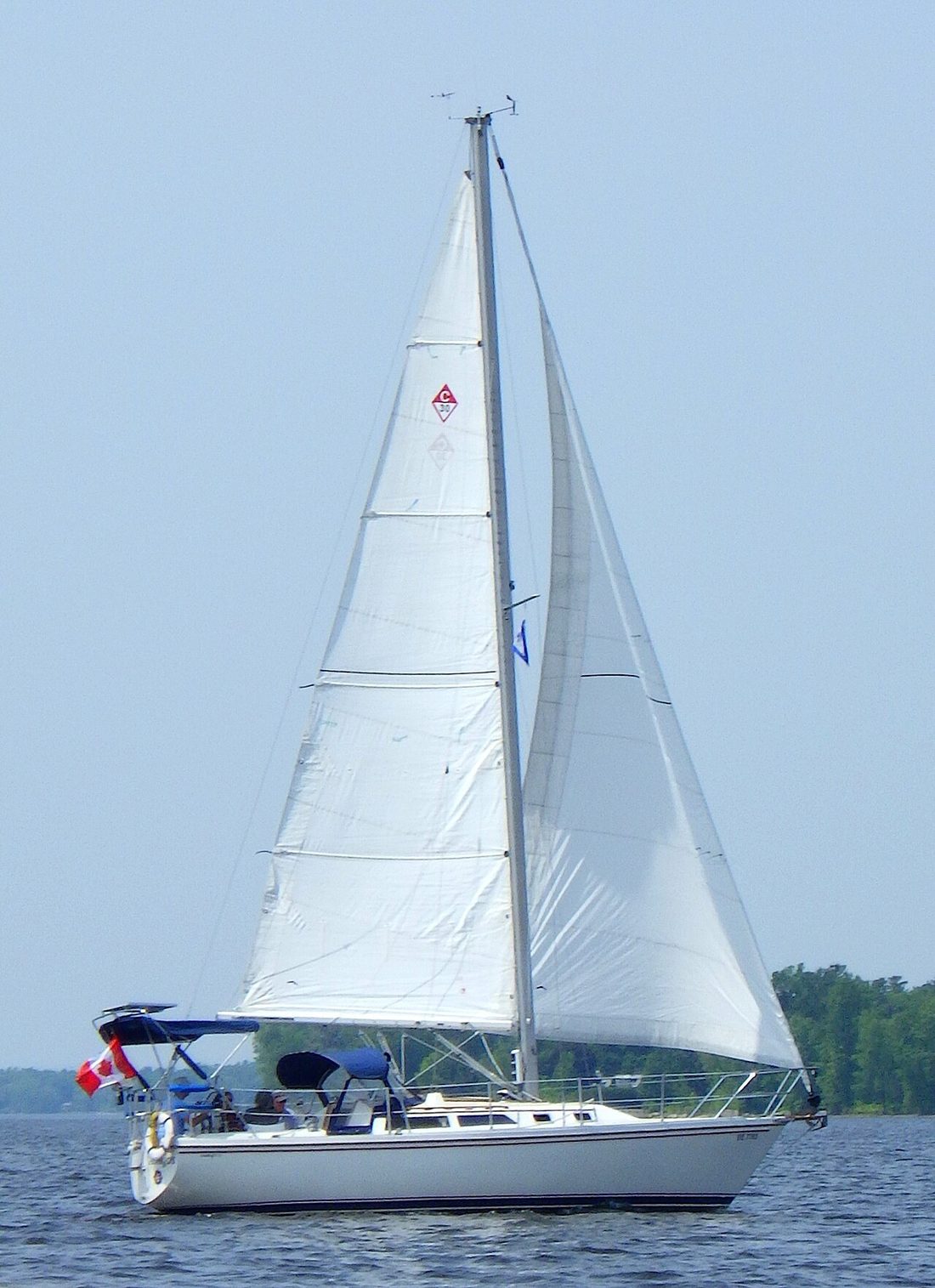
The single most useful thing you can know about your boat is which of the three generations it belongs to. Catalina evolved the Catalina 30 through three marks while keeping the same basic hull underneath, so the differences you care about are almost all in the cockpit, the deck, the rig hardware, and the keel. The clearest generational breakdown comes from the owners' association (catalina30.com).
Mark I (1975 to 1986)
This is the original boat, and if yours is from the mid-1970s through the mid-1980s it is almost certainly a Mark I. Its defining features are:
- A straight, non-notched cockpit and tiller steering.
- End-boom mainsheet trimming, meaning the mainsail is controlled from the aft end of the boom.
- Early boats used wire-rope external halyards run outside the mast.
Engine choices in the Mark I era were mixed, and this book's engine chapter covers them in full. In brief, the mainstay was the Atomic 4 gasoline engine, with Yanmar, a Universal 5411, and small optional diesels also appearing, before the fleet transitioned to Universal M-25 diesels in the mid-1980s (International Catalina 30/309 Association).
One Mark I detail is worth flagging now as a used-boat check item: Practical Sailor notes that early boats "lacked reinforced lower shroud chainplates," a shortcoming "later versions corrected." If you own an early boat, that is a spot to inspect and to read about in the systems and known-issues chapters.
Mark II (September 1986 to 1993)
The Mark II is the boat many buyers now consider the sweet spot, and it arrived with a clear cluster of changes in September 1986:
- A T-shaped cockpit replaced the straight one.
- Pedestal (wheel) steering replaced the tiller.
- Internal halyards were routed aft to the cockpit, cleaning up the rig and letting you handle sails from the safety of the cockpit.
The Mark II began at roughly hull number 3300 in 1986 (sailboatdata). On the engine side, the Universal M-25 diesel became the sole engine option from October 1988, which is when the gasoline engine was dropped entirely (International Catalina 30/309 Association). Practical Sailor's second reviewer explicitly "recommends Mark 2 or later versions (1986 onward)" for their improved deck and interior details, citing deeper anchor lockers, cross-ventilation ports, and a propane-ready galley. If you are shopping rather than already an owner, that recommendation is worth weighing.
Mark III (1994 to 2008)
The Mark III carried the boat through its final fourteen years and brought the biggest single change to how you get aboard:
- A walk-through transom with a boarding and swim platform became standard, where it had been an option on earlier boats.
- Wider cockpit coamings, an expanded galley, and three additional hull ports for natural light.
- The wing keel became standard on the Mark III.
There is one date to flag. Wikipedia states an "open transom added in 1990," while the owners' association ties the standard walk-through transom to the 1994 Mark III. The most likely truth is that both are correct at different levels: an open or walk-through transom was available as an option around 1990 and became standard equipment with the Mark III in 1994. If a listing tells you a 1991 or 1992 boat has a walk-through transom, that is entirely plausible as a factory option and does not make the boat a Mark III.
2.6 The rig matrix: standard, tall, and bowsprit
Independent of which mark you own, your Catalina 30 came with one of a small matrix of rig choices, and this is the second thing worth pinning down about your boat. Four configurations were offered (International Catalina 30/309 Association; goodoldboat):
- Standard rig
- Standard rig plus bowsprit
- Tall rig
- Tall rig plus bowsprit
Every version is a masthead sloop, meaning a single mast with the forestay running all the way to the top and one headsail set in front. What changes between them is the size of the sail plan, and the factory rules for the options are refreshingly simple (International Catalina 30/309 Association):
- The bowsprit adds about 32 inches to the J measurement, the foretriangle base along the deck, which lets you fly a larger headsail.
- The tall mast adds 24 inches to the I measurement (the height of the foretriangle) and 6 inches to the E, or boom, measurement.
In round numbers, the standard rig measures roughly I 41 feet, J 11.5 feet, P 35 feet, E 11.5 feet, for a working sail area in the neighborhood of 430 to 446 square feet depending on how you count it. The tall rig measures roughly I 43 feet, P 37 feet, E 12 feet, for a total in the neighborhood of 505 to 517 square feet (goodoldboat; sailboatdata; Practical Sailor).
A word of caution on those sail-area numbers. Published totals vary quite a bit, because sources use different measurement conventions, sometimes a 100 percent foretriangle basis and sometimes a mainsail-plus-working-jib basis, and sometimes fold a bowsprit into the "tall rig" figure. You will see 433, 437, and 446 square feet all quoted for the standard rig, and 505 through 517 for the tall. This book will never hand you a single "the sail area" number without telling you which rig it belongs to, and you should be equally skeptical of any listing that does. Treat standard as roughly 430 to 446 and tall as roughly 505 to 517, and always confirm which rig is being described.
Which rig should you want depends entirely on where you sail. Practical Sailor calls the standard rig "slightly undercanvassed in areas with predominantly light weather," and says the tall rig is "substantially faster" per PHRF, making the boat "competitive with Pearson 30, O'Day 30, and Ericson 30-2 when equipped with tall rig and racing sails." The short version: the standard rig is the easygoing, stiff, forgiving choice, and the tall rig is what you want for light-air venues and club racing.
2.7 The keels
Your boat sits on one of three keels, and knowing which one determines where you can safely float. Three options were offered (International Catalina 30/309 Association; Practical Sailor; Wikipedia):
- Deep fin (the standard), drawing 5 feet 3 inches. Practical Sailor describes it as a "swept-back high aspect ratio fin," and it delivers the best upwind performance of the three.
- Shoal fin, drawing 4 feet 5 inches, about 11 inches shallower. Practical Sailor notes it was "popular in Florida and Chesapeake areas," which is to say wherever the water is thin.
- Wing, drawing just 3 feet 10 inches, introduced in November 1986 and made standard on the Mark III.
The deep fin is an external lead keel bolted on with stainless steel fasteners (Practical Sailor). If you find "slight cracking at the joint between hull and ballast," do not panic; Practical Sailor calls that "typical of boats with narrow external ballast keels" and a normal inspection item rather than a structural fault. The maintenance chapter covers how to watch it. One honest gap: the factory sources do not give separate ballast weights for the three keels, so treat all three as carrying approximately the same total ballast, around 4,200 to 4,300 pounds of lead, until a factory spec sheet says otherwise.
2.8 Where it sits in the Catalina line
The Catalina 30 did not exist in isolation. It was the mid-size anchor of a whole family of Frank Butler designs that shared the same value-first philosophy, from the smaller trailerable boats up through larger cruisers. The 30 slotted in as the boat that a family might step up to from a Catalina 22 or 27, and it shared enough engineering DNA with its larger siblings, the Catalina 34 and 36, that owners routinely borrow knowledge across models. That cross-pollination is real and useful: much of the reliable information about your Universal M-25 diesel, for instance, comes from the well-documented Catalina 34 and 36 associations, because Catalina fitted the same engine family across the range.
The boat was successful enough, and its owner community loyal enough, that the class association carries the name "Catalina 30/309," reflecting the later, related Catalina 309 that followed in the family. This book does not cover the 309 in detail, and you should not assume 309 parts or specifications apply to your 30 without checking, but the shared association name tells you something: the Catalina 30 was not a one-off, it was the archetype that a whole segment of the Catalina line was built around.
2.9 What this means for you
By the end of this chapter you should be able to answer four questions about your own boat, and every later chapter will lean on your answers:
- Which mark is it? Mark I means a tiller and a straight cockpit; Mark II means a wheel, a T-cockpit, and internal halyards from September 1986 on; Mark III means a walk-through transom and, as standard, a wing keel from 1994 on.
- Which rig? Standard or tall, with or without a bowsprit, which sets your sail plan and your expectations for light air.
- Which keel? Deep fin at 5 feet 3 inches, shoal at 4 feet 5 inches, or wing at 3 feet 10 inches, which sets where you can safely go.
- Which engine era? Early gasoline Atomic 4 or the later Universal M-25 diesel, a changeover the engine chapter walks through in full.
None of these choices makes a Catalina 30 a bad boat. They just make it your Catalina 30. The genius of Frank Butler's design was that thousands of families could each get the boat they needed out of the same honest, roomy, forgiving hull, and more than three decades later that is still exactly what it offers you.
Glossary
- Acr
- An automatic charging relay: a device that joins two battery banks to charge together when a charging source is present, then isolates them so loads on one bank cannot drain the other.
- Atomic 4
- The Universal Atomic 4, a 30 hp inline-four gasoline auxiliary engine fitted to many older production sailboats.
- Backstay
- The stay from the masthead to the stern that keeps the mast from falling forward and controls forestay tension.
- Backstay Adjuster
- A device (hydraulic, mechanical, or tackle) that changes backstay tension under way to tune the rig.
- Ballast
- Heavy material, usually lead or iron, placed low in the keel to lower the boat's center of gravity and provide the righting force that keeps a sailboat upright and counteracts the heeling force of the wind on the sails.
- Barrier Coat
- A series of epoxy coatings applied below the waterline to seal the hull laminate against water absorption and osmotic blistering.
- Battery Bank
- A group of batteries wired together as one house or starting supply.
- Beam
- The width of the boat at its widest point.
- Biaxial Tape
- A fiberglass tape with fibers in two directions, used for structural repairs and tabbing.
- Bilge Pump
- A manual or electric pump that removes water collected in the bilge.
- Blower
- An electric fan that ventilates the engine compartment; on a gasoline boat it must be run before starting to clear fumes.
- Bowsprit
- A spar projecting forward from the bow that carries the headstay and forward sails, lengthening the effective rig.
- Catalina Smile
- The cosmetic crack that opens along the hull-to-keel joint on Catalina and similar boats as the keel bolts and stub flex or corrode.
- Catalina Yachts
- The California builder, founded by Frank Butler, of the Catalina line of production sailboats.
- Chain-And-Cable
- A steering system in which a chain over the wheel's sprocket drives cables back to the rudder quadrant.
- Chainplate
- A strong metal strap or fitting bolted to the hull or a structural bulkhead to which the standing rigging (shrouds and stays) attaches, transferring the enormous loads from the mast and rig into the boat's structure.
- Companionway
- The main opening and steps from the cockpit down into the cabin.
- Compression Post
- A vertical structural member beneath a deck-stepped mast that carries the mast's downward compression load through the cabin to the keel or a floor structure, preventing the deck from sagging under rig loads.
- Cone Clutch
- A friction clutch using cone-shaped mating surfaces to transmit torque, used in some marine transmissions (such as certain Yanmar gearboxes) to engage forward and reverse drive smoothly.
- Crevice Corrosion
- A localized form of corrosion that attacks stainless steel in tight, oxygen-starved gaps, such as under fittings or inside swage terminals, where the protective oxide layer cannot renew itself. It is a common hidden failure mode in rigging and chainplates.
- Cutless Bearing
- A water-lubricated sleeve bearing, with a grooved rubber inner surface, that supports the propeller shaft where it exits the hull; it wears out and must be replaced periodically.
- Dc
- Direct current, the 12-volt electrical system aboard most boats.
- Deck-Stepped
- A mast that sits on the deck or cabin top rather than passing through to the keel; its load is carried down by a compression post.
- Distribution Panel
- The electrical panel with breakers or fuses that distributes power to the boat's circuits.
- Dorade Vent
- A boxed ventilator that lets air below while trapping and draining spray.
- Dripless Seal
- A shaft seal that stops seawater at the propeller shaft without the steady drip of a traditional stuffing box.
- Edson Pedestal
- A cockpit steering pedestal made by Edson, carrying the wheel and its chain-and-cable gear.
- Emergency Tiller
- A simple lever or bar that fits directly onto the rudder post to steer the boat by hand if the main steering system fails.
- Fin Keel
- A relatively short, deep ballasted keel attached to the bottom of the hull, offering good upwind performance and maneuverability compared with a long full keel, at the cost of some directional stability and grounding robustness.
- Flame Arrestor
- A metal-mesh device on a gasoline engine's air intake that stops a backfire flame from igniting fumes.
- Foot Pump
- A foot-operated pump for fresh or sea water at the galley or head, needing no electrical power.
- Forestay
- The forward stay from the mast to the bow that carries the jib and keeps the mast from falling aft.
- Foretriangle
- The triangular area at the front of the rig bounded by the mast, the forestay, and the deck. Its dimensions (I and J) define the size of the jib or genoa and are used in sail area and rating calculations.
- Furler
- A device that rolls a sail around a stay or foil for setting and stowing.
- Galvanic Isolation
- A galvanic isolator or isolation transformer in the shore-power ground that blocks galvanic current, protecting underwater metals at the dock.
- Gelcoat
- The pigmented resin outer layer of a fiberglass hull or deck that provides a smooth, glossy, waterproof finish and protects the underlying laminate from UV and water. It can craze, chalk, or blister with age.
- Glow Plug
- An electric heating element in a diesel that warms the air to aid cold starting.
- Halyard
- A line used to hoist a sail up the mast.
- Hdpe
- High-density polyethylene, a tough plastic used for replacement rudders and fittings.
- Headroom
- The standing height available in the cabin.
- Heat Exchanger
- A component in a freshwater-cooled (indirect) engine cooling system where engine coolant is cooled by raw seawater flowing through a bundle of small tubes, transferring heat without the two fluids mixing, much like an automotive radiator cooled by water instead of air.
- Holding Tank
- The onboard tank that stores sewage (black water) from the marine head until it can be pumped out ashore or discharged legally offshore.
- Hull
- The main body of the boat.
- Hull Identification Number
- The unique serial number (HIN) molded into a boat's hull, encoding builder and build date.
- Hydrolock
- Engine damage caused when water fills a cylinder; because water cannot compress, the piston stops hard, often bending a connecting rod. On boats it usually comes from seawater backing up the exhaust into the engine.
- Impeller
- The flexible rubber, vaned rotor inside a raw-water pump that draws seawater through the engine's cooling system. Its vanes wear and can shear off, so it is a routine maintenance-replacement item; running the pump dry destroys it quickly.
- Keel Bolts
- The bolts that fasten an external ballast keel to the hull; critical structural fasteners to inspect and torque-check.
- Keel-Stepped
- A mast that passes through the deck and steps on the keel, as opposed to deck-stepped.
- Kubota
- The Japanese industrial-engine maker whose diesel blocks Universal and Beta marinized, the source of cheap cross-referenced parts.
- Lift Pump
- The pump that draws fuel from the tank and feeds the engine's injection system.
- Mainsheet
- The line that controls the mainsail's trim by adjusting the boom.
- Marine Head
- A toilet designed for boat use, flushed with seawater or fresh water and discharging to a holding tank or overboard through a Marine Sanitation Device.
- Marinized
- An industrial or automotive engine adapted for marine use with seawater cooling, marine exhaust, and corrosion protection.
- Mark Ii
- A later production series incorporating design changes; on the Catalina 30, the September 1986 update (T-cockpit, wheel).
- Mast Step
- The fitting or structure the base of the mast sits on, on deck over a compression post or on the keel.
- Masthead Sloop
- A single-masted sailboat whose forestay attaches at the top (masthead) of the mast, allowing a large foretriangle and headsail. This contrasts with a fractional rig, where the forestay attaches partway down the mast.
- Mechanical Fitting
- A rigging terminal (such as Sta-Lok or Norseman) assembled by hand onto wire without swaging, allowing field replacement.
- Mixing Elbow
- A fitting at the engine's exhaust outlet where cooling raw water is injected into the hot exhaust gas, cooling the exhaust and carrying the water overboard. It is prone to internal carbon and salt buildup and corrosion, and is a common failure point requiring periodic replacement.
- Osmosis
- The process by which water permeates a hull's gelcoat and forms blisters in the laminate.
- Phrf
- Performance Handicap Racing Fleet, a widely used North American handicapping system that assigns each boat a rating in seconds per mile so that dissimilar boats can race fairly by correcting elapsed times.
- Pressure Water
- A freshwater system with an electric pump that maintains pressure so taps run like a house.
- Pressure-Relief Valve
- A valve that opens to release excess pressure, as on a water heater.
- Quadrant
- A fan- or pie-shaped fitting clamped to the top of the rudder post that steering cables or a ram act on to turn the rudder.
- Racor
- A common brand of fuel filter/water separator, so ubiquitous the name is used generically.
- Radial Drive
- A steering system in which the wheel turns a large radial drive wheel (a grooved disc) that pulls steering cables or chain running to the rudder quadrant, giving direct, responsive wheel steering.
- Raw-Water Pump
- The engine-driven pump that draws seawater for cooling; its rubber impeller is a routine wear item.
- Reversing Gear
- The transmission behind the engine that provides ahead, neutral, and astern.
- Roller Furling
- A system that rolls a sail around a rotating stay or foil so it can be set or stowed from the cockpit.
- Rudder
- The underwater blade, turned by tiller or wheel, that steers the boat.
- Rudder Stock
- The shaft that connects the rudder blade to the steering gear and passes through the hull.
- Running Rigging
- The lines adjusted while sailing (halyards, sheets, control lines), as opposed to the fixed standing rigging.
- Self-Tailing
- A winch with a jaw that grips the line so it can be trimmed without a second person tailing.
- Sheaves
- The grooved wheels inside blocks or at the masthead over which halyards and other lines run.
- Sheet
- A line that controls the trim of a sail, such as the jib sheet or mainsheet.
- Shoal Keel
- A shallower-draft keel option, trading some upwind performance for access to thinner water.
- Shore Power
- Dockside AC electricity brought aboard by cable to run systems and chargers.
- Shroud
- A standing-rigging wire from the mast to the side of the boat that supports the mast athwartships.
- Spreaders
- Horizontal struts projecting from the mast that hold the upper shrouds outboard, changing their angle to the mast so they better resist the mast's tendency to bend or buckle under rig loads. Also called crosstrees.
- Sprocket
- A toothed wheel that engages a chain to transmit motion; in some steering systems a chain-and-sprocket links the wheel to the steering cables.
- Stanchion
- An upright metal post at the deck edge that supports the lifelines.
- Standard Rig
- The base mast-and-sail configuration, as opposed to the taller tall-rig option.
- Standing Rigging
- The fixed wires or rods (shrouds and stays) that hold the mast up and in position. Unlike running rigging, it is not routinely adjusted while sailing and is a critical structural system with a finite service life.
- Stuffing Box
- The fitting where the propeller shaft exits the hull, packed with greased flax or fitted with a seal to keep the sea out while allowing the shaft to spin; also called a packing gland.
- Swage
- A wire terminal fitting attached by compressing (swaging) a metal sleeve tightly onto the end of a wire rope under high pressure. Swage terminals are common on standing rigging but can develop cracks or crevice corrosion over time.
- Tall Rig
- A taller mast and larger sail plan offered as an option for lighter-air performance.
- Thru-Deck Tube
- A tube through the deck that lets a mast's wiring or a post's load pass while keeping water out.
- Thru-Hull
- A fitting that penetrates the hull for an intake or discharge, normally paired with a seacock.
- Tiller
- A lever attached to the rudder head used to steer, as opposed to a wheel.
- Traveler
- An athwartships track and car that positions the mainsheet's lower block, controlling boom angle.
- Universal
- Universal (Universal Diesel), maker of the Atomic 4 gas engine and the later Kubota-based M-series diesels.
- Universal M-25
- The ~21 hp three-cylinder Universal diesel (marinized Kubota D850) that repowered many production sailboats.
- Waterlift Muffler
- A canister-style marine muffler that collects the cooling water mixed into the exhaust and, as exhaust pressure builds, lifts and pushes that water up and out overboard.
- Wheel Steering
- Steering by a wheel and cable/quadrant gear, as opposed to a tiller.
- Winches
- Drum-shaped mechanical devices that give the crew purchase to trim sheets and halyards.
- Wing Keel
- A shoal keel with winglets at its base that recover some of the stability and grip of a deeper keel.
- Y-Valve
- A Y-shaped diverter valve with one inlet and two selectable outlets, commonly used in a marine head's plumbing to direct waste either to a holding tank or overboard.
- Zinc Anode
- A sacrificial block of zinc attached to underwater metal parts that corrodes in place of them, protecting propellers, shafts, and fittings from galvanic corrosion. It must be inspected and replaced before it is fully consumed.