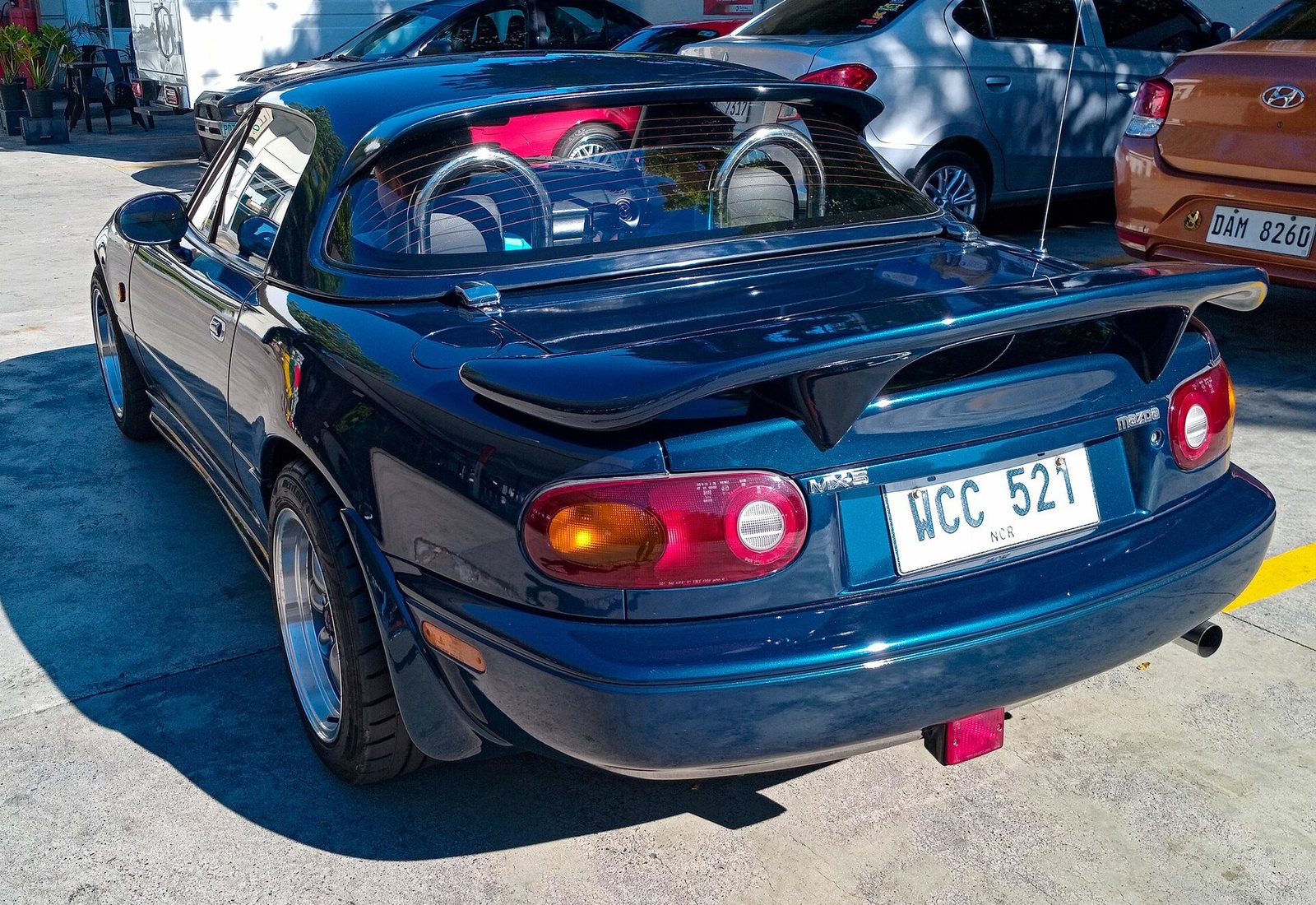
Mazda MX-5 Miata
About This Book
This is a single-generation reference for the first Mazda MX-5, the 1989 to 1997 car the world calls the NA. It exists because the NA is an unusual old car: genuinely simple to keep, genuinely cheap to run, and genuinely easy to buy badly. Most of what follows is aimed at that last problem.
1.1 What this book is, and what it is not
It is an owner's and buyer's reference for one generation of one car, built from three kinds of evidence and honest about which is which. Mazda's workshop literature comes first, and for the NA it is unusually accessible: a public archive carries the factory service volumes for the 1991-1993, 1994 and 1997 cars, free, in PDF (source: mellens.net/mazda/). Second, the marque specialist archives, three decades of community knowledge that in places knows the car better than the manual does. Third, suppliers, retailers and live market listings, checked directly in August 2026.
It is not a replacement for the factory manual. Where a job has a sequence, the manual has the sequence, and this book tells you which figure to trust and where it came from. It is not a tuning guide, and not a history of the nameplate past 1997. Nothing here is filled in from the NB generation that followed, which is the commonest way wrong NA figures get into circulation.
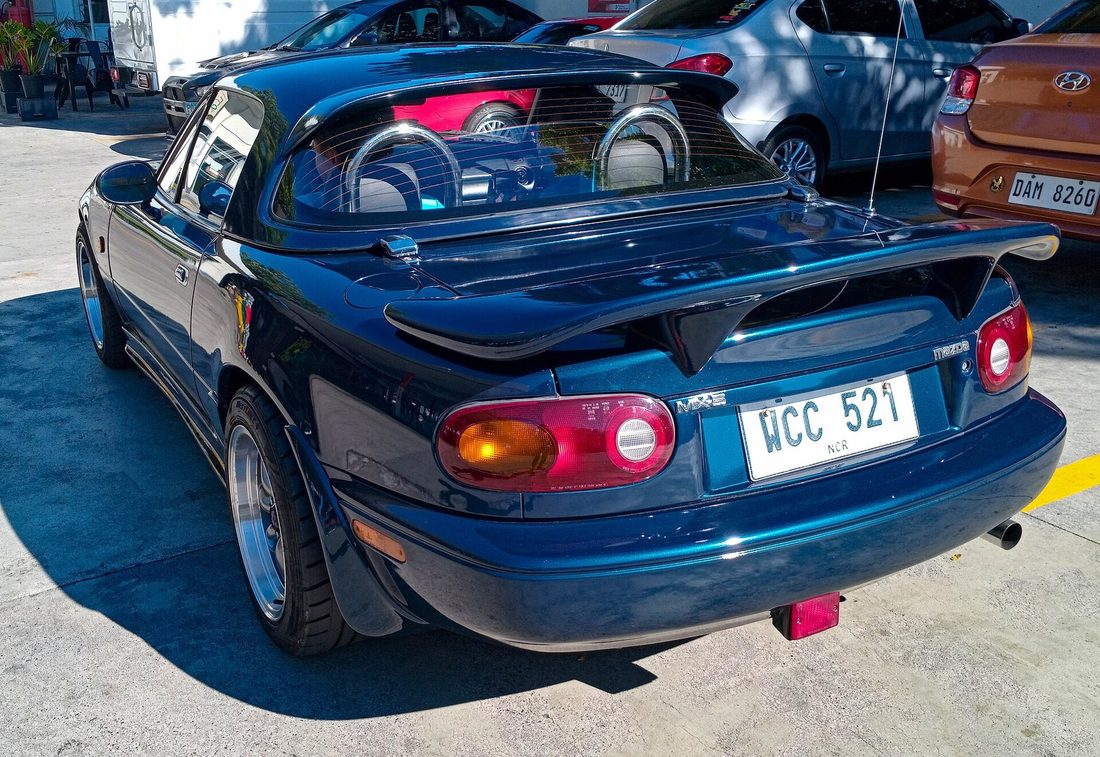
1.2 What the NA is, and why it mattered
In 1979 an American motoring journalist named Bob Hall put an idea to Kenichi Yamamoto, then Mazda's head of research and development: the world still wanted the small, cheap, front-engine rear-drive roadster the British had stopped building (source: barchetta.co/articles/mazda-mx-5-miata). His reference points were the Lotus Elan, the MGB and the Triumph Spitfire, built this time with Japanese reliability (source: onallcylinders.com/2025/02/16/always-the-answer-a-brief-history-of-the-mazda-miata-mx-5). That was not a fashionable argument: the category had been vacated, not outgrown, and industry wisdom held that it had died for good reasons.
What Mazda built was a clean-sheet answer to the same question: steel unitary bodyshell, aluminium bonnet, double wishbones at all four corners, four-wheel discs, a twin-cam four making 115 bhp, and an aluminium beam tying engine, gearbox and differential into one rigid unit (source: en.wikipedia.org/wiki/Mazda_MX-5_(NA)). The programme manager, Toshihiko Hirai, gave the team a mantra rather than a power target: Jinba Ittai, horse and rider as one, with a curb weight goal near 2,100 lb and 50:50 distribution (source: petrolicious.com/blogs/articles/mazda-mx-5-miata-na-buyers-guide). It reached the Chicago Auto Show in February 1989 at $13,995 (source: en.wikipedia.org/wiki/Mazda_MX-5_(NA)).
Vindication was immediate, and then it kept going: Automobile Magazine's 1990 Automobile of the Year, and Car and Driver's 10Best from 1990 through 1992 (source: en.wikipedia.org/wiki/Mazda_MX-5). Mazda built 431,506 NAs between April 1989 and 1997 (source: en.wikipedia.org/wiki/Mazda_MX-5_(NA)), and by 2000 the MX-5 was the best-selling two-seat sports car in history at 531,890 cars across generations (source: en.wikipedia.org/wiki/Mazda_MX-5). The nameplate ran on through the NB, NC and ND cars and is still in production (source: mazdamotorsports.com). A category the industry had written off is now the longest-running sports car programme in the business.
1.3 The generation splits in two
One structural fact comes before everything else. The NA is not one car with trim changes across nine model years. It is two cars, and the line falls in 1994.
Through 1993 the car is the 1,597 cc NA6CE. From 1994 it is the 1,839 cc NA8C, and the change was not just displacement: larger front brakes, a differential with a seven inch ring gear in place of the six inch unit, additional chassis bracing including a track bar between the seatbelt towers, a redesigned dashboard carrying dual airbags, a larger fuel tank and new wheels (source: en.wikipedia.org/wiki/Mazda_MX-5_(NA); source: projectjdm.org/blog/mazda-mx5-na-miata-jdm-guide; source: redlineautoparts.com/blog/na-18-to-na-16-miata-compatibility-guide-19941997-na8-to-19901993-na6). Then 1996 brought OBD-II and a rise to 133 bhp (source: onallcylinders.com/2025/02/09/1989-97-na-mazda-miata-buyers-guide-year-by-year-changes).
The consequences run through the whole book. Parts catalogues split at 1994, not at the badge, and manifolds, camshafts, clutches, flywheels and differentials do not cross between the two families even where the gearboxes will swap.
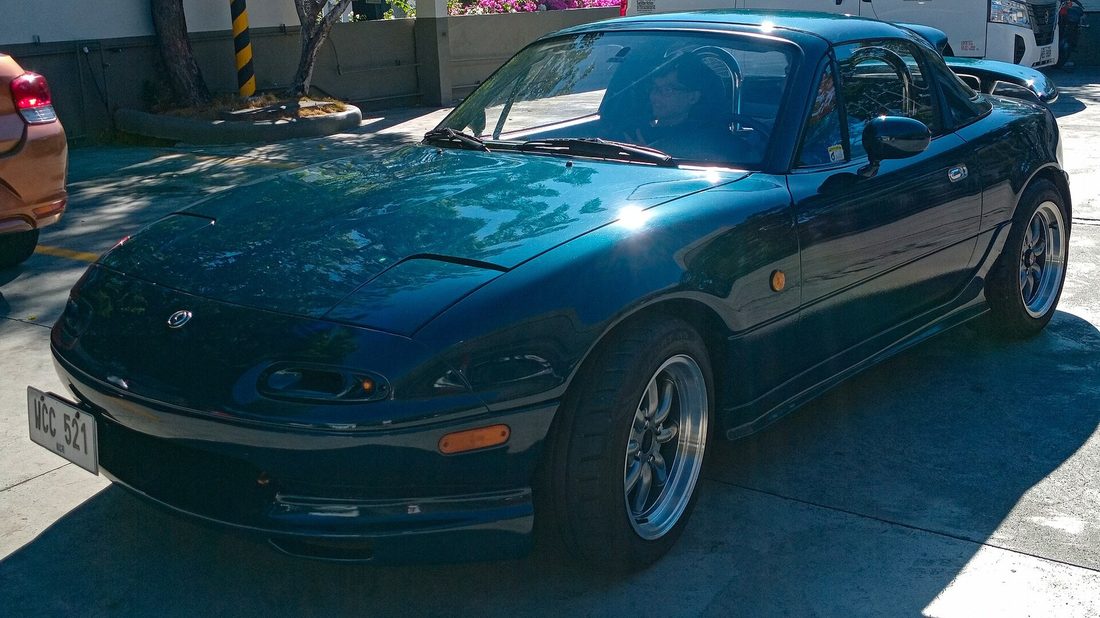
1.4 Who this book is for
Three readers. The first is about to buy one, and will spend most of their time in Chapter 4. The second already owns one and does some of their own work, and lives in Chapters 5 through 7. The third has a car with history worth establishing, a special edition or an unusual market car, and wants Chapter 2 and the identification sections that close it. Not served: anyone who wants a car whose ownership is a project in itself.
1.5 The honest proposition
Most cars in this series need a book because keeping one alive is complicated. The NA does not, and its discipline is short enough to state in full.
Keep the drains clear. Know which crankshaft you have. Do the timing belt on time. Beyond that, the car wants oil and a filter two or three times a year, plugs and an air filter every year or two, a fluid flush every second year, and one lumpy service every 60,000 miles (source: mellens.net/mazda/Mazda-Miata-1997/maintenance.pdf). The published averages put annual repair and maintenance at $349 to $429 with 0.4 unscheduled shop visits a year (source: repairpal.com/mazda/miata; source: repairpal.com/mazda/mx-5-miata). That is the real character of the car, and it is why this book's job is mostly to stop you buying the wrong example rather than to help you survive the right one.
Two findings decide a purchase on their own, and both are settled before money changes hands.
Which crankshaft. All 1990 cars, and 1991 cars below a specific VIN sequence, carry a crankshaft nose that can destroy itself and take the engine with it. It is identified by model year and VIN, then confirmed by eye. Engine serial numbers will not settle it: a forum thread that tried produced no answer until the owner went and looked at the pulley (source: miata.net/garage/crankshaft.html; source: miataforumz.com/na-1989-1997-8/short-nose-long-nose-crank-serial-numbers-810/). Chapter 4 has the mechanism, the breakpoints and the checks.
Whether the drains have been kept clear. Blocked drains rot the frame rails and inner sills from the inside, and that is structure, not trim, on a car with no roof to help it (source: miataturbo.net/general-miata-chat-9/rust-repair-pictorial-64629/). Mazda said so in writing: technical service bulletin 034/94, "Clogged side sill drain holes," records that water left in the sill area will result in corrosion to the vehicle body metal, and allows 0.3 hours to fix it (source: miata.net/garage/tsb/s034_94.html). A twenty-minute job, neglected, is the only failure on this car that cannot be bought back.
1.6 How this book is organized
Chapter 2, History and Identity: Hall's pitch, Mazda's internal skunkworks and the three-way design contest, Jinba Ittai, Chicago, then year by year through the United States market, the 1994 revision, the R Package and the M Editions, the special editions market by market, the Japanese Eunos Roadster, and how to establish which NA is in front of you.
Chapter 3, Specifications: the factory number set arranged to be used, covering dimensions, mass, both engines, performance, capacities, ratios, brakes by year and running gear, each table followed by what the figure changes for the owner. It ends with what could not be established, and a way to test a seller's claims with a caliper and the VIN.
Chapter 4, Known Issues and Pre-Purchase Inspection: the longest chapter, and the one to read first if you are buying. It takes the crankshaft and the drains first, then works system by system with symptom, check, severity and 2026 cost, closing with a full inspection checklist and a method for sorting findings into walk away, price it in, and normal wear.
Chapter 5, Engine and Propulsion: both engines, the crankshaft question at length, the absence of any valve clearance to set, oil, the timing belt, a torque reference, the gearbox, the differential, the powerplant frame, and rebuild economics against a used engine.
Chapter 6, Systems and Diagnosis: the twelve-volt electrical system and the on-board diagnostic procedure, fuel, cooling, brakes and ABS, suspension and steering, soft top drainage as an engineering system, heating and air conditioning, and the interchange traps.
Chapter 7, Maintenance: the service schedule with capacities, fluid specifications, the plug choice this engine wants, the belt service, the crank pulley bolt, storage and a torque reference, with the drains and fender cavities treated as scheduled items rather than detailing.
Chapter 8, Parts, Suppliers and Values: the soft top first, because nearly every NA needs one, then rust repair metal, Mazda's restoration parts programmes, the specialists confirmed trading in 2026, the used and salvage channels, what is hard to find, and what the cars are asking.
Chapter 9, Community and Resources: the forums, clubs, events and documentation, which for this car are an unusually large part of what you buy.
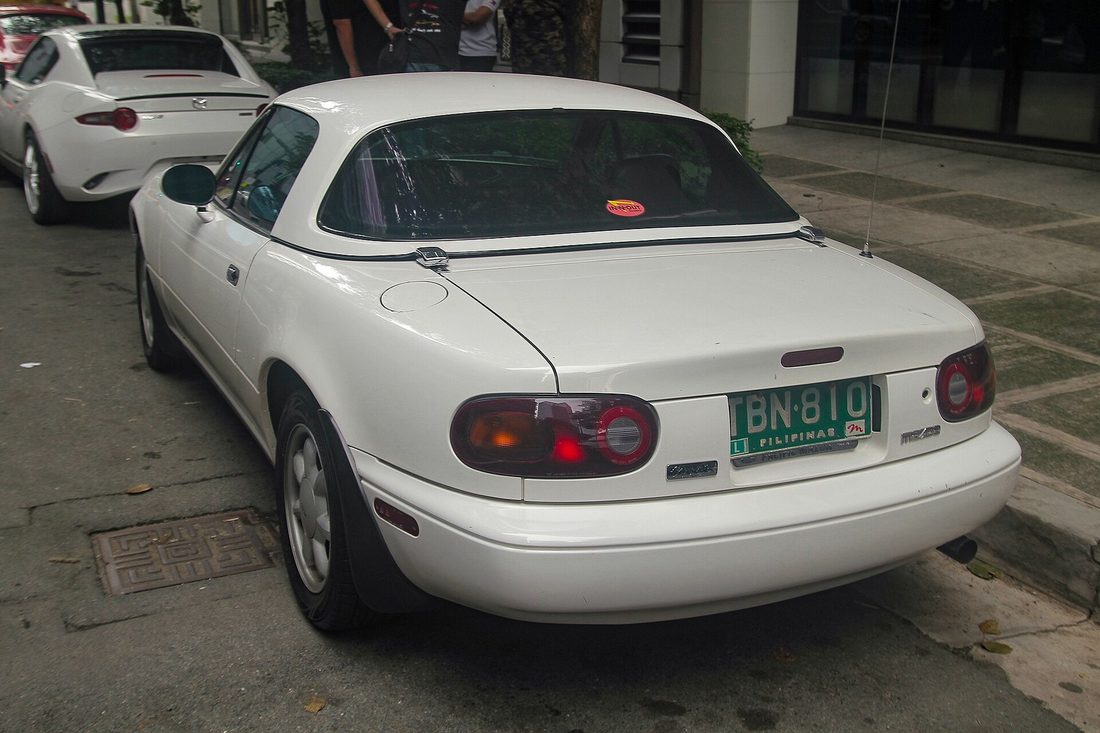
1.7 A word on sources
Every factual claim here carries its source inline, and that is not decoration: a well-documented car accumulates confident errors as readily as a poorly documented one. Where good sources disagree, both figures appear and the better-supported one is named. Four examples.
English Wikipedia's specification table gives the base car at 1,002 kg and the 1.8 at 990 kg, which has the later car getting lighter while gaining bracing, dual airbags, larger rotors, a bigger differential and a larger tank (source: en.wikipedia.org/wiki/Mazda_MX-5_(NA)). That is backwards, two independent national records contradict it, and so does a passage on the same page describing 1994 base weight rising. This book does not use those weight figures, and says why.
Valve clearance shim figures circulate freely on NA forums. They are correct figures, for the 1999-2000 BP-4W, a later engine with solid lifters (source: 5xracing.com/p-15966-mazda-4-cylinder-engine-history-and-interchangeability-guide.html). The NA runs hydraulic lash adjusters and has no adjustable clearance at all, which the factory articles state in as many words (source: mellens.net/mazda/Mazda-Miata-1991-1993/1991_engine.pdf). A correct number for one car becomes a wrong number for another, and that is the failure mode to watch for in every enthusiast source.
The definitive community archive, miata.net, is blocked to automated access, returning HTTP 403 on every URL form attempted on 21 August 2026 (source: miata.net). Its content is indispensable and appears throughout, but where a figure came second-hand from a search summary rather than a direct read, this book says so.
And some counts simply disagree. The 1996 M Edition is recorded as 3,000 cars, 3,698 cars and 2,968 cars by three different references (source: worthdriving.com/na-miata-special-editions; source: importarchive.com/mazda/miata/1990-1997; source: en-academic.com/dic.nsf/enwiki/3347214). Nothing resolves that, so all three appear and none is settled.
One limitation deserves its own line. The 2026 pricing here rests on asking prices from live listings, not on settled sales, because the valuation services and auction archives were unreachable (source: hagerty.com/valuation-tools/mazda/mx-5-miata; source: classic.com). Asking prices tell you what sellers believe, which is useful and is not the same thing.
1.8 A word on voice
This book assumes you can be told bad news. Where a car should be walked away from, it says so. Where a fault sounds alarming and is not, it says that too, because the tick these engines make is not a fault and good cars have been rejected over it. Where something could not be established, the gap is printed rather than filled in.
The recommendation the whole book resolves into is short enough to carry to a viewing. Buy the driest car on offer. Confirm the crankshaft with your own eyes before money changes hands. Then spend the difference on the top, the rain rail and the drains, because that is where the water gets in, and water is the only thing on this car that turns a cheap fault into an expensive one.
History & Identity
The MX-5 was not conceived in a design studio. It began as an argument an American journalist made to a Mazda executive in 1979, that the world still wanted the small, cheap, rear-drive roadster the British had stopped building, and it took a decade, an internal skunkworks and a three-way design contest to reach a stand at the Chicago Auto Show. This chapter covers where the car came from, who built it, what changed in each year of the 1989 to 1997 run, and how to establish exactly which NA you are looking at.
2.1 The Idea, and the Man Who Kept Making It
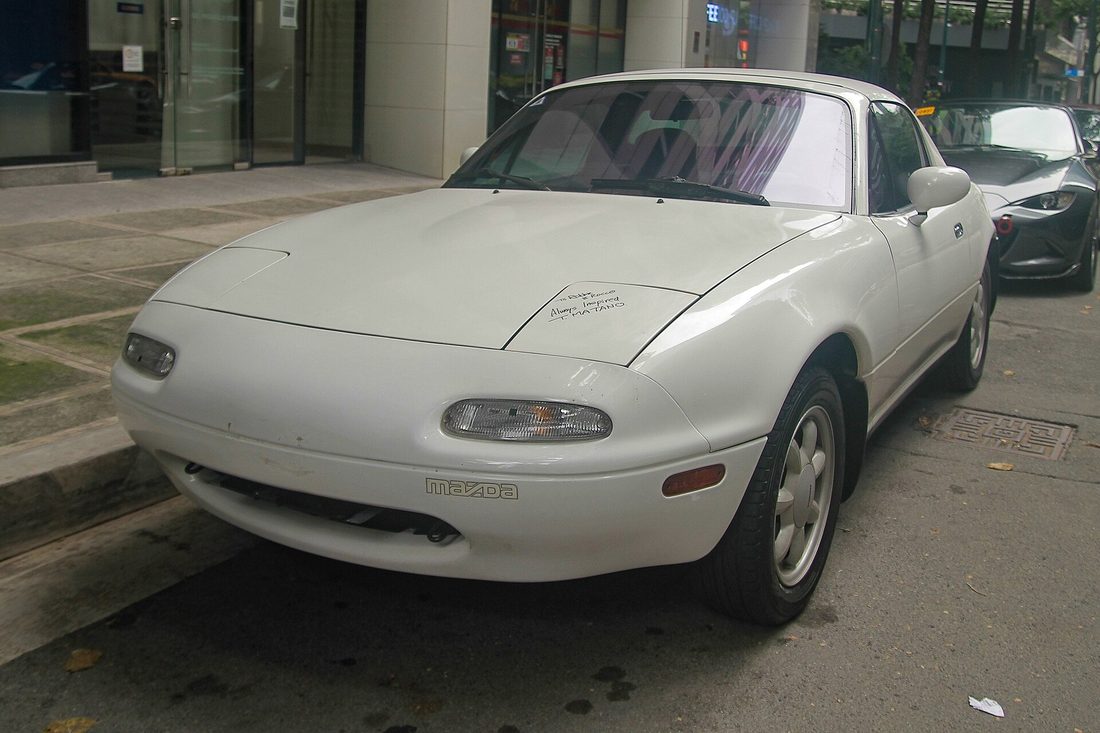
In 1979 the American automotive journalist Bob Hall pitched a lightweight, affordable, front-engine, rear-drive roadster to Kenichi Yamamoto, then Mazda's head of research and development, during a visit to Hiroshima (source: barchetta.co/articles/mazda-mx-5-miata). His reference points were the British sports cars of the 1960s, the Lotus Elan, the MGB and the Triumph Spitfire, but built with Japanese reliability (source: onallcylinders.com/2025/02/16/always-the-answer-a-brief-history-of-the-mazda-miata-mx-5). A buyer's guide records the pitch as "a small, affordable, front-engine, rear-wheel drive roadster" inspired by the British classics Hall's father had owned (source: petrolicious.com/blogs/articles/mazda-mx-5-miata-na-buyers-guide).
Hall then went to work for the company he had lobbied, joining Mazda's North American research and development operation in Irvine, California in 1981; in February 1982 Yamamoto, by then more senior, approached him about reviving the idea (source: barchetta.co/articles/mazda-mx-5-miata). A second account has Hall in product planning at Mazda USA from 1981, meeting Yamamoto again as chairman, receiving a go-ahead in 1982 to research the idea, and bringing the designer Mark Jordan into the new Southern California studio (source: en.wikipedia.org/wiki/C._Mark_Jordan).
2.2 Offline 55, and the Design Contest
The internal machinery matters as much as the pitch. In November 1983 Michinori Yamanouchi established an off-line programme for experimental projects, described as OGG, or Off-line Go-Go, requiring a 55 percent production viability threshold (source: barchetta.co/articles/mazda-mx-5-miata). Other accounts name the same initiative "Offline 55" (source: en.wikipedia.org/wiki/C._Mark_Jordan). The sources do not agree on the internal label; the 55 percent threshold appears in both, which suggests the numeral is the durable part. The programme carried the codes LWS (Lightweight Sports) and P729 (source: barchetta.co/articles/mazda-mx-5-miata).
The design contest is better documented. Irvine proposed a front-engine, rear-drive convertible under Tom Matano as design director, with Jordan, Shigenori Fukuda and Masao Yagi; Tokyo offered a mid-engine rear-drive coupe and a front-engine front-drive convertible. At the first Hiroshima evaluation in April 1984 the Irvine roadster ranked third but was told to build a full-scale model, and at the second evaluation in September 1984 its proposal, called Duo 101 and fitted with a removable hardtop, won. Matano's argument against front drive was blunt: torque steer and understeer were incompatible with sports car character (source: barchetta.co/articles/mazda-mx-5-miata).
A running prototype followed. In November 1984 International Automotive Design in Britain was contracted to build the V-705 prototype from donor hardware, RX-7 front suspension, 929 rear suspension and a 323 engine, shipped in October 1985 to Santa Barbara for public reaction, where it drew strong interest. In September 1986 Irvine handed its final model to the Technical Research Center, where Shunji Tanaka refined the styling, applying a Noh-mask philosophy of light and shadow to the body surfaces. A March 1987 clinic in Pasadena put 245 people in front of the car: 60 percent approved, and the average acceptable price came back at $17,000 against a target near $13,000. The design was frozen that September (same source).
2.3 Jinba Ittai
Toshihiko Hirai, at Mazda since 1961, managed the project as programme manager and gave the team its mantra, Jinba Ittai, horse and rider as one (source: petrolicious.com/blogs/articles/mazda-mx-5-miata-na-buyers-guide; source: worthdriving.com/the-visionaries-behind-the-original-miata). Mazda's own framing is that the car is treated as an extension of the driver's body (source: mazdastories.com/en_us/inspire/kansei-human-touch). The effort under Hirai, with Matano as stylist, aimed at balance and simplicity rather than power, on a dedicated platform, and Hirai's stated targets were a 50:50 weight distribution and a curb weight near 2,100 lb (source: petrolicious.com/blogs/articles/mazda-mx-5-miata-na-buyers-guide). Masataka Matsui, director of the Technical Research Division, is credited with intervening to stop the project being suspended (source: barchetta.co/articles/mazda-mx-5-miata).
The MX-5 designation came out of Mazda's 1980s concept car sequence, and "Miata," used in North America, is traced to an Old High German word meaning reward; Japan got the car through the Eunos sales channel as the Eunos Roadster. The pop-up headlights were kept both for United States height regulations and for visual continuity with the RX-7 (same source).
2.4 Chicago, February 1989
The car was unveiled at the Chicago Auto Show with a price tag of US$14,000 and a launch base price of $13,995 (source: en.wikipedia.org/wiki/Mazda_MX-5_(NA)). The show date is given as 10 February 1989 by English Wikipedia and 9 February 1989 by the Dutch entry (source: nl.wikipedia.org/wiki/Mazda_MX-5); the two disagree by one day and neither is corroborated further here.
Deliveries began in May 1989 in the United States and Canada as a 1990 model, on 1 September 1989 in Japan, and in 1990 in Europe, with the German record putting the European introduction at May 1990 (source: en.wikipedia.org/wiki/Mazda_MX-5_(NA); source: de.wikipedia.org/wiki/Mazda_MX-5). Japanese launch pricing was 1,700,000 yen standard and 1,805,000 yen for the Special Package (source: ja.wikipedia.org/wiki/マツダ・ロードスター). Recognition came immediately: Automobile Magazine's 1990 Automobile of the Year, and Car and Driver's 10Best list from 1990 through 1992 (source: en.wikipedia.org/wiki/Mazda_MX-5).
One widely repeated claim should be set aside. The Dutch record says the car reached the market in July 1989 and that 33,000 were sold worldwide within half a year (source: nl.wikipedia.org/wiki/Mazda_MX-5). That launch month contradicts the May 1989 United States on-sale date, so the six-month window corresponds to no period the other sources recognise. Treat the 33,000 figure as unusable rather than merely approximate: the date it is anchored to is wrong.
2.5 Year by Year, United States Market
- 1990. The 1.6 litre B6ZE(RS) four, 115 hp, five-speed manual. Options grouped as A, B and C packages: power steering and alloy wheels, then power windows and cruise control, then combinations (source: onallcylinders.com/2025/02/09/1989-97-na-mazda-miata-buyers-guide-year-by-year-changes).
- 1991. A revised crank snout addressed timing belt servicing problems, the change separating the short-nose crankshaft cars from the rest. An optional four-speed automatic arrived without limited-slip availability, plus an optional viscous limited-slip differential and anti-lock brakes with the B package (same source).
- 1992. Rear suspension reinforcement brace added; Sunburst Yellow for this year only (same source).
- 1993. Optional Mazda Sensory Sound System, otherwise minimal change (same source).
- 1994. The split year, covered below.
- 1995. The A, B and C packages dropped in favour of a Popular Equipment Package and a Leather Package (same source).
- 1996. OBD-II compliance, output up to 133 hp (same source).
- 1997. The final NA year; option packages restructured again (same source).
2.6 The 1994 Revision
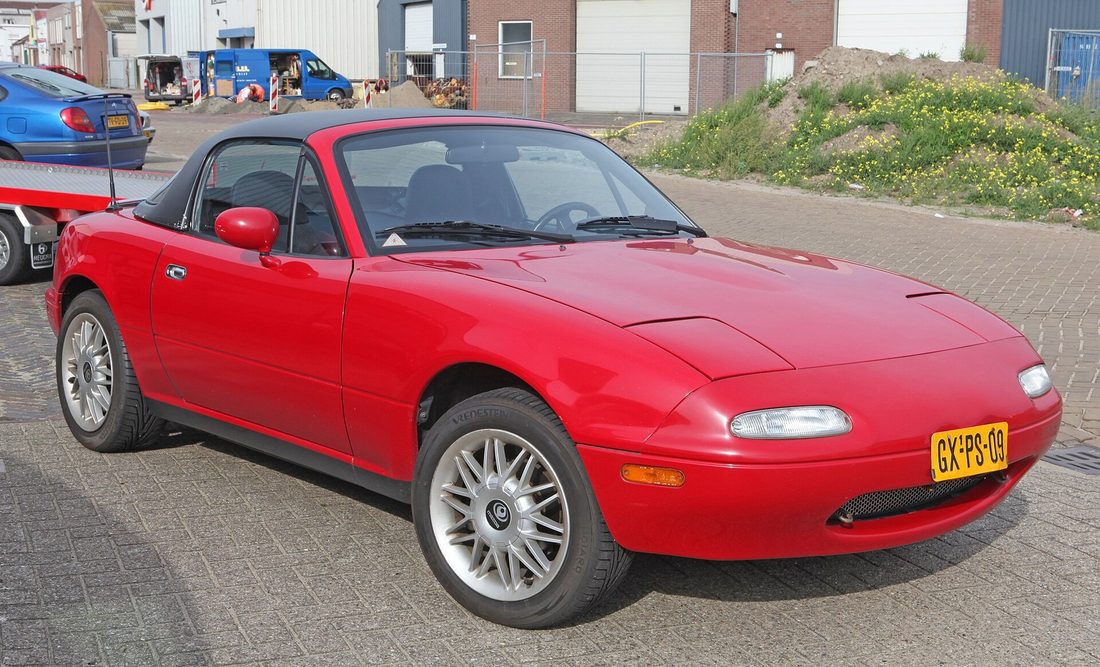
This is the line that divides the generation, and the Japanese chassis codes follow it: NA6CE for the 1.6 cars of 1989 to 1993, NA8C for the 1.8 cars of 1993 to 1997 (source: projectjdm.org/blog/mazda-mx5-na-miata-jdm-guide).
Engine. The 1,839 cc BP-ZE replaced the 1,597 cc B6ZE, and output is where the sources scatter worst. American accounts give 128 hp (source: petrolicious.com/blogs/articles/mazda-mx-5-miata-na-buyers-guide; source: edmunds.com/mazda/mx-5-miata/1994/long-term-road-test), 129 bhp (source: en.wikipedia.org/wiki/Mazda_MX-5_(NA)) and 130 hp (source: onallcylinders.com/2025/02/09/1989-97-na-mazda-miata-buyers-guide-year-by-year-changes), against 130 ps in Japan (source: ja.wikipedia.org/wiki/マツダ・ロードスター) and 131 PS in Europe (source: de.wikipedia.org/wiki/Mazda_MX-5). The 128 hp figure is the one in Mazda's own workshop data, so it is the best-supported number for a United States 1994 or 1995 car; the 129, 130 and 131 quotations are published ratings under different standards and none is a mistake in its own market. Torque is 149 Nm (110 lb-ft) at 5,500 rpm in the English record against 152 Nm at 5,000 rpm in Europe (source: en.wikipedia.org/wiki/Mazda_MX-5_(NA); source: de.wikipedia.org/wiki/Mazda_MX-5).
Brakes. Larger, and the factory rotor tables are the hardest evidence for it. A 1991 car's front rotors are 18 mm original thickness with a 16 mm discard limit; a 1994 car's are 20 mm original and 18 mm discard, with the rear discard limit rising from 7 mm to 8 mm on an unchanged 9 mm rotor (source: trull.org/.../1991_1993/brakes.pdf; source: trull.org/.../1994/disc_brakes.pdf). Period figures describe the same change as 10 inch front and 9.9 inch rear discs (source: 5xracing.com/p-8143-miata-brake-information.html). Retrofitting them to a 1.6 needs the 1994 to 1997 caliper brackets, rotors and pads together, and the dust shields differ in size (source: redlineautoparts.com/blog/na-18-to-na-16-miata-compatibility-guide-19941997-na8-to-19901993-na6).
Chassis bracing. Mazda added substantial bracing, in part to meet side impact standards, specifically at the subframes plus a track bar between the seatbelt towers (source: en.wikipedia.org/wiki/Mazda_MX-5_(NA)). The 1994 to 1997 rear subframes carry extra mounting points (source: redlineautoparts.com/blog/na-18-to-na-16-miata-compatibility-guide-19941997-na8-to-19901993-na6), and the JDM description of the NA8C is stiffer subframes, larger brakes and revised suspension geometry (source: projectjdm.org/blog/mazda-mx5-na-miata-jdm-guide). A 1994 to 1997 car is measurably stiffer at the rear structure than a 1.6.
Differential. A stronger unit with a 7 inch ring gear replaced the 1.6 car's 6 inch ring and pinion (source: miata.net/garage/torsen_90.html), and a Torsen differential arrived in some markets in place of the viscous type, on manual cars only (source: en.wikipedia.org/wiki/Mazda_MX-5_(NA); source: beavismotorsport.com/guides-tech/differential-guide-for-miata-mx5).
Interior, safety, tank and wheels. Dual airbags in a redesigned dashboard (source: en.wikipedia.org/wiki/Mazda_MX-5_(NA)), which makes a 1994 to 1997 dash a different part from a 1989 to 1993 one; fuel tank capacity up from 11.9 to 12.7 US gallons, roughly a gallon (source: miata.net/garage/fluid.html); and new alloy wheel designs (source: onallcylinders.com/2025/02/09/1989-97-na-mazda-miata-buyers-guide-year-by-year-changes).
The Weight Problem, Stated Plainly
The single most misleading number circulating about the NA is its curb weight. English Wikipedia lists 1,002 kg (2,210 lb) for the base car and 990 kg (2,180 lb) with the 1.8 (source: en.wikipedia.org/wiki/Mazda_MX-5_(NA)). That has the later, heavier car getting lighter, which is not credible against everything else on the same page: subframe bracing and a track bar, dual airbags, larger brakes, a bigger differential, a larger tank.
Two independent records disagree with it and agree with each other. The Japanese data gives 940 to 960 kg for a manual NA6CE and 980 to 1,000 kg for a manual NA8C, with automatics at 980 and 1,030 kg (source: ja.wikipedia.org/wiki/マツダ・ロードスター). The German data gives a European kerb weight of 955 to 1,030 kg depending on engine and equipment (source: de.wikipedia.org/wiki/Mazda_MX-5). Both have the 1.8 gaining weight, which is what the hardware implies, and a separate passage in the same English source describes 1994 base weight rising from 980 to 990 kg, contradicting its own specification table and pointing the same way (source: en.wikipedia.org/wiki/Mazda_MX-5_(NA)).
Do not use the 1,002 kg and 990 kg pairing. Use the Japanese figures for a Japanese-market car and the German range for a European one, and expect any car with air conditioning, power steering and an automatic to sit at the top of whichever band applies.
The 1.6 Did Not Disappear
In Europe the 1.6 continued underneath the 1.8 as the lower-specification car, detuned to 66 kW, and here too the sources disagree on both the number and the date. English Wikipedia's NA article gives 89 bhp from 1994; the Mazda B engine article gives 90 hp (66 kW) at 6,500 rpm with 129 Nm at 5,500 rpm for 1994 to 1997; the German record dates the 66 kW (90 PS) version from 1995 and notes German owners nicknamed it the "Hausfrauenmotor"; the Dutch record gives 90 pk with 129 Nm at 4,000 rpm from 1995, exclusively for Europe (source: en.wikipedia.org/wiki/Mazda_MX-5_(NA); source: en.wikipedia.org/wiki/Mazda_B_engine; source: de.wikipedia.org/wiki/Mazda_MX-5; source: nl.wikipedia.org/wiki/Mazda_MX-5). Three of four sources give 90 hp and two of those date it to 1995, which is the better-supported reading, but the torque peak genuinely conflicts: 5,500 rpm against 4,000 rpm for the same 129 Nm. All four agree on the character of the thing: a detuned tax-and-insurance engine, not the 1989 unit carried forward. In Japan the 1.6 was dropped once the 1.8 arrived and did not return until the NB (source: ja.wikipedia.org/wiki/マツダ・ロードスター).
1996: OBD-II, and the Last Cars
OBD-II compliance arrived for 1996 and the rating rose to 133 hp with 114 lb-ft (source: onallcylinders.com/2025/02/09/1989-97-na-mazda-miata-buyers-guide-year-by-year-changes; source: en.wikipedia.org/wiki/Mazda_MX-5_(NA)). The hardware delta is small: a 1996 car carries a downstream oxygen sensor and a crankshaft position sensor the 1995 does not, plus a MAP sensor for the EGR system (source: forum.miata.net/vb/archive/index.php/t-605754.html), and the extra power came largely from calibration, the OBD-II map leaning the fuel curve above 6,000 rpm on carried-over pistons (source: 5xracing.com/p-15966-mazda-4-cylinder-engine-history-and-interchangeability-guide.html). Note for anyone checking a 133 hp claim: Mazda's own workshop tables still list 128 hp and 110 lb-ft in the 1997 to 1998 article, so the service literature and the published rating do not match (source: mellens.net/mazda/Mazda-Miata-1997/engine.pdf).
Because build dates straddle model years, a car titled 1996 can carry the earlier system, and owners routinely have to verify which they have (source: forum.miata.net/vb/showthread.php?t=263653). Mechanically 1996 and 1997 are essentially the same car, 1997 differing mainly in how equipment was bundled (source: onallcylinders.com/2025/02/09/1989-97-na-mazda-miata-buyers-guide-year-by-year-changes).
2.7 The R Package and the M Editions
The R package, introduced for 1994 and offered through 1997, was the factory's competition-minded option group: larger alloys, performance tires, Bilstein shocks, retuned springs, stiffer anti-roll bars, front and rear underbody spoilers and a Torsen differential, with air conditioning optional but no power steering, no leather and no automatic (source: onallcylinders.com/2025/02/09/1989-97-na-mazda-miata-buyers-guide-year-by-year-changes; source: worthdriving.com/na-miata-special-editions). It was a $1,500 option rather than a model (source: miata.net/faq/miatase.html). Production ran 1,218 for 1994, 465 for 1995, 111 for 1996 and 47 for 1997, totalling 1,841, which matches an independently published four-year total (source: jalopnik.com/your-guide-to-every-special-edition-mazda-miata-ever-so-1675339097; source: worthdriving.com/na-miata-special-editions). The absence of power steering is genuine, so an R package car with power steering has been altered.
The M editions were four consecutive United States model years, one colour each:
| Year | Colour | Reported count |
|---|---|---|
| 1994 | Montego Blue Mica | 3,000, or 3,003 |
| 1995 | Merlot Mica | 3,500 |
| 1996 | Starlight Blue Mica | 3,000, or 3,698, or 2,968 |
| 1997 | Marina Green Mica | 3,000 |
The 1994 car came with the Torsen standard, tan leather, Nardi trim and stainless door sills; the 1995 introduced adjustable headrests and 15 inch BBS wheels; the 1997 wore polished six-spoke Enkei wheels and was the last to carry the name (source: worthdriving.com/na-miata-special-editions; source: jalopnik.com/your-guide-to-every-special-edition-mazda-miata-ever-so-1675339097). The 1994 count is 3,000 in two sources and 3,003 in a third (source: en-academic.com/dic.nsf/enwiki/3347214), close enough to be a rounding of one run.
The 1996 figure is the untidiest number in this book: 3,000, 3,698 and 2,968 from three sources, with the specialist archive that would normally settle it also carrying 2,968 (source: worthdriving.com/na-miata-special-editions; source: importarchive.com/mazda/miata/1990-1997; source: en-academic.com/dic.nsf/enwiki/3347214; source: miata.net/faq/miatase.html). There is no way to adjudicate between them here, so all three are printed and none preferred. One identification note is firmer: Montego Blue Mica is the only M edition colour that later became a regular production colour, offered through 1997 (source: miata.net/faq/mfield.html), so a Montego Blue car is not automatically a 1994 M edition.
2.8 Special Editions by Market
North America. The 1991 Special Edition in British Racing Green, with tan leather, wooden Nardi shift knob and handbrake, stainless sills, air conditioning, cruise control, CD player and a numbered badge, is given as 3,997 United States plus 1,051 Canada by four sources, as 4,000 USA plus 150 Benelux by a fifth, and as a limit of 4,000 built between 3 December 1990 and 30 March 1991 by a sixth (source: worthdriving.com/na-miata-special-editions; source: en.wikipedia.org/wiki/Mazda_MX-5_(NA); source: importarchive.com/mazda/miata/1990-1997; source: en-academic.com/dic.nsf/enwiki/3347214; source: miata.net/faq/miatase.html). The weight of evidence favours 3,997 for the United States, and the 150 Benelux cars are probably a separate European allocation rather than a contradiction.
Then: 1992 Sunburst Yellow, largely base specification, 1,519 United States and 503 Canada; 1992 Black and Tan in Brilliant Black with tan leather and 14 inch BBS basketweave wheels, 4,625 (given as 4,626, and as not actually limited, by one source); 1993 Limited Edition in Brilliant Black with red leather, the only NA with a red interior, on BBS wheels, Bilstein suspension and spoilers, 1,505 United States and 300 Canada; the 1994 and 1995 Laguna Blue cars with tan leather, 341 and 122, treated as special editions though not formally so; the 1997 STO (Special Touring Option) in Twilight Blue Mica with 1996 M edition wheels and spoiler but no Torsen and no cruise control, 1,500; and a 1997 Speedster for Canada at 150 (source: worthdriving.com/na-miata-special-editions; source: jalopnik.com/your-guide-to-every-special-edition-mazda-miata-ever-so-1675339097; source: en.wikipedia.org/wiki/Mazda_MX-5_(NA); source: miata.net/faq/miatase.html). Two conflicts sit inside that list: the 1993 Canadian allocation is 300 in most sources but a separate Canadian Limited run of 1,500 in one, a five-fold discrepancy that matters if you are buying one, and the 1997 Speedster is 150 in one source against fewer than 200 in Marina Green in another (source: en-academic.com/dic.nsf/enwiki/3347214; source: en.wikipedia.org/wiki/Mazda_MX-5_(NA)).
Japan. J Limited (1991, 800) and J Limited II (1993, 800); S-Limited in Brilliant Black (1993, 1,000); S-Special (1993 to 1995, 300); Tokyo Limited in Brilliant Black (1994, 40, the smallest run recorded anywhere); RS-Limited in Montego Blue Mica (1995, 500), R-Limited (1995, 1,000) and G-Limited (1995, 1,500); VR-Limited Combination A (1996, 700) and B (1996, 800); B2-Limited (1997, 1,000) and R2-Limited (1997, 500). The M2 series ran M2-1001 Cafe Roadster, M2-1002 Vintage Roadster and M2-1028 Street Competition at 300 each (source: en.wikipedia.org/wiki/Mazda_MX-5_(NA); source: en-academic.com/dic.nsf/enwiki/3347214).
United Kingdom. 24 Hour Le Mans (1991, 24 cars); SE Brilliant Black in 1992 (200) and 1993 (150); Gleneagles (1995, 400) and California (1995, 300); Merlot (1996, 600) and Monaco (1996, 450); Monza (1997, 800), Dakar (1997, 400), Harvard (1997, 500) and Classic (1997, 400); plus a Berkeley of 400 listed for 1998, worth flagging because it postdates the 1997 end of NA production in most listings (source: en-academic.com/dic.nsf/enwiki/3347214; source: en.wikipedia.org/wiki/Mazda_MX-5_(NA)).
Continental Europe and Australia. 150 British Racing Green cars in Benelux for 1991; yellow cars in 1995 at 99 in Austria, 500 in Germany and 50 in Switzerland as the Sunracer; a German-market sequence of a 1991 Limited Edition in Racing Green, the 1995 Sunracer in Speed Yellow, the 1996 Cosmo in Merlot Mica and the 1997 Classic in Night Blue; and 75 Monza cars in British Racing Green for Australia in 1997 (source: en-academic.com/dic.nsf/enwiki/3347214; source: de.wikipedia.org/wiki/Mazda_MX-5).
2.9 Japan: The Eunos Roadster
Japan bought the car through the Eunos channel from 1989 to 1997 (source: en.wikipedia.org/wiki/Mazda_MX-5_(NA)). The Japanese trim timeline runs V-Special from August 1990, S-Special from September 1992, the 1.8 with upgraded specification from July 1993, and V-Special Type II plus chassis improvements from August 1995, the last including a lightened flywheel (source: ja.wikipedia.org/wiki/マツダ・ロードスター). Enthusiast guides describe JDM cars as marginally more powerful on less restrictive intake and exhaust, roughly 30 to 50 kg lighter, and available with combinations the United States never got, including factory hardtops, leather Nardi wheels and Torsen differentials on more trims (source: projectjdm.org/blog/mazda-mx5-na-miata-jdm-guide). Those weight and power claims are enthusiast assertions rather than factory data.
2.10 How Many Were Built
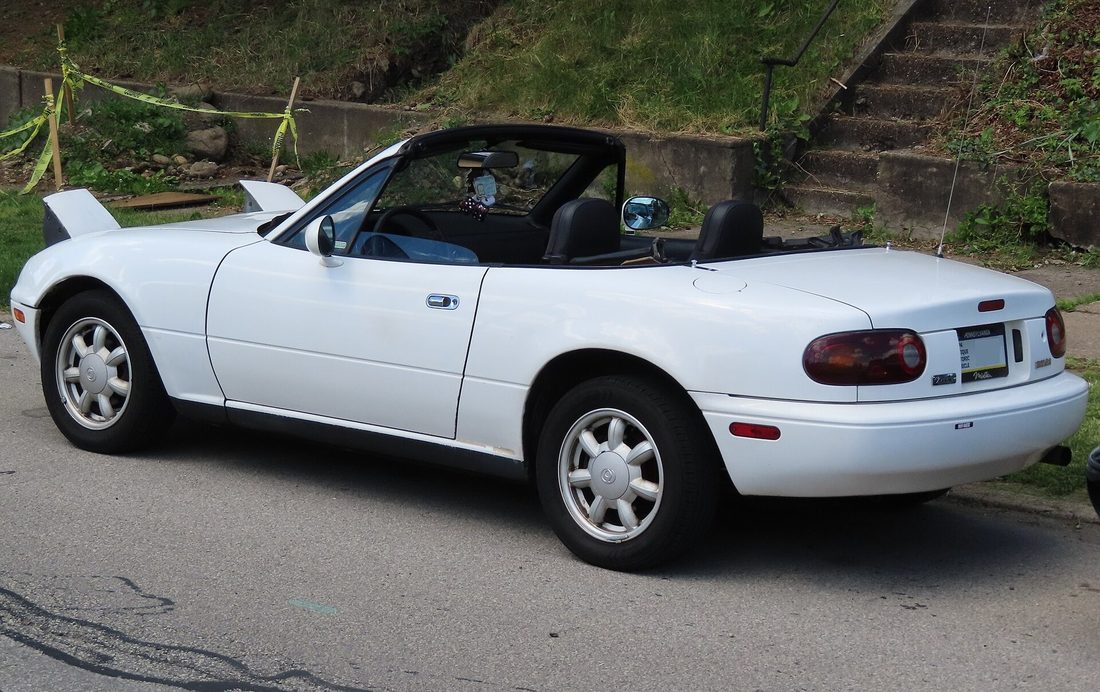
Total NA production is consistently 431,506 cars for the 1989 to 1997 run, a figure four independent records agree on, with production dated April 1989 to 1997 at Hiroshima's Ujina Plant No. 1 (source: en.wikipedia.org/wiki/Mazda_MX-5_(NA); source: en.wikipedia.org/wiki/Mazda_MX-5; source: de.wikipedia.org/wiki/Mazda_MX-5; source: ja.wikipedia.org/wiki/マツダ・ロードスター).
One adjacent number needs care. Alongside 431,506 built, Wikipedia's MX-5 overview cites 228,961 units sold in the period (source: en.wikipedia.org/wiki/Mazda_MX-5). That cannot be a worldwide sales total against that production figure and is most likely a single-market number. Do not present it as global sales. By 2000 the MX-5 was recognised as the best-selling two-seat sports car in history, with then-total production across generations of 531,890 (same source).
A year-by-year production breakdown could not be established: the enthusiast reference carrying the annual splits refused automated access during research, so no annual figures are asserted here rather than estimated. The per-year counts above, for the R package and the special editions, come from sources that published those specific runs.
2.11 The Car That Brought the Roadster Back
The context is what makes the NA important rather than merely charming. Hall's pitch described a car nobody was building any more: the British roadster trade had collapsed and the segment it left behind was empty. The MX-5 filled it with something the British cars had never managed, a small open two-seater that started every morning. It arrived at $13,995 in a market where a sports car was assumed to be either expensive or unreliable, won Automobile of the Year and three consecutive 10Best listings, and by 2000 held the record as the best-selling two-seat sports car ever made (source: en.wikipedia.org/wiki/Mazda_MX-5). Every affordable roadster that followed in the 1990s was answering this car.
2.12 The 2026 Market
Live United States asking prices retrieved on 21 August 2026 spanned $9,961 to $50,000 across twenty-four nationwide listings (source: cars.com/shopping/results). The shape of the curve: high-mileage cars start around $10,000; driver-grade cars run $11,000 to $14,500 regardless of year, including special editions with miles on them; tidy 45,000 to 80,000 mile cars ask $16,000 to $18,000; low-mileage cars ask $22,000 to $32,000; and a 495 mile 1990 asked $44,995. One 1996 with 149,950 miles at $50,000 is an outlier, probably modified or misconfigured. A 2025-dated buyer's guide put clean unmodified examples at $10,000 to $14,000 with low-mileage cars near $20,000 (source: petrolicious.com/blogs/articles/mazda-mx-5-miata-na-buyers-guide), which the 2026 data confirms at the bottom while showing the top pulling away.
Two caveats. These are asking prices, not sold prices; and Hagerty, Classic.com and Bring a Trailer all blocked automated retrieval, so no auction results or condition-graded valuation tiers are represented (source: hagerty.com/valuation-tools/mazda/mx-5-miata, observed redirect to login). The market is paying for mileage and originality rather than for the faster 1.8: the two highest asks in the sample were a 1990 and a 1996 at opposite ends of the odometer.
2.13 Identifying the Car in Front of You
Work in this order.
- Year and market. Establish the model year from the VIN and certification sticker, then which market the car was built for, because output ratings, the availability of the lower-spec 1.6 and the special edition lists all differ by market. A JDM import is a different car from a United States 1990 in the same paint.
- Engine. 1.6 B6 or 1.8 BP. The code is stamped on a machined pad at the left rear of the block at the transmission mating flange, and the eighth VIN character also identifies the engine (source: mellens.net/mazda/Mazda-Miata-1991-1993/1991_engine.pdf).
- Crankshaft, on 1.6 cars. All 1990 engines and 1991 cars with VIN sequence 209446 or below have the short nose; 209447 and above are safe, and Mazda gave the European breakpoint as 127442 (source: miata.net/garage/crankshaft.html). Confirm by eye: four slots in the crank pulley face means short nose, eight means long nose (source: mx5vic.org.au/wp-content/uploads/2021/09/MX-5-Short-nose-Crankshafts_NA-Peter-Ferguson.pdf). Engine serial numbers do not settle it.
- Brake and bracing generation. Measure a front rotor: 18 mm nominal is 1990 to 1993, 20 mm nominal is 1994 or later (source: trull.org/.../1994/disc_brakes.pdf). Then look for the track bar between the seatbelt towers and the extra subframe mounting points that mark the 1994 structure. Parts ordered on displacement alone frequently arrive wrong here.
- Special edition claims. Ask for the numbered plaque where the edition carried one, and check the colour against the year, remembering Montego Blue became a regular colour from 1995. Body-colour rockers are original only on the 1996 M edition in Starlight Blue, the 1997 M edition in Marina Green, 1996 to 1997 Montego Blue cars and the 1997 STO; on anything else they indicate a respray (source: miata.net/garage/Checking Out a Used Miata - Update 2018.pdf).
- OBD generation. Do not trust the title year. Look for the downstream oxygen sensor and the crank position sensor only the OBD-II car carries (source: forum.miata.net/vb/archive/index.php/t-605754.html). A 1994 or 1995 block has the crank sensor bolt hole present but unthreaded, a swap trap rather than a fault (source: 5xracing.com/p-15966-mazda-4-cylinder-engine-history-and-interchangeability-guide.html).
Glossary
- Abs
- Anti-lock braking system, which releases and reapplies brake pressure many times a second to stop a wheel locking. An option rather than standard equipment on this generation, so its presence is part of identifying a car's specification.
- Bp-4W
- The 1999-2000 1.8 litre engine, which uses solid, shim-adjusted valve buckets. It matters here only as a warning: shim clearance figures circulating on forums belong to this engine, not to any NA, because every NA uses hydraulic lash adjusters.
- Cabrio Grain
- A textured vinyl finish used on replacement soft tops, imitating the appearance of canvas at lower cost.
- Coilover
- A suspension unit combining the spring and damper on one assembly with an adjustable spring platform, allowing ride height and often damping to be set. A common replacement for the factory struts.
- Crank Angle Sensor
- The sensor that tells the engine management where in its rotation the engine is. On this car it is camshaft-driven rather than crank-driven, which is why a timing light can report correct ignition timing on an engine whose crankshaft keyway is destroyed.
- Double Wishbone
- A suspension layout with two lateral arms per wheel, upper and lower, which controls camber through travel far better than a strut. The NA uses it at all four corners, which was unusual in a car this cheap.
- Duckbill Flap
- The one-way rubber flap fitted at the outlet of a drain channel, letting water out while keeping road spray and debris from tracking back in.
- Final Procurement
- A manufacturer's last production run of a discontinued part, after which no more are made. Knowing a part has reached final procurement changes whether you buy it now or wait.
- Frame Rail
- The longitudinal structural member running along the underside of the body. On this car the rails rot from the inside outward when the soft-top drains block, which is why a drainage detail is a structural concern.
- Gl-5
- An API gear-oil rating carrying a heavy sulphur-phosphorus additive load. The factory table permits GL-4 or GL-5, while the specialist community argues for GL-4 only on the grounds that GL-5 additives can attack the yellow metals in synchromesh.
- Hydraulic Lash Adjuster
- A valve-train component that takes up its own clearance using engine oil pressure, so no periodic adjustment is needed. Every NA engine uses them, which is why the car has no valve clearance specification at all.
- Hydraulic Lash Adjusters
- Valve-train components that take up their own clearance using engine oil pressure, so no periodic adjustment is needed. Every NA engine uses them, so there is no valve clearance specification for this car.
- Jacking Point
- The reinforced spot in the sill designed to take a jack or lift arm. On a car whose sills rot from inside, their condition is also a useful proxy for the structure around them.
- Jinba Ittai
- Horse and rider as one. Mazda's design principle for the car, meaning the driver and machine should respond as a single organism.
- Keyway
- The slot machined into the crankshaft nose that receives the Woodruff key. When the pulley bolt loses torque the load transfers onto the key and keyway, which then wear each other away.
- M Edition
- A series of annual special editions, generally combining a distinctive colour with leather, wood-rim or Nardi trim and alloy wheels. Production counts for several years are disputed across sources.
- Na6Ce
- Mazda's internal designation for the 1.6 litre NA, 1989 to 1993 and continuing in lower-output form in some markets afterwards.
- Na8C
- Mazda's internal designation for the 1.8 litre NA, from the 1994 revision onward.
- Nb
- The second-generation MX-5, 1998 to 2005, which replaced the NA. It matters to an NA owner because a useful number of NB parts interchange, which is part of why these cars remain cheap to keep.
- Non-Interference
- An engine design in which the valves and pistons never occupy the same space, so a broken camshaft belt stops the engine without bending anything. Both NA engines are non-interference, which changes the stakes of a belt failure considerably.
- Non-Interference Engine
- An engine in which the valves and pistons never occupy the same space, so a snapped camshaft belt strands the car without destroying the engine.
- Obd-Ii
- The second-generation on-board diagnostics standard, mandatory in the United States from the 1996 model year. It changes how a car is scanned, so it splits late NAs from earlier ones for diagnostic purposes.
- Pop-Up Headlights
- Retractable headlamps raised by electric motors, unique to this generation of the car. The motors and linkages are a characteristic failure point and a recognisable part of the car's face.
- Power Plant Frame
- The rigid aluminium beam bolting the engine and gearbox assembly directly to the differential. Also written powerplant frame, and commonly abbreviated PPF.
- Powerplant Frame
- The rigid aluminium beam bolting the engine and gearbox assembly directly to the differential, so driveline torque reactions are contained within the structure rather than twisting the chassis.
- Proportioning Valve
- The hydraulic valve that limits rear brake pressure so the rear wheels do not lock before the fronts under heavy braking.
- R Package
- A factory suspension and chassis package with stiffer springs and dampers, additional bracing and a limited-slip differential, aimed at competition use.
- Rain Rail
- The fabric or vinyl channel sewn inside the soft top that catches water running off the rear window and directs it to the drains. A split rain rail dumps water straight into the car.
- Short-Nose Crankshaft
- The early crankshaft, 22 mm at the nose with a shorter key engagement, fitted to 1990 and early 1991 cars. It is intolerant of assembly error at the pulley bolt, which is the single most consequential thing to establish about any NA you are considering.
- Spec Miata
- A single-model racing class built around this car, which is the main reason its parts supply, technical knowledge and used-shell market are as deep as they are.
- Stayfast Canvas
- A woven canvas soft-top material, more expensive and longer-lived than vinyl, and the usual choice when a top is being replaced properly rather than cheaply.
- Torsen
- A torque-sensing limited-slip differential using worm gearing rather than clutch packs, so it biases torque to the wheel with grip without needing to slip first. Fitted to later and higher-specification cars.
- Torsen Differential
- A torque-sensing limited-slip differential using worm gearing rather than clutch packs, biasing torque to the wheel with grip without needing to slip first.
- Viscous Limited-Slip Differential
- A limited-slip differential using a sealed silicone fluid coupling, which resists a speed difference between the driven wheels progressively rather than by clamping. Fitted before the Torsen unit.
- Wasted Spark
- An ignition arrangement in which one coil fires two cylinders at once, one on its compression stroke and one on exhaust, so the second spark does no work. It removes the distributor and is used on later cars in this generation.
- Woodruff Key
- The small half-moon key that indexes the timing cog to the crankshaft nose. On the short-nose crank it is not engaged over its full length, which is the root of that engine's notorious keyway failure.