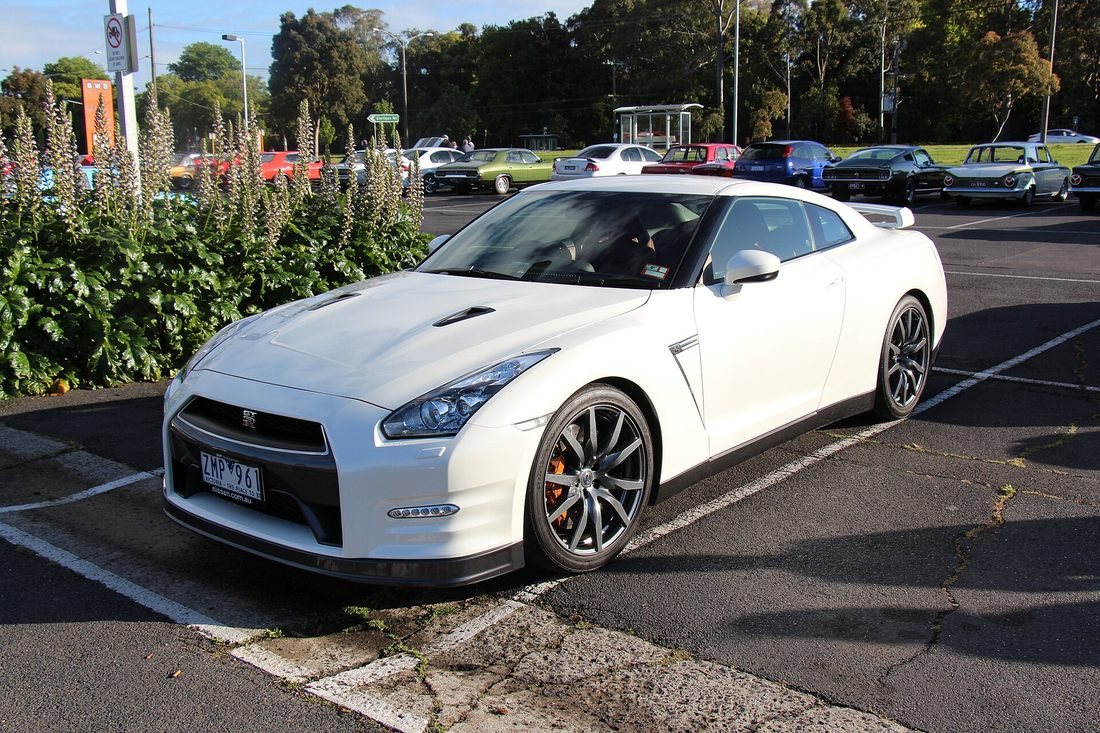
Nissan GT-R
About This Book
This is an honest owner's reference for the R35 Nissan GT-R, not a brochure and not a fan letter. It is written for the person who is about to buy one, already lives with one, or lies awake wanting one, and it treats the car the way it deserves to be treated: with real affection and zero illusions. Everything factual in these pages is sourced, and where the sources argue with each other, this book tells you so and points you back to your own car.
1.1 What this book is
The car you are reading about is the R35 generation Nissan GT-R: the hand-built, all-wheel-drive, twin-turbo everyday supercar that Nissan built from its 2007 Japan launch through the end of production in 2025. It is a car that has spent its whole life embarrassing machinery costing three and four times as much, and it did so while remaining startlingly usable, something you could drive to work in the rain and then take to a track on the weekend.
This book exists because that reputation cuts both ways. The GT-R's giant-killing legend has attached itself to a real used car with real, specific, sometimes expensive quirks, and the gap between the legend and the ownership reality is exactly where buyers get hurt. So this is a reference organized around the questions an owner actually asks: What am I looking at? What breaks? What does it cost to keep right? Where do I get the parts, and who do I trust to touch it?
Two promises shape every chapter. First, it is sourced. When you read a service interval, a torque figure, or a known failure here, it carries an inline citation to where that claim comes from, so you can check it and so you know whether you are reading a Nissan spec, a specialist's experience, or one owner's story. Second, it is honest about uncertainty. The R35 was in production for roughly eighteen model years with rolling changes, and even good sources disagree on details like oil capacity or a rotor diameter. Where that happens, this book gives you the best-supported number, names the disagreement in plain words, and tells you to verify against your specific car's documentation rather than pretending a single figure is gospel.
1.2 What this book is not
It is not a Nissan marketing document. You will not be told the GT-R is flawless, because it is not: the dual-clutch transaxleGR6 dual-clutch transaxle is a genuine weak point, early cars carry a melting-dashboard problem that Nissan never recalled (source: topclassactions.com/lawsuit-settlements/lawsuit-news/nissan-class-action-says-dashboard-defect-makes-gt-r-vehicles-unsafe), and the running costs surprise people. All of that is in here, in detail, because loving a car honestly means knowing where it bites.
It is also not a factory service manual, and it does not replace one. This is a pre-purchase and ownership reference, not a step-by-step repair bible with every fastener torque. For dealer-level programming, wiring diagrams, and exact bolt specifications you will still want the Nissan service manual for your model year. What this book does that a service manual cannot is tell you which of those procedures actually matter in the field, which cars carry which problems, and what a fair number looks like when a shop hands you a quote.
Finally, it is not a tuning guide dressed up as an owner's manual. The R35 is one of the most tunable production cars ever made, and that world is covered honestly, but the through-line of this book is a distinction the sources return to again and again: the VR38 engine is genuinely robust at stock power, and a large share of the horror stories, blown gearboxes, cracked diff cases, grenaded engines, are tuned-car and abuse stories, not stock-car defects. Your central job as a buyer is to figure out which car is in front of you. This book is built to help you do exactly that.
1.3 Who it is for
If you are shopping, the early chapters and the pre-purchase inspection material are your map: what changed year to year, what the model-year eras mean, and what to put your hands and a diagnostic tool on before you sign anything. If you already own one, this is the book you keep in the glovebox and open when a light comes on, a service is due, or a forum thread scares you. And if you are simply a person who has wanted a GT-R since a video game taught you its name, this book will tell you the real story, which is better than the myth because it is true.
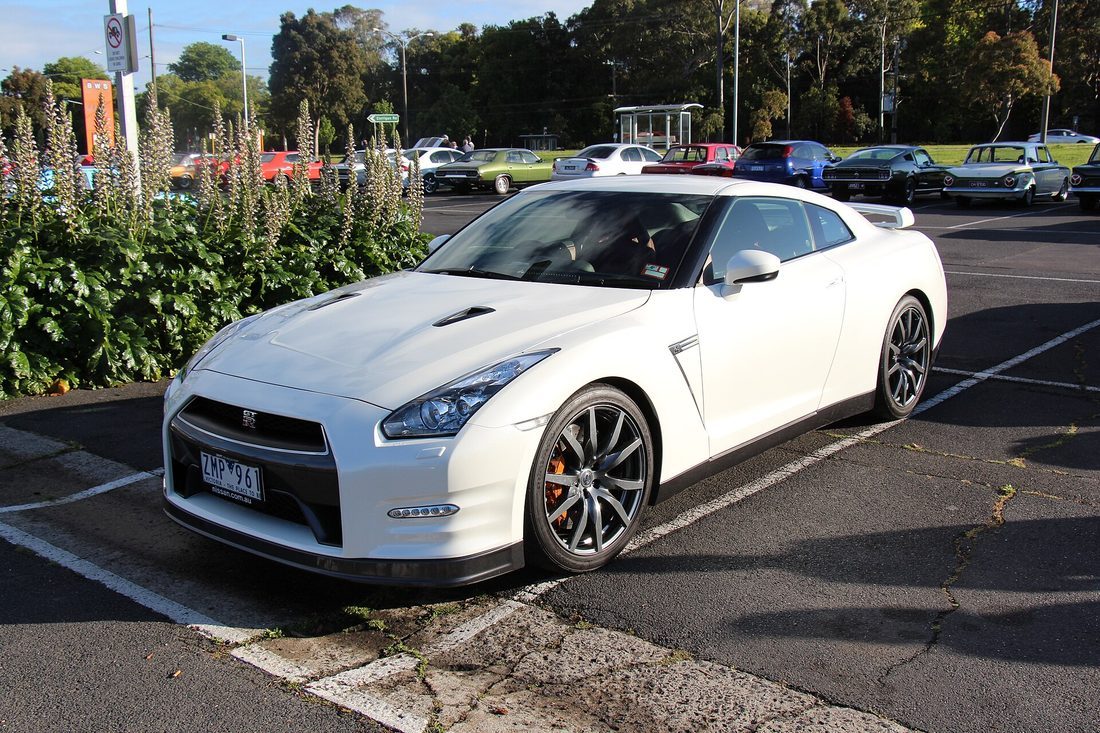
1.4 How this book is organized
The chapters walk from the big picture down to the wrench, then back out to the community that keeps these cars alive.
History and the car's place in the world comes first: the program that Kazutoshi Mizuno, the chief engineer known as "Mr. GT-R," drove to production (source: usa.nissannews.com/en-US/releases/kazutoshi-mizuno-the-man-in-front-of-gt-r), the launch timeline, the model-year eras, the special editions, and where values sit today. That chapter also settles the framing question this catalog raises: production physically ended in 2025, the last US cars were 2024 model year and the last Japanese cars 2025, and there is no 2026 GT-R (source: en.wikipedia.org/wiki/Nissan_GT-R). When you see this book's coverage described as running to 2026, read that as "through the end of the R35 era and its current used market," not as a model year that never existed.
Engine and propulsion is the heart of the book: the VR38DETTVR38DETT 3.8-litre twin-turbo V6, each one assembled by hand by a master craftsman, one of the small group Nissan calls TakumiTakumi, who signs the engine with a nameplate bearing his own name (source: hagerty.com/media/maintenance-and-tech/the-r35-gt-r-leaves-behind-a-legacy-of-hand-built-engine-craftsmanship/). That chapter also covers the GR6 dual-clutch and the ATTESA E-TSATTESA E-TS all-wheel-drive system that make the car behave the way it does, plus an honest look at the tuning ladder and where each part becomes the limit.
Vehicle systems takes the car apart by function: the electrical system and its well-known appetite for a battery when the car sits, the Polyphony Digital multi-function display, the Brembo brakes, the Bilstein-damped suspension and its three-mode switches, the wheels and tires, climate, and the hybrid body structure. Known issues is the buyer's honest catalog of what actually goes wrong, stock-car wear items separated cleanly from tuned-car failures, and it ends with a full pre-purchase inspection checklist. Maintenance lays out the complete service program by interval and by system, with fluids, capacities, and a real accounting of why this car costs what it does to keep. And parts and community maps the ecosystem you are buying into: OEM and Japan-direct sources, the specialist tuners, the forums, and the events, along with a frank note that genuine body and safety parts have tightened and climbed in price since production ended (source: torquenews.com/17992/nissan-gt-r-parts-surge-price-following-r35-discontinuation).
You do not have to read them in order. Each chapter stands on its own, cross-referencing the others where a subject like the GR6 or the AWD system spans more than one. Specifications and deep technical detail live in those chapters, deliberately kept out of this opening so that what you take from here is orientation, not numbers.
1.5 A word on voice
This book is written by people who love these cars, and it does not hide that. But love without honesty is just marketing, and you deserve better when you are spending real money and real weekends on a machine this serious. So the tone throughout is warm and direct: it will tell you plainly when a car is a bargain and when it is a trap, when a noise is normal and when it means your wallet is about to open. The GT-R earned its legend the hard way, on real roads and real tracks. This book tries to honor it the same way, by telling you the truth.
The Story and the Identity
The R35 was never meant to be a pretty car or an easy one. It was built to a single stubborn idea: a supercar that any driver could use on any road, in any weather, every day of the year. Understanding that idea, and the people who chased it for the better part of a decade, is the key to understanding the machine now sitting in your garage.
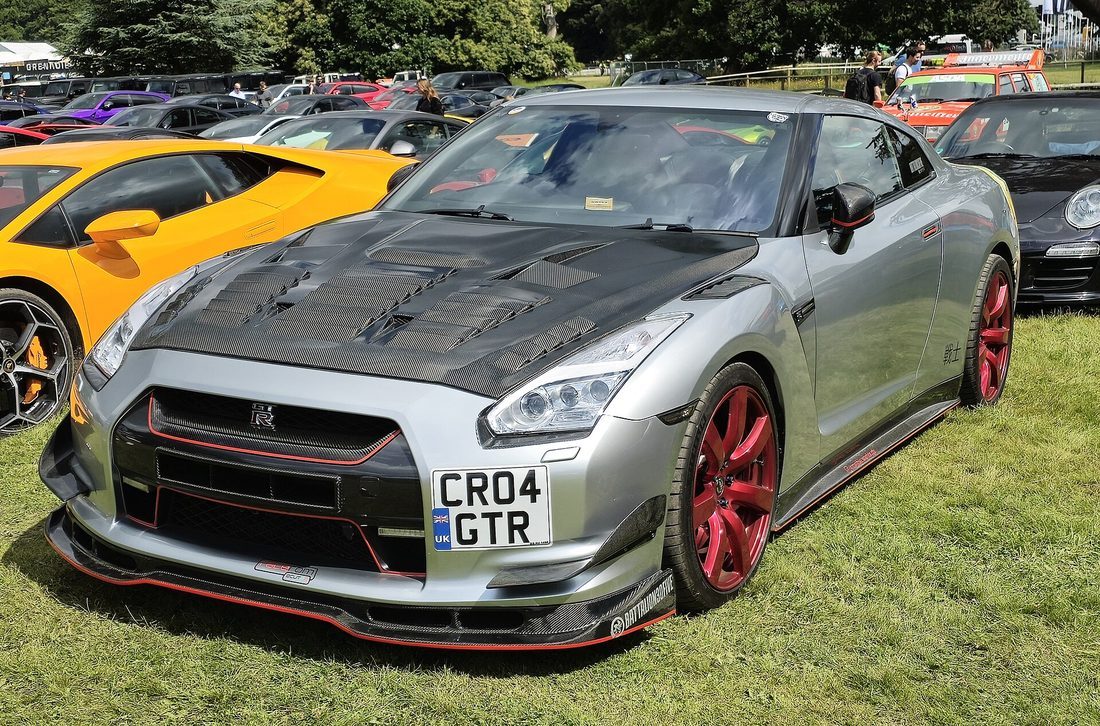
2.1 The brief: a "multi-performance supercar"
The car you own began as a challenge that its own chief engineer initially thought could not be met. When Carlos Ghosn's revival plan for Nissan called for a halo car around 2000 and 2001, the brief was deceptively simple and genuinely radical: build a multi-performance supercar, a car that could deliver supercar performance in all conditions, for all drivers, on any road, and still be driven every day (source: en.wikipedia.org/wiki/Nissan_GT-R).
That was not how supercars were made. The established recipe was a light, delicate, fair-weather machine that demanded skill and forgave nothing. Nissan wanted the opposite: pace that did not evaporate when the road turned wet, cold, or bumpy, and that did not require a professional behind the wheel to unlock.
The man handed this problem was Kazutoshi Mizuno, later known simply as "Mr. GT-R." Mizuno had history with the earlier Skyline GT-Rs and with Nissan's Le Mans and GT racing programs, so he understood both road cars and the demands of the track (source: usa.nissannews.com/en-US/releases/kazutoshi-mizuno-the-man-in-front-of-gt-r). By his own account he resisted at first, feeling he "couldn't make a world-class performance car from this platform as Ghosn requested." He came around, and in April 2003 he had built a prototype on an advanced platform derived from Nissan's front-midship architecture (source: carbuzz.com/features/why-the-nissan-gt-r-is-still-an-icon-after-15-years).
Formal development began with a dedicated team in January 2004, capping what Nissan describes as roughly seven years of development and testing before the production car appeared (source: en.wikipedia.org/wiki/Nissan_GT-R). Mizuno led as chief engineer. Nissan's design director Shiro Nakamura oversaw the look, with a broader team credited for the exterior, interior, and engine, though the individual design credits rest on a single source and are best treated as attribution rather than gospel (source: en.wikipedia.org/wiki/Nissan_GT-R).
One detail says a great deal about the car's character: much of the engineering team came not from Nissan's sports-car side but from its commercial and truck operations, with several accounts tying early chassis and durability work to engineers with Isuzu truck backgrounds (source: thedrive.com/news/the-r35-nissan-gt-r-was-partly-developed-by-isuzu-truck-engineers). That is exactly the sort of person you want building a supercar meant to survive daily abuse. The R35's over-engineered, take-a-beating feel is not an accident; it is a fingerprint.
2.2 The platform and the Gran Turismo connection
The car rides on what Nissan calls the Premium Midship (PM) platform, derived from the company's front-midship layout. The engine sits behind the front axle line for balance, and the transmission is carried at the rear as a transaxle, an arrangement covered in depth in the systems and engine chapters (source: en.wikipedia.org/wiki/Nissan_GT-R). The public saw the idea evolve in stages: a GT-R Concept at the 2001 Tokyo Motor Show, a redesigned prototype at the 2005 Tokyo Motor Show, and finally the production car at the 2007 Tokyo Motor Show (source: en.wikipedia.org/wiki/Nissan_GT-R).
There is a thread running through the R35 that no other supercar of its era can claim: a direct line to a video game. Polyphony Digital, the studio behind the Gran Turismo series, was contracted by Nissan to design the car's central multi-function display (MFD) interface, the screen that shows live boost pressure, oil and water temperatures, g-force, torque split, throttle and brake, and lap and acceleration timers (source: gtplanet.net/forum/threads/polyphony-digital-contracted-by-nissan-to-design-r35-gt-r-s-multifunction-interface.99174/). Nissan continued to reference the driver-configurable MFD through the final cars (source: nissanusa.com/interactivebrochures/sportscars/gtr/gt-r-technology/). If you have ever felt that your GT-R's cockpit displays telemetry like a racing simulator, that is because the people who make racing simulators built it.
2.3 The heart: a hand-built engine
At the center of every R35 is the VR38DETT, a 3.8 litre twin-turbocharged 60-degree V6 that powered the car for its entire life. The engine chapter goes deep on how it works and where its limits are; what matters to the car's identity is how it is made.
Every VR38DETT is assembled by hand, largely by one person working alone, by a small cadre of master craftsmen Nissan calls Takumi (匠), in a climate-controlled clean room at Nissan's Yokohama plant, not on the line where the cars themselves are built (source: en.wikipedia.org/wiki/Nissan_VR_engine). Nissan referred to a working team of four active Takumi at any given time, and across the full production run a core group of nine master craftsmen built the engines for roughly 48,000 cars (source: global.nissannews.com/en/releases/nissan-bids-fond-farewell-to-r35-gt-r-as-final-vehicle-rolls-off-the-line). When a builder finishes an engine, he fixes an engraved nameplate to the front bearing his name, a practice in the spirit of Mercedes-AMG's "one man, one engine" signature (source: hagerty.com/media/maintenance-and-tech/the-r35-gt-r-leaves-behind-a-legacy-of-hand-built-engine-craftsmanship/).
That plaque is the single most cherished piece of provenance on the car. Owners photograph it, reference their engine by its builder's name, and factor it into value. If you own an R35, open the hood and find the name of the person who built your engine. It is one of the few things in modern manufacturing that is genuinely, literally personal.
The cars themselves were assembled at Nissan's Tochigi plant in Kaminokawa, Japan, while the engines were hand-built at Yokohama (source: en.wikipedia.org/wiki/Nissan_GT-R).
2.4 Launch: Tokyo 2007, America 2009
The production GT-R broke cover at the 2007 Tokyo Motor Show and went on sale in Japan on December 6, 2007, as a 2008 model year car (source: en.wikipedia.org/wiki/Nissan_GT-R). North America came next, with sales beginning July 7, 2008, badged as a 2009 model year car. The launch price stunned people: a base of $69,850 and $71,900 for the Premium, a figure that undercut cars it could out-accelerate by six figures. Nissan later raised those numbers mid-cycle to $76,840 and $79,090, citing raw-material costs (source: jalopnik.com/2009-nissan-gt-r-priced-at-69-850-on-sale-july-7-397345) (source: usa.nissannews.com/en-US/releases/nissan-announces-price-adjustment-on-the-2009-gt-r). Europe followed in March 2009 (source: en.wikipedia.org/wiki/Nissan_GT-R).
The reason the world paid attention was performance for the money. Early 480-to-485 PS cars ran 0 to 60 mph in around 3.3 seconds and the quarter mile in roughly 11.5 seconds, with a top speed near 191 to 193 mph (source: fastestlaps.com/models/nissan-gt-r) (source: 0-60specs.com/nissan/gt-r-0-60-times). Numbers like that, from a car costing less than a third of its rivals, earned the R35 its enduring nickname as a giant-killer.
2.5 What makes it special
Three things define the R35's character beyond raw speed.
The hand-built VR38. As above, this is a genuinely bespoke engine in a car sold in the tens of thousands, unusual at any price.
ATTESA E-TS all-wheel drive. The R35 puts its power down through ATTESA E-TS, an electronically controlled all-wheel-drive system that manages torque with a wet multi-plate clutch pack rather than a mechanical center differential. It is normally rear-biased, sending as little as about 2 percent of torque forward at a standing start and up to a maximum of 50:50 within milliseconds as it reads wheel slip, yaw, steering, g-force, and throttle (source: autoevolution.com/news/nissan-gt-r-s-secret-attesa-e-ts-awd-system-explained-35006.html). This is the system that delivers on the "any road, any weather" half of the brief. It is why a GT-R launches without drama in the rain and why it feels planted where a rear-drive rival would be nervous. The full mechanical story is in the engine and propulsion chapter.
An honest look at the Nurburgring. No part of the R35 legend is more famous, or more disputed, than its lap times around the Nurburgring Nordschleife, and you deserve the honest version. At the 2007 launch Nissan quoted a development lap of roughly 7:38.54, said to have been set in damp conditions. That figure was challenged almost immediately, most publicly by Porsche, over questions of tires and conditions (source: en.wikipedia.org/wiki/Nissan_GT-R). Later, a lap of 7:08.679 (set by Michael Krumm in 2013 and publicized with the 2015 NISMO) was presented as a production-car record for its time (source: netcarshow.com/nissan/2015-gt-r_nismo). That record status was disputed by rivals as well, chiefly over what counts as a production car and which tires were fitted.
The fair way to hold all this: the GT-R was and is genuinely, ferociously fast around a circuit, but the specific published lap times were contested by competitors when they were announced, and you should read them as manufacturer claims rather than settled fact. The car does not need the asterisks to be impressive. Treat any single Ring number you see quoted with healthy skepticism and verify it against independent timing before repeating it as gospel.
2.6 Reading the eras: how to tell the years apart
An R35 is not one car but a slow-motion evolution across nearly two decades. Enthusiasts and Nissan's own documentation split the run into chassis phases you will hear constantly: the early CBA cars (roughly 2009 to 2011 in the US), the mid-run DBA cars (2012 to 2016), and the post-facelift cars from 2017 onward, with the 2020-and-later run-out sometimes called out separately (source: amsperformance.com/product/ams-performance-nissan-gt-r-alpha-6-performance-package). Knowing which era is in front of you tells you most of what you need to know about its power, its interior, and its known problems.
Power climbed in steps. Rather than reciting the full table (which belongs to the specifications chapter), remember the anchor points. Launch cars made about 480 hp (quoted as 480 or 485 PS depending on market and measurement standard). The 2012 facelift pushed things up toward 530 hp, the mid-cycle cars settled around 545 hp, and the big 2017 facelift lifted the standard car to 565 hp with peak power arriving higher in the rev range (source: en.wikipedia.org/wiki/Nissan_GT-R) (source: autoblog.com/news/nissan-gt-r-r35-2009-2024-collectible-buyers-guide-and-specs). Some of the year-to-year hp differences reflect changes in how the figure was measured, not just hardware, so do not read too much into a handful of horsepower between adjacent years.
The 2017 facelift is the great dividing line. If you learn to spot one thing, learn this one. The 2017 update was the R35's most significant visible and interior change. Outside, it brought a larger "V-motion" grille, enlarged partly to feed more cooling air to the engine and systems, and revised bumpers that grew the car slightly in length (source: usa.nissannews.com/en-US/releases/nissan-gt-r-undergoes-significant-transformation) (source: en.wikipedia.org/wiki/Nissan_GT-R). Inside, the change was dramatic: a redesigned dashboard in Nappa leather, a larger 8-inch capacitive touchscreen, and a switch count cut from 27 to 11 (source: usa.nissannews.com/en-US/releases/nissan-gt-r-undergoes-significant-transformation).
That interior redesign matters for a practical reason beyond looks. The pre-facelift cars (2009 to 2016) are the ones afflicted by the notorious melting, bubbling dashboard, a widespread defect that became a class-action lawsuit and that Nissan never covered by recall, TSB, or warranty. The 2017-and-later redesigned dash is not affected the same way (this is covered fully in the known-issues chapter) (source: topclassactions.com/lawsuit-settlements/lawsuit-news/nissan-class-action-says-dashboard-defect-makes-gt-r-vehicles-unsafe). So the facelift is not just a styling waypoint; it separates two meaningfully different ownership experiences.
A quick field guide. A 7-inch center screen and a busy center stack full of buttons: you are looking at an early-to-mid car (2009 to 2016). A cleaner dash, Nappa leather, an 8-inch touchscreen, a big V-motion grille: 2017 or later. Pop the hood for the Takumi plaque either way.
2.7 The trim and special-edition identity
Across the run, the R35 wore a shifting cast of trims and limited editions. Here is how to place them.
Premium was the volume trim for most of the car's life, the well-equipped "base" with heated leather and a Bose audio system (source: usa.nissannews.com/en-US/releases/2017-nissan-gt-r-broadens-its-appeal).
Black Edition added Recaro sport bucket seats in red and black, lightweight forged RAYS wheels, dark-finish accents, and a dry-carbon rear spoiler. It is the sportier-flavored standard car (source: en.wikipedia.org/wiki/Nissan_GT-R).
Track Edition was the harder-focused variant, offered from around 2014 (and in the US from roughly 2017), with stiffer hand-assembled suspension, extra bonding and spot welds, wider fenders, a carbon spoiler, and often no rear seats. From around 2019 the US Track Edition adopted the NISMO-specification 600 hp engine. The exact US intro year and which years received the 600 hp engine are worth confirming for a specific car, as the sources are not perfectly precise here (source: en.wikipedia.org/wiki/Nissan_GT-R).
NISMO is the top performance trim, offered from the 2015 model year: 600 hp and 481 lb-ft from GT3-derived larger turbos, revised intake, exhaust, and ignition, NISMO-tuned Bilstein suspension, carbon body panels, 20-inch forged RAYS wheels, and carbon-ceramic Brembo brakes (source: netcarshow.com/nissan/2015-gt-r_nismo). NISMO is the aspirational reference point of the range, and late NISMO cars command the strongest money.
T-spec arrived for 2021 through 2025 as a limited, heritage-flavored trim: the revived colors Millennium Jade and Midnight Purple, bronze RAYS wheels, wider fenders, gold-detailed engine cover, a carbon roof, and NISMO or Track chassis hardware (source: en.wikipedia.org/wiki/Nissan_GT-R).
Among the limited and special editions:
SpecV (2009, Japan only, roughly 110 units) was the lightest R35 at about 1,680 kg, with carbon-ceramic brakes, carbon Recaro buckets, carbon aero, and a high-gear overboost function. It kept the same nominal power but focused on weight and response, offered only in Ultimate Opal Black, and priced at ¥15,750,000, around $140,000 at the time (source: supercars.net/blog/2009-nissan-gt-r-specv) (source: carfolio.com/nissan-gt-r-specv-191928).
Egoist (2011 to 2012) was a bespoke, made-to-order luxury interior program built around personalized leather and Alcantara cabins; the surviving detail on it is thin, so treat specifics cautiously (source: en.wikipedia.org/wiki/Nissan_GT-R).
A 45th Anniversary Gold Edition is often cited for 2016 as a commemorative color and badging edition, but it was not cleanly sourced in this research and should be verified against Nissan records before you rely on it (source: en.wikipedia.org/wiki/Nissan_GT-R).
The 2020 50th Anniversary Edition revived the R34-era Bayside (Wangan) Blue with white racing stripes and two-tone heritage liveries, plus special badging, stitching, and a redesigned steering wheel (source: motor1.com/news/345032/nissan-gt-r-anniversary-bayside-blue) (source: usa.nissannews.com/en-US/releases/nissan-gt-r-50th-anniversary-edition-debuts-in-new-york).
The final US special editions for the 2024 model year were the send-off. The T-spec Takumi Edition honored the engine builders themselves with a red-etched engine badge, a gold VIN plate, NISMO carbon-ceramic brakes, gold NISMO RAYS wheels, NISMO-tuned dynamics, and wider fenders, priced from $151,090. Alongside it, the Skyline Edition, built on the Premium in Bayside Blue with a Sora Blue interior, came in at $131,090. Fewer than about 200 US units total made up this run-out (source: hagerty.com/media/news/2024-nissan-gt-r-adds-skyline-and-takumi-special-editions) (source: usa.nissannews.com/en-US/releases/thrilling-t-spec-takumi-skyline-editions-join-2024-nissan-gt-r-lineup).
One further name you may encounter is the GT-R50 by Italdesign (2018 to 2020, around 50 units), a coachbuilt special of roughly 710 hp. It is not a mainstream trim, and its reported price is unverified, so think of it as a limited coachbuilt curiosity rather than part of the normal lineup (source: en.wikipedia.org/wiki/Nissan_GT-R).
2.8 The end of the road: 2025, and the truth about "2026"
Every long story ends, and the R35's ended quietly at Tochigi. The market wind-downs came in sequence: Australia and New Zealand stopped at the end of October 2021, Europe and the UK around March 2022, and North America around October 2024 (source: en.wikipedia.org/wiki/Nissan_GT-R). The final R35, a Midnight Purple Premium in T-spec trim, was built at Tochigi in August 2025, closing out roughly 18 years and about 48,000 cars (source: en.wikipedia.org/wiki/Nissan_GT-R) (source: usa.nissannews.com/en-US/releases/nissan-sunsets-r35-generation-gt-r-with-t-spec-takumi-and-skyline-limited-editions).
A word on the calendar, because it matters for how you describe your own car. Although this book's coverage runs to the present market, there is no 2026 model year GT-R. The last US model year was 2024 and the last Japan model year was 2025; production physically ended in August 2025. When you see this book's timeframe expressed as reaching into 2026, read it as "through the end of the R35 era and current-market coverage," not as a model year that ever existed.
The car's status as a discontinued icon has already begun to shape its life as a used and collectible machine. Genuine Nissan parts, particularly collision and some safety parts, spiked in price and thinned in availability after production ended, pushing owners toward Japan-direct and salvage sources (the parts-and-community chapter covers this in detail) (source: torquenews.com/17992/nissan-gt-r-parts-surge-price-following-r35-discontinuation). And values follow the familiar shape of a car like this: strong at the beginning for well-kept early cars, softest in the high-mileage middle, and climbing again at the end for the late and final special editions such as T-spec, Takumi, NISMO, and the 50th Anniversary (source: carbuzz.com/2009-r35-nissan-gt-r-pricing).
That is the arc of the machine you own: a car conceived as an impossible brief, built by truck engineers and lone master craftsmen, launched to humble cars costing many times more, evolved in steady steps for almost two decades, and retired as one of the most significant performance cars Japan has ever produced. The chapters that follow get into the specifics, the numbers, the engine, and the care it needs. This one is simply the reason it is worth the trouble.
Glossary
- Attesa E-Ts
- Nissan's electronically controlled all-wheel-drive system on the GT-R; it normally drives the rear wheels and sends up to half the torque forward through a rear-mounted transfer clutch as grip demands.
- Can Bus
- The controller area network, the digital data bus over which the car's many control modules talk to one another.
- Catalytic Converter
- The exhaust emissions device that converts harmful gases to less harmful ones; the GT-R's restrictive factory units are a common early removal when tuning.
- Cba
- The early R35 chassis-code prefix (CBA-R35), used for the 2007 through 2010 model years, before the DBA update.
- Ccm
- Carbon-ceramic matrix brakes, the optional lightweight, fade-resistant rotors offered on later NISMO models.
- Clutch Relearn
- A dealer or CONSULT procedure that recalibrates the dual-clutch engagement points after service or as the clutches wear.
- Clutch Touch Point
- The measured engagement position of each clutch, logged by the transmission control module and used to judge clutch wear.
- Consult-Iii
- Nissan's factory diagnostic and programming system, used to read the GT-R's modules, pull health data, and flash calibrations.
- Continuously Variable Valve Timing
- An engine system that varies the timing of the valves across the rev range to improve both power and efficiency.
- Damptronic
- The GT-R's electronically adjustable Bilstein damper system, with Comfort, Normal, and R settings selected from the console.
- Dba
- The R35 chassis-code prefix (DBA-R35) used from the 2011 model year on, marking the higher-output, revised cars.
- Dct
- A dual-clutch transmission, which uses two clutches (one for odd gears, one for even) to shift with almost no interruption; the GT-R's is the GR6.
- Direct Injection
- A fuel system that sprays fuel straight into the combustion chamber rather than into the intake port.
- Dual-Clutch Transaxle
- A transaxle (a combined transmission and final drive) that uses two clutches for near-seamless shifts; on the GT-R this is the rear-mounted GR6.
- Dual-Clutch Transmission
- A gearbox with two clutches, one serving the odd gears and one the even, allowing one gear to be engaged as the next is pre-selected for near-instant shifts.
- Ecu
- The engine control unit, the computer that manages fueling, ignition timing, and boost.
- Esm
- The electronic service manual, Nissan's official electronic repair and diagnostic documentation.
- Fsm
- The factory service manual, the manufacturer's authoritative repair and specification reference.
- Gr6
- The GT-R's six-speed dual-clutch transaxle, mounted at the rear of the car for balance.
- Launch Control
- An electronic system that manages engine speed and clutch engagement for a maximum-grip standing start.
- Limited-Slip Differential
- A differential that limits the speed difference between the two driven wheels so power is not lost to a single spinning wheel.
- Mechatronic
- The combined hydraulic and electronic control unit inside the dual-clutch gearbox that operates the clutches and executes the shifts.
- Monoblock Caliper
- A brake caliper machined from a single piece of metal for stiffness; the GT-R uses Brembo monoblocks.
- Multi-Function Display (Mfd)
- The GT-R's central screen, designed with Polyphony Digital, showing navigation, audio, and live vehicle telemetry pages.
- Multi-Performance Supercar
- The design brief Nissan set for the GT-R: supercar capability that also works in everyday driving, traffic, and weather.
- Nismo
- Nissan Motorsport, the company's in-house performance division, and the name of the GT-R's top factory performance models.
- Plasma Transferred Wire Arc
- The process that sprays a thin, hard steel coating onto the VR38's aluminum cylinder bores in place of pressed-in iron liners.
- Plasma-Sprayed Bore
- A cylinder bore surfaced with a plasma-sprayed steel coating rather than a separate liner, saving weight and improving heat transfer.
- Polyphony Digital
- The Gran Turismo video-game studio that designed the graphics and layout of the GT-R's multifunction display.
- Nissan's name for the GT-R's front-engine, rear-transaxle platform layout, which places the gearbox and final drive at the back.
- The GT-R's bespoke front-engine, rear-transaxle chassis, which carries the transmission and final drive at the rear for near-even weight distribution.
- Roll Racing
- A form of racing from a rolling start at speed rather than a standing start, a scene the all-wheel-drive GT-R dominates.
- Run-Flat
- A tire built to run a limited distance with no air pressure so a puncture does not strand the car.
- Run-Flat Tire
- A reinforced tire that can be driven a limited distance after losing pressure, standard fitment on the GT-R.
- Standing Mile
- A speed event that measures the highest speed a car reaches over one mile from a standing start.
- Takumi
- A master craftsman; each GT-R engine is hand-assembled by a single Takumi, whose nameplate is fixed to it.
- Tcm
- The transmission control module, the computer that manages the dual-clutch gearbox.
- Tpms
- The tire-pressure monitoring system, which warns of a low or failing tire.
- Transaxle
- A single unit that combines the transmission and the final-drive differential; on the GT-R it sits at the rear of the car.
- Vdc
- Vehicle Dynamic Control, the GT-R's stability-control system, which can be set to a reduced R mode or switched off entirely.
- Vr38Dett
- The GT-R's hand-built 3.8-liter twin-turbocharged V6, the engine at the heart of the R35.