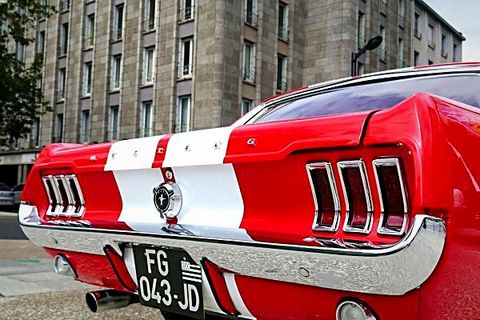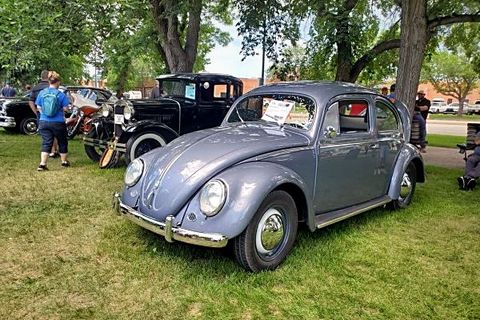
However carefully you inspected it, the car in your garage is an unknown quantity. It has almost certainly been driven less in the last two years than it is about to be driven in the next two months, and the things that break on an old car are the things that have been sitting still. The first hundred miles are for finding those things deliberately, close to home, rather than accidentally, ninety miles away at night.
Do this in order. Safety systems first, comfort last.
Before you drive it at all
Put it up on stands and get underneath with a flashlight, even if you looked before you bought it. You are looking at the brake lines and hoses end to end, the fuel lines from the tank to the engine, the steering joints, and the exhaust hangers. Rubber fuel line that has gone hard and shiny is the single most common cause of a classic car fire, and it is a cheap afternoon to replace.
Check every fluid and look at its condition rather than just its level. Brake fluid should be clear to light straw. Dark brown brake fluid is old, has absorbed water, and needs a full flush before you trust the system, not after. Engine oil that is honey-colored on a car that has sat means it has been changed and not used, which is fine. Milky oil is not.
Read the tire date codes. Tires more than about six years old are hard and unsafe regardless of how much tread is left, and a beautiful car on twelve-year-old rubber is a beautiful car with no grip.
Then find the jack points, the tool kit, the spare, the wheel chock and the fuse box, and confirm the spare actually holds air. Learn where the fuel shutoff is if the car has one.
The baseline service
Unless you have receipts proving otherwise, do the basics yourself so you know they are done. Engine oil and filter. Air filter. A look at the plugs, which tells you more about the state of the engine than any single other five-minute job. Belts and their tension. Every hose squeezed by hand, looking for one that feels soft or crunchy. Coolant condition and strength.
Bleed or flush the brakes. Check pad and shoe thickness. Grease the fittings if the car has them. Check the gearbox and differential levels, which almost nobody does and which quietly kill more old drivetrains than hard driving.
Write down everything you do with the date and the mileage. You are starting the file that will sell this car one day.
The shakedown drive
Plan a loop that stays within easy recovery distance of home, includes some hills, and ends where you started. Take a phone, a flashlight, a basic tool roll, a jug of water and a rag.
Drive the first few miles slowly, testing the brakes gently and repeatedly. Then work the car through its range: each gear, some sustained speed, a proper stop from speed on a clear road, and at least one hill both up and down. Get the engine fully hot and then let it idle for five minutes in a parking lot, which is the condition that exposes marginal cooling systems.
Use your ears and nose more than the gauges. Hot oil, hot coolant, hot brake and burning electrical insulation all smell distinct, and on a car this age you should be able to identify all four.
When you get home, put it back on the stands while it is hot and look for anything wet that was dry two hours ago. Retorque anything you loosened. Check the oil level again.
The second and third drives
Extend the loop. Add a longer sustained run, then a run at night to test every light under real conditions, then one in the rain if the car will ever see rain, which will find the wiper motor, the demister and the leaks all at once.
By a hundred miles you will have a list. It always has three or four things on it, and that is normal, not a sign you bought a bad car. Fix them in safety order: brakes, steering, fuel, tires, lights, then everything else.
Set the rhythm
Once it is sorted, the best thing for an old car is regular use. Short, occasional idling is worse than nothing. A proper drive every couple of weeks keeps seals wet, brakes clean and the battery charged, and it surfaces small problems while they are still small.
Put the year's service on a calendar with the maintenance interval planner, and keep the file going.
The specific things to check first differ by model, and the owners club always knows which they are. Garage, Galley & Hangar writes a model-specific owner's reference manual for every car in the catalog, built around its known issues and service schedule, so your first hundred miles are spent on the right things. Browse the cars catalog.