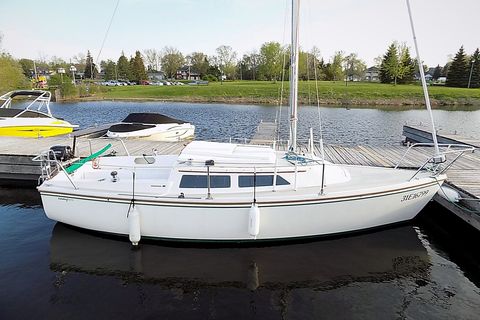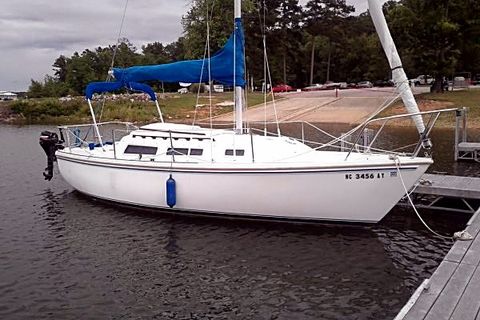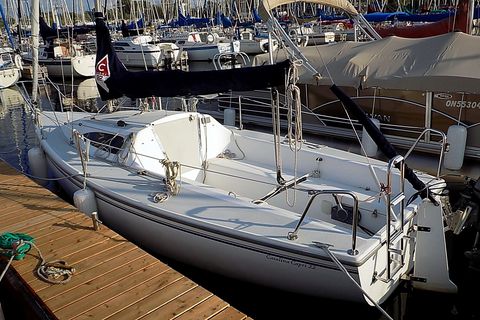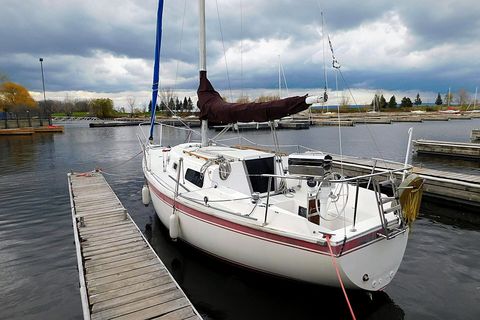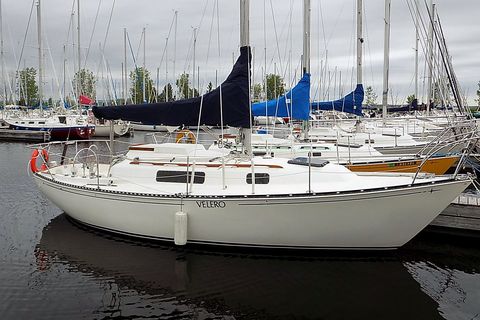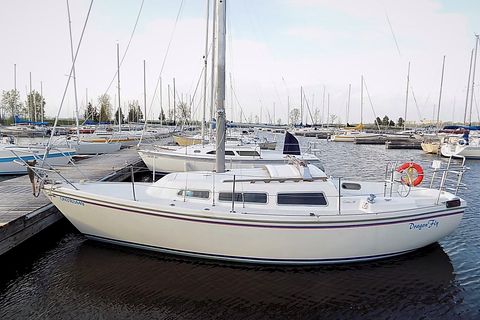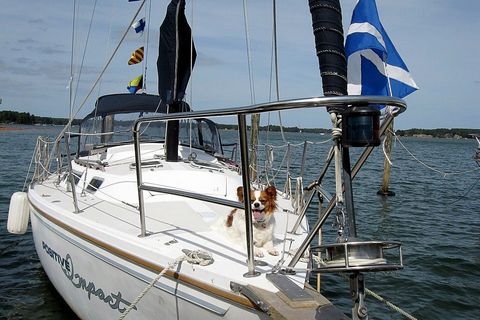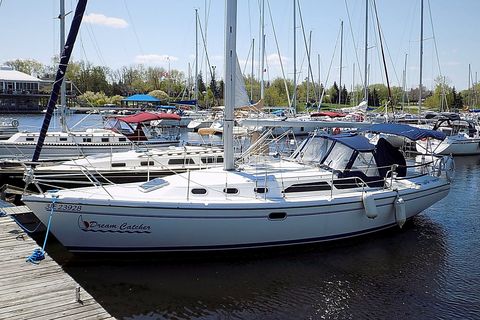
A good first cruiser is forgiving when you make mistakes, cheap enough that a refit will not sink you, and common enough that parts, advice, and an owners forum are always a search away. That rules out the exotic and the fragile, and it points straight at a handful of production boats that have been sailed, fixed, and written about for decades. This guide is for the new owner shopping in the 22 to 40 foot range for coastal cruising, not offshore passagemaking. Here are ten that reward a first-timer, and the honest things to check on each.
Start small and trailerable with the Catalina 22. More than 15,000 were built between 1969 and 1995, and the boat more or less invented the trailer-sailer market. You can keep it in the driveway, launch for a weekend, and learn the whole system on a scale you can actually reach. Check the swing-keel pivot and cable (the classic wear point), and look for a soft or delaminated cabin sole. Tradeoff: it is a daysailer that happens to have berths, not a place to live.
The Catalina 25 is the logical next size up and one of the most numerous trailerable cruisers ever made. It came in swing-keel, fin-keel, and wing-keel versions, so confirm which you are buying, since it changes both your draft and your ramp options. Inspect the keel hardware and the rudder for cracking. It gives you real standing-around room and a small galley without needing a slip you cannot afford.
If you want the same trailerable footprint but sharper sailing, look at the Catalina Capri 22. It is the lighter, more performance-minded fin-keel cousin of the classic 22, with a bigger cockpit built for daysailing rather than hiding below. Fixed fin keel means you need a slip or a hoist, not a ramp, so be honest about how you will store it. For a new sailor who wants to feel the boat respond, it is a lot of fun for the money.
Step up to a proper pocket cruiser with the Cal 27, a Bill Lapworth design that sails well above its size and stays cheap on the West Coast used market. These are old boats now, so budget for the standard 1970s issues: tired standing rigging, an original engine near the end of its life, and possible deck-core moisture around old fittings. Sail it before you dismiss the age, because the hull shape is genuinely good.
The C&C 27 is the racer-cruiser in this group, a widely campaigned club boat that ran through five distinct marks, so identify which mark you are looking at before comparing prices. C&C build quality was a cut above, but that same era brings balsa-cored decks: tap the deck and sidedecks for the dull thud of wet core, which is the one repair that can dwarf the purchase price. Reward is a boat that points higher and moves better than most of its cruising peers.
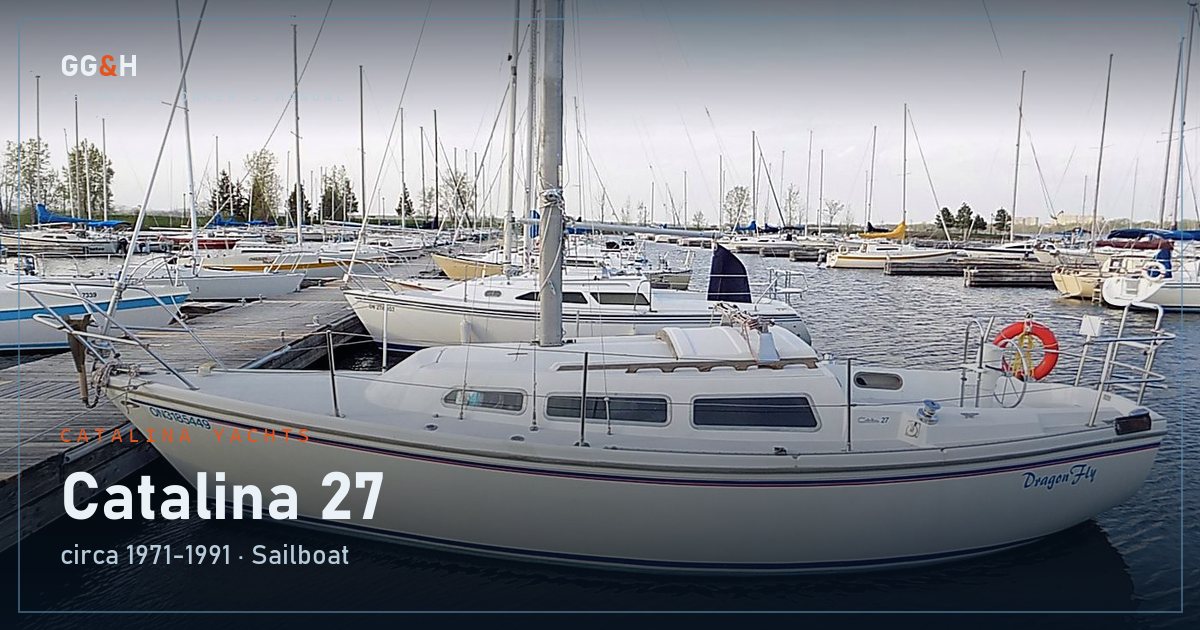
The Catalina 27 is the archetype, the boat Practical Sailor called the Volkswagen of the market. More than 6,600 were built from 1971 to 1991, so they are everywhere, cheap, roomy for their length, and endlessly supported by parts and a deep owners community. Check the rudder for water intrusion and the original Atomic 4 gas engine or early diesel for condition and hours. Nothing here will surprise a first owner, and that is exactly the point.
When you want standing headroom and space to sleep a family, the Catalina 30 delivers it. One of the best-selling auxiliary sailboats ever, it is beamy, stiff, and high-volume, with up to seven berths. It is a coastal cruiser, not a sea boat, and it likes a breeze to get going, so do not over-canvas your expectations in light air. Verify the fuel tank and check for the known keel-stub and rudder wear.
The Catalina 34 is a comfortable, better-finished coastal cruiser, and the MkII update improved the interior noticeably, so favor a later hull if you can. The wing-keel version is popular where the water is thin. Look at the rig and chainplates and the usual engine hours. It is a natural home for a couple who has outgrown a 27 or 30.
For real volume, the Catalina 36 is a big family cruiser with a walk-through transom on later hulls. Buyers must go in with eyes open: this model has well-documented rudder and keel-stub issues, so make a proper survey non-negotiable. Priced right and surveyed honestly, it is a lot of boat.
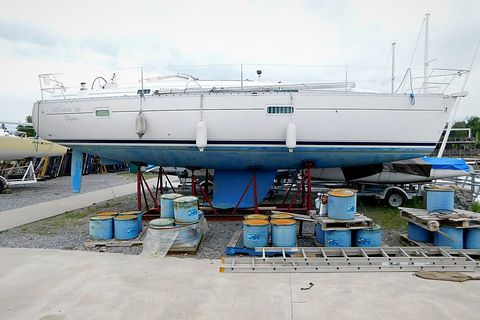
Finally, if you want something newer and more modern below, the Beneteau Oceanis 361 offers a bright two or three-cabin interior and a fold-down transom. Many were charter boats, so scrutinize the engine hours, the saildrive service history, and how hard the boat was used. A well-kept private example is a comfortable, easy-to-sail step into a contemporary cruiser.
Whichever you choose, get a survey, sail it first, and buy the boat with the cleanest maintenance record over the one with the flashiest gear. Garage, Galley & Hangar makes a model-specific owner's reference manual for every boat above, written around its known quirks and systems, so you can shop and own with the details in hand. Browse the full boats catalog to find yours.